I firmly believe that Hamas took out the best of us. They targeted the kibbutzim close to Gaza, where peace activist Vivian Silver lived, where human angels like Jimmy Pacheco and Angelyn Aguirre worked, and where Shoshan Haran and her family came from.
.
.
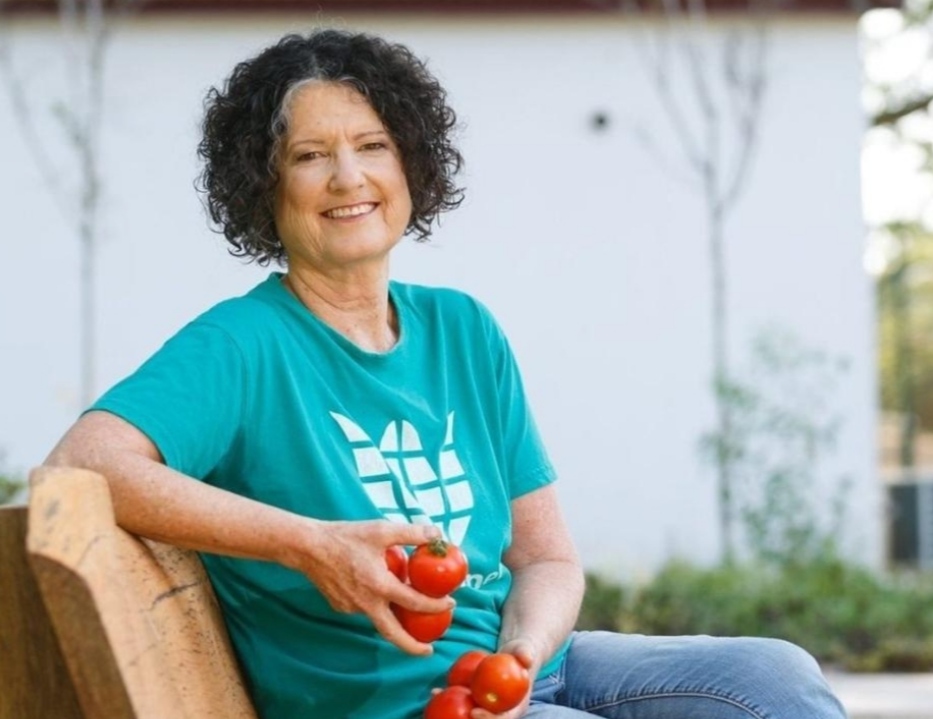
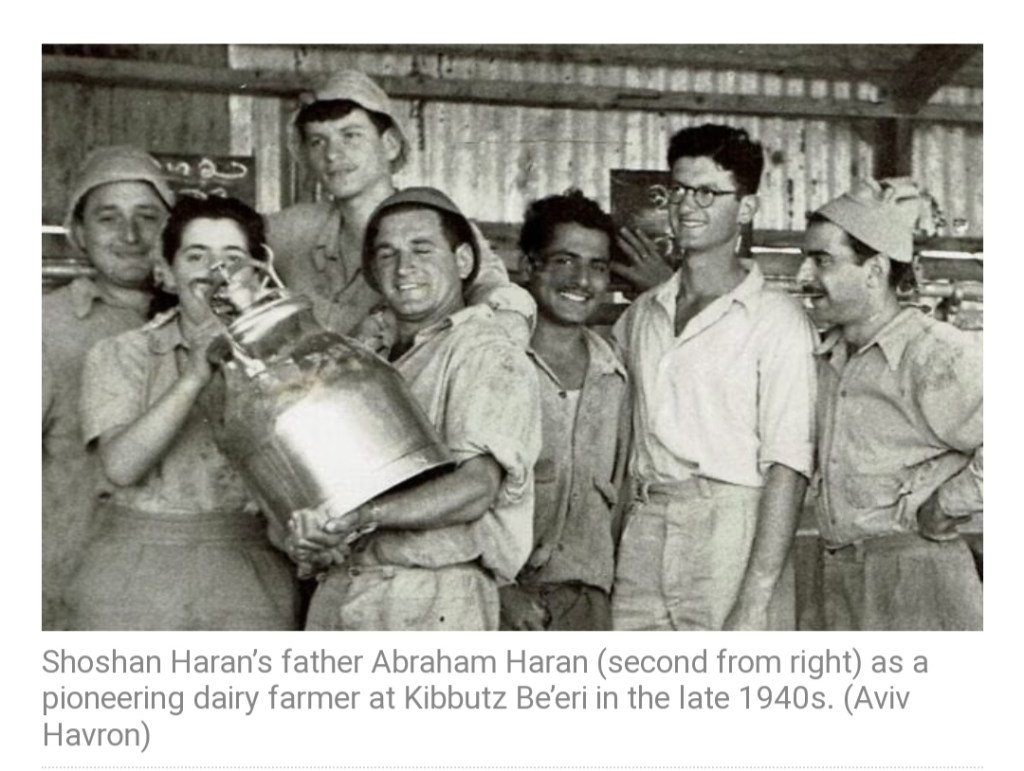
Dr. Shoshan Haran, 67, comes from a family of highly educated, highly driven lifesavers. Her grandparents were orthopedic surgeons in Stuttgart, Germany, before the Second World War. They came to Israel to escape Hitler’s reign of terror and continued their work in the new country: they treated children with polio and severe injuries in the Alyn Hospital for disabled children. Their son, Avraham Havron, left the relatively wealthy and comfortable home of his parents in Jerusalem to help to establish the agricultural community of kibbutz Be’eri.
.
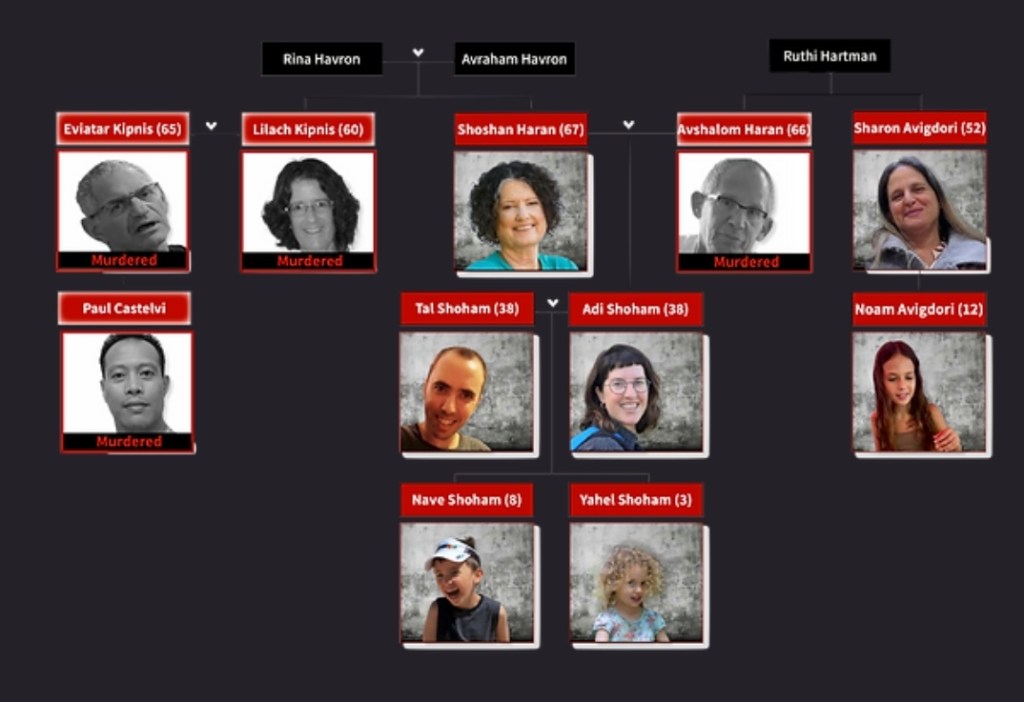
Abraham Havron’s children, Shoshan, Lilach and Aviv, were born and raised in kibbutz Be’eri. Shoshan married Avshalom Haran. The couple lived in Be’eri and had 3 children together: Adi, Yuval and Shaked. These names will all come back later in this story.
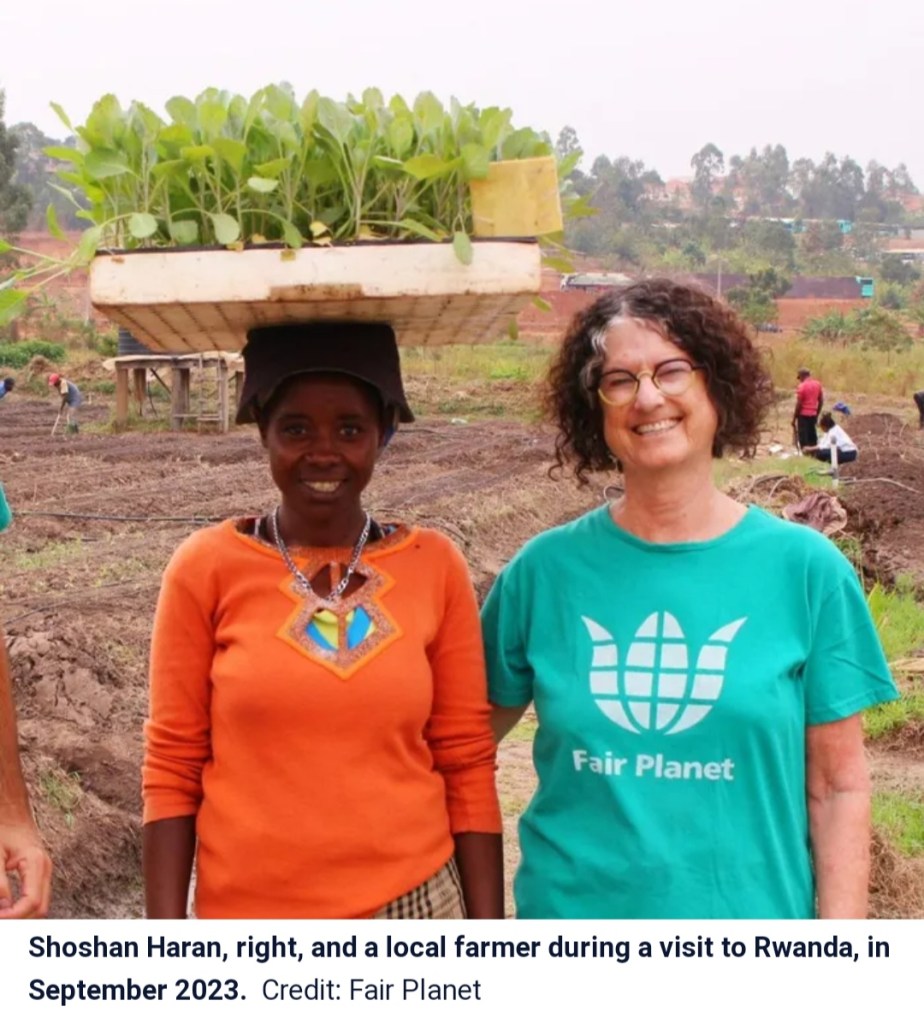
Shoshan studied biology and plant protection in Jerusalem and started working at Hazera Genetics, a leading seed producing company. But after years of working in the seed industry, Shoshan wanted to use her knowledge to help people. She founded the non-profit organization Fair Planet, which develops high quality seeds specifically for African farmers. The NGO operates in Ethiopia, Tanzania and Rwanda and has helped thousands of farmers achieve much more successful harvests than before. This way, not only has Fair Planet improved the lives of the farmers themselves, but also the lives of hundreds of thousands of people who now have food to eat, instead of failed harvests and hunger.
.
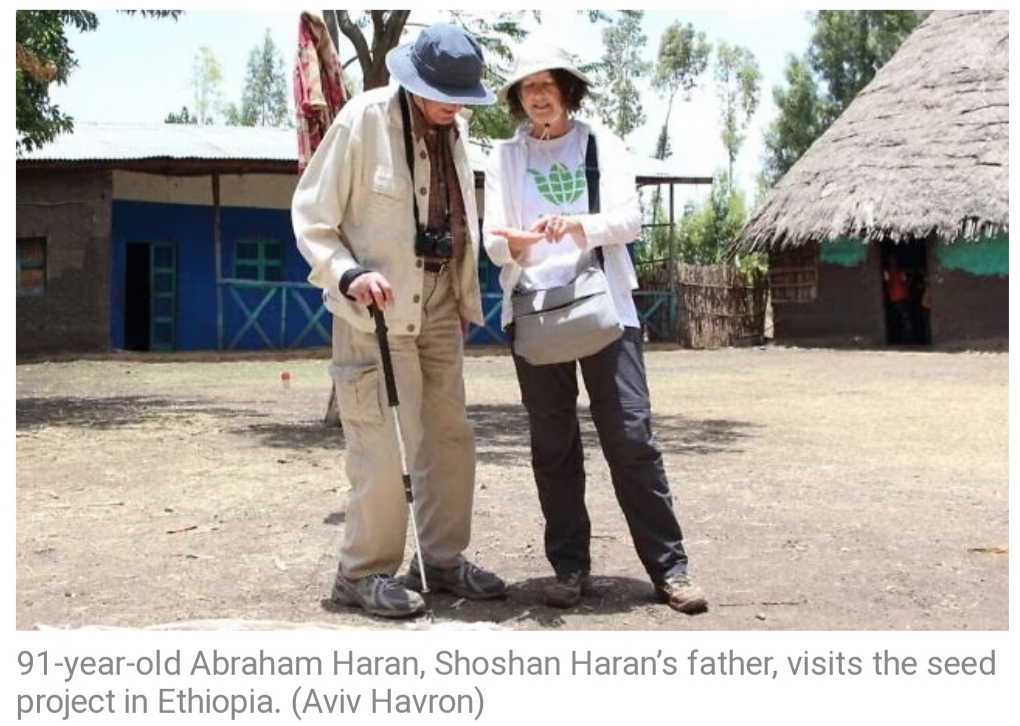
Shoshan travelled to Africa several times a year. Her father, Avraham, was so proud of her work that, at 91 years old, he decided to come with her on one of her field trips. Avraham Havron passed away at the age of 96 in 2022. It is a blessing that he did not have to live through the horror of October 7, 2023.
.
Over the years, their succes grew. Some of the biggest seed companies in the world, like Bayer and Syngenta, started funding Fair Planet, because they are developing the African market, which is profitable for them. The NGO doesn’t only provide the farmers with seeds, but also with education and practical help from volunteers. With the assistance of this project, the farmers are able to produce up to six times more vegetables of better quality than before, which has a huge effect on entire communities. It is fair to say that Shoshan Haran’s work changed millions of lives for the better. How many of us can say that?
Of course, Hamas does not ask people what good they have done in the world. The terrorists, crazed and bloodthirsty, hopped up on a cocktail of drugs, didn’t care about anything or anyone. On October 7, kibbutz Be’eri was raided and destroyed by hundreds of inhuman demons from hell. Murdering, torturing, burning. Screaming about the greatness of their cruel god. The Death Eaters of our world, full of hate, sadism and cocaine. I cannot imagine anything more terrifying than that.
Shoshan’s husband, Avshalom Haran, was murdered in cold blood. So were her sister, Lilach Kipnis, her husband, Eviatar Kipnis, and Eviatar’s caretaker, Paul Vincent Castelvi. And Shoshan was abducted, together with six other members of her family: her daughter Adi Shoham, Adi’s husband Tal Shoham, their children Yahel (3) and Naveh (8), Avshalom’s sister Sharon Avigdori and her daughter Noam. Eleven members of the same family (including Paul) were missing or dead. Try to imagine it. I can’t. My brain just refuses to wrap itself around this idea.
.
.
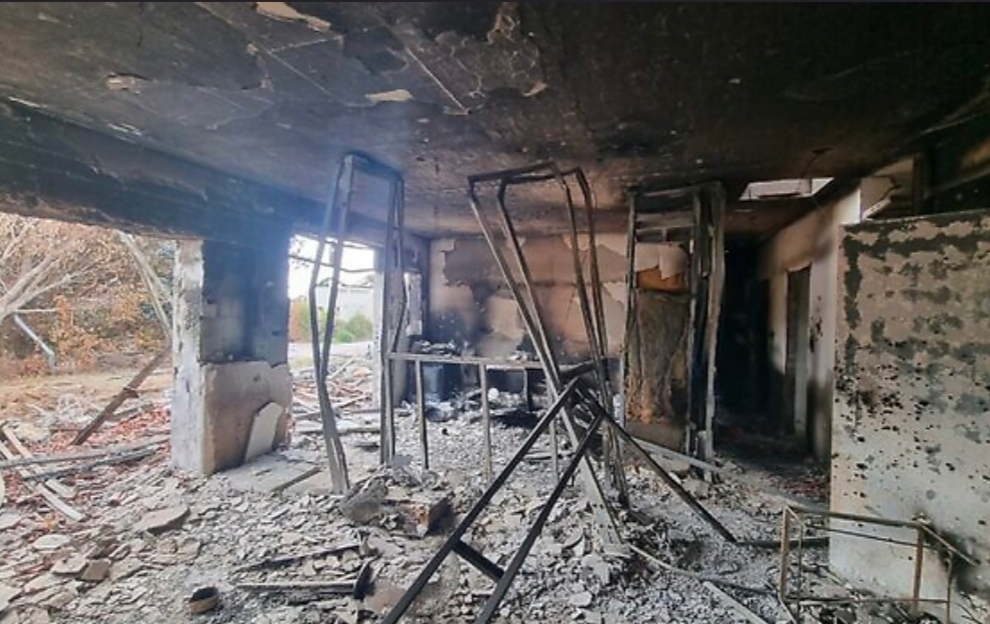
Shoshan and Lilach’s brother, Aviv Havron, found a blackened ruin where his sister’s house once stood. It had been blown up with explosives by the terrorists.
.
.
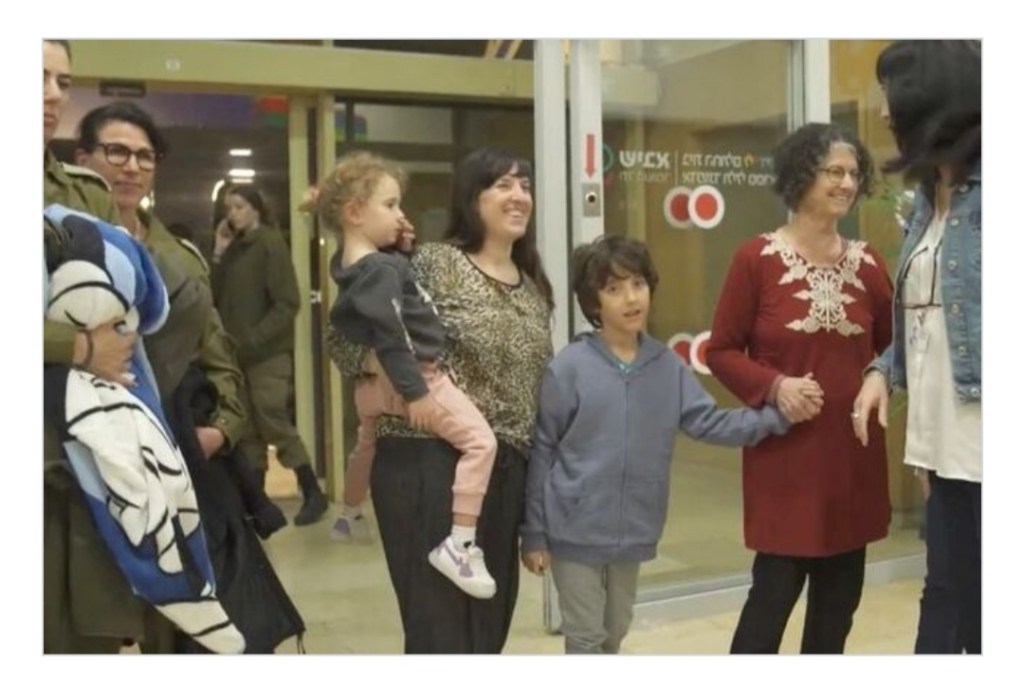
For seven long weeks, Shoshan and her family members were hostages, hidden underground in the tunnels system of Gaza. They were kept in the dark, with very little food or water. They could not wash or brush their teeth. They had to stay quiet and speak in whispers. They were threatened, verbally and with weapons. Shoshan was the one who kept them all together, who told them to stay positive, that they would get out. And they did, on November 26. In Gazan clothes, accompanied by hooded, armed terrorists, who handed them over to the Red Cross. Finally, Shoshan’s brother and her two other children could hug her again. Yahel and Naveh could play again. They could eat and shower.
But not all of them. Tal Shoham, the children’s father, was not released. As I am writing this, on the last day of 2023, he is still imprisoned in Gaza. And Shoshan had to be told about the murder of her husband and sister. She didn’t know, she thought they had also been kidnapped. Like so many others, this family has been torn apart by the horrible crimes of Hamas on October 7.
But Shoshan Haran will come back from this, and she will continue her work at Fair Planet and save countless lives. Because that is who she is: the best of us.
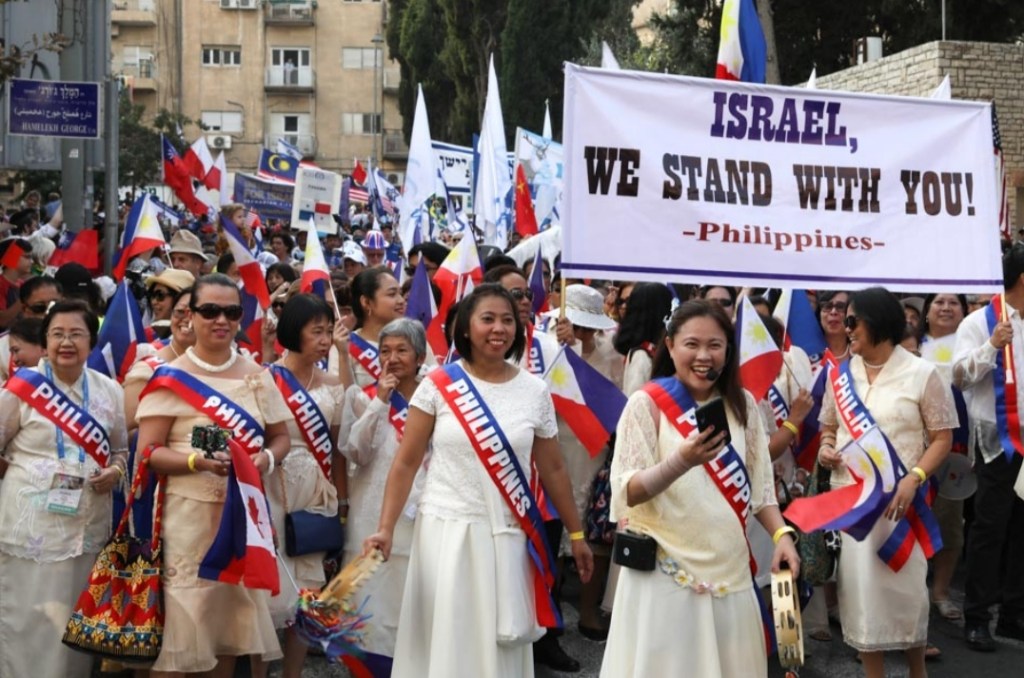
Israel is home to more than 300,000 foreign workers. Many of those are Thai. 30,000 to 50,000 are Filipinos, who most often work as caregivers for elderly and disabled people. Many Filipinos live and work in other countries to take financial care of their families. They are called overseas foreign workers (OFW’s). They are educated according to the country they are aiming at, in courses where they learn the language alongside nursing. Israel is a popular destination for Filipino OFW’s. In Israel, they earn a salary many times higher than what they could earn in the Philippines, and they are treated better than in countries like Saudi Arabia. Some Filipinos have children back home, who are in the care of their grandparents. To take care of their families financially, these parents give up raising their own children, to work in Israel and make sure their kids have a home, food and an education. They make the ultimate personal sacrifice to take care of their loved ones – and of our elderly. For that only, they deserve all our respect and admiration.
But apart from that, Filipino caregivers are most often lovely people and wonderful nurses, who decicate themselves to the care of their patients. They often stay with the same patient for years and become a member of their families. The elderly or ill person whose family can afford hiring a Filipino nurse is truly a lucky human being.
On October 7, four Filipino nationals were killed and two taken hostage. These are their stories.
—
Jimmy Pacheco
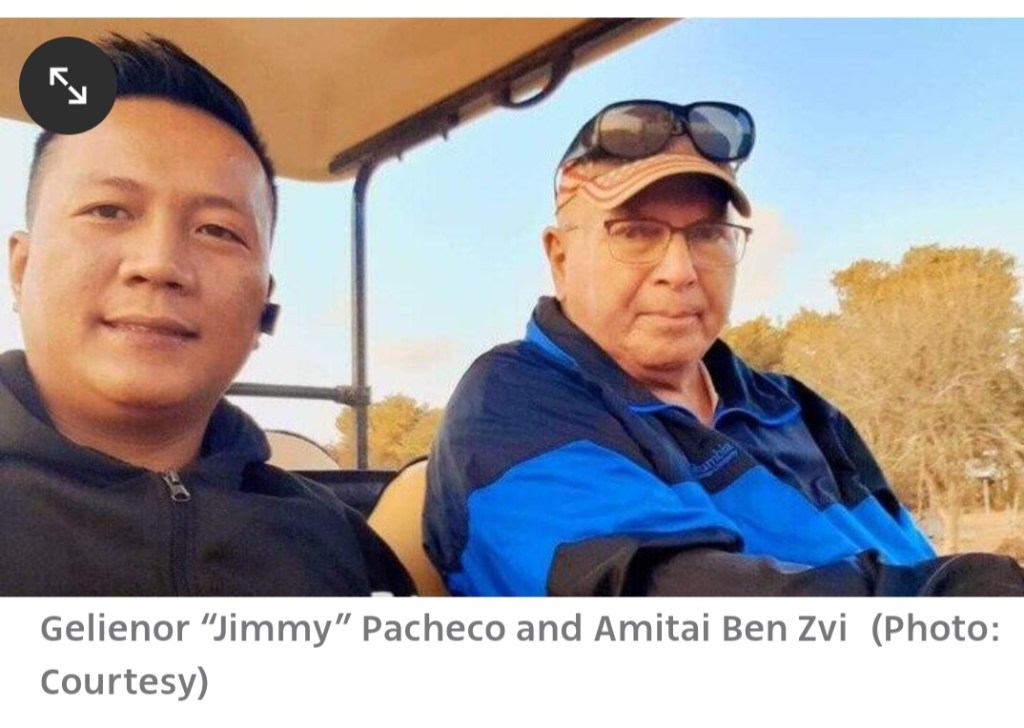
Gelienor (Jimmy) Pacheco had been in Israel for five years. Four of those years he had cared for Amitai Ben Zvi (80) in kibbutz Nir Oz. He called his patient Abba (dad). The relationship between the two of them was very good and the family loved Jimmy. Amitai’s daughter said that he took care of her father “with quiet, admirable devotion, always attentive to his needs and supportive in countless ways.” Jimmy’s wife and three children lived in the Philippines and kept in contact with him through video calls.
On Black Shabbath, when Hamas terrorists attacked kibbutz Nir Oz, Jimmy was there with his patient. The invaders shot Amitai, an 80 year old man with Parkinson’s, point blank. Jimmy managed to call his friends to tell them his Abba had been murdered and he was being kidnapped. Two Hamas videos showed Pacheco handcuffed and surrounded by armed men.
Jimmy was a hostage in the tunnels of Hamas for 49 days. He describes the terror and harsh conditions he went through on Ynet, telling them how he ate toilet paper because he was so determined to survive, and how thoughts of his children and his Catholic faith pulled him through. Pacheco was released on November 24, together with 10 Thai nationals, as part of an agreement with the Thai and Filipino governments. Jimmy went back to visit Nir Oz and the grave of Amitai Ben Zvi. He showed the destruction in a live video on Facebook.
On December 18, Jimmy Pacheco finally landed in the Philippines and was reunited with his family. The good news is that he will never have to leave them again. He will get lifetime benefits from Israel. To us, he is a hero.
.
—
Noralyn Babadilla
Noralyn Babadilla, 60, lived and worked in Israel for over 30 years. She married an Israeli, Gideon Babani, and gained dual Israeli-Filipino citizenship. She and her husband lived in Yehud, a town in central Israel. On October 6, they went to visit friends in kibbutz Nirim in the Gaza Envelope, where they stayed overnight. Early in the morning of October 7, the kibbutz was attacked by Hamas terrorists. At around 7 AM, Noralyn called her brother and told him terrorists were shooting at them, and she was afraid. That was the last anyone heard of her.
Gideon Babani was found murdered in kibbutz Nirim, but Noralyn was missing. No one knew for certain what had happened to her. Her brother and sisters were desperately worried. Fortunately, on November 28, Noralyn was released by Hamas, together with a small number of other women and children. She had been a hostage all that time. She was seen in the videos of the release of the hostages that day, assisting an elderly woman.
Noralyn survived her ordeal in reasonably good health, and was reunited with her siblings, who also live and work in Israel. But her husband and her friends were murdered before her eyes. How do you even begin to recover from such a terrible trauma?
—
Angelyn Aguirre
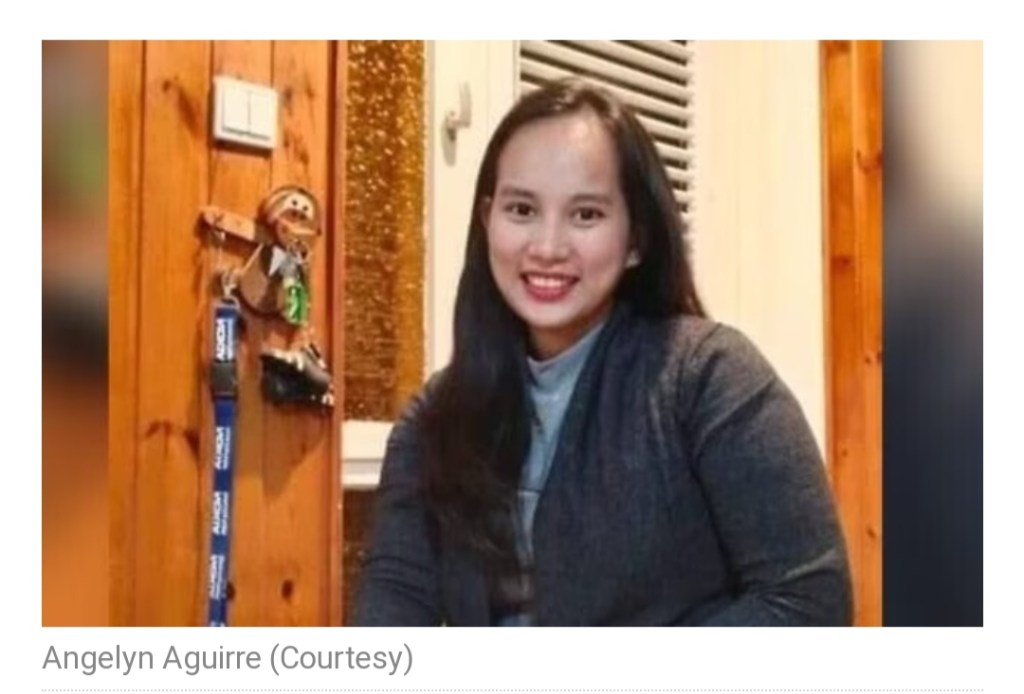
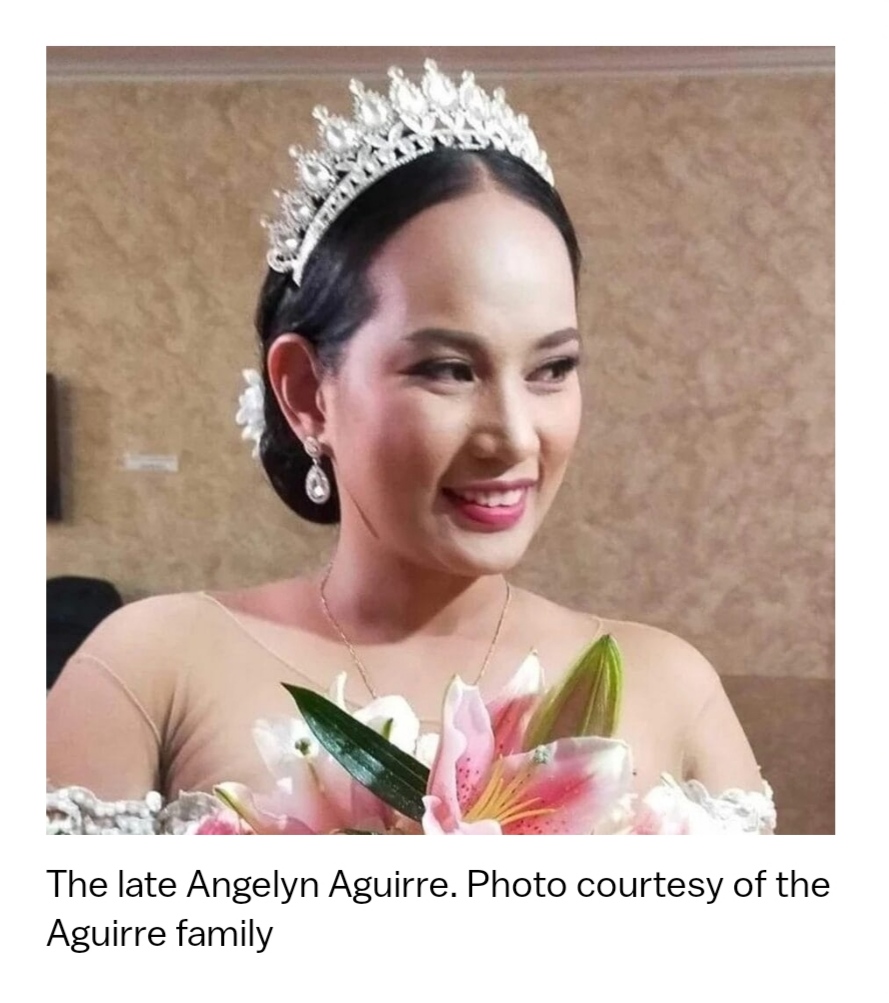
The story of Angelyn Aguirre is desperately sad. It is one of those that doesn’t leave me alone. Just look at that beautiful, sweet face. Angie was 33 years years old. She had been working in Israel for seven years, but she had just got married and in a few months’ time, she was going to return to the Philippines to be with her husband and start a family.
Angie took care of Nira Ronen (86) in kibbutz Kfar Aza. When the terrorists ransacked and burned their way through the kibbutz, Angie took Nira into the safe room of the house and tried to hold the door closed, while armed men on the other side forced it open and opened fire at the two defenseless women inside the room.
The mental image is mind-boggling. It is just beyond anything I can ever understand. How can things like this have happened? What kind of soulless beings gun down an 86 year old lady and her young Filipino carer in their home? What kind of unimaginable evil took over the minds of those invaders? I want to know. But it breaks my heart, every time again, to read and research these stories.
After the bodies of Nira and Angie were found, the deputy mayor of Jerusalem, Fleur Hassan-Nahoum, wrote on X/Twitter: “Despite having a chance to flee the Hamas terror attacks, Angeline showed unbelievable humanity and loyalty by remaining Nira’s side during the violence, resulting in both of them being brutally murdered by Hamas. Unimaginable honor in the face of evil.”
Later, in an emotional interview with ABS-CBN News, Hassan-Nahoum said: “The Filipino community in the State of Israel is very much loved and appreciated. They take care of our elderly and they take care of special needs children. My mother was taken care of by two wonderful nurses and I owe them so much. There are so many people in this country that owe the Filipino community so much. For us, it’s as painful to lose one of you as it is to lose one of us.”
I agree completely.
.
—
Paul Vincent Castelvi
Paul Castelvi (42) lived and worked in kibbutz Be’eri. He was the caretaker of Eviatar Kipnis, who suffered from an auto-immune disease. Paul was the main breadwinner for his entire family back in the Philippines; his parents, his three siblings and his nieces and nephews. He was married to Jovelle Santiago, who also lived and worked in Israel. Jovelle was pregnant with the couple’s first child. The baby was due in November, and Paul’s employers had given him and his wife tickets to fly home for Christmas, to surprise their families and show them the new baby.
Instead, Jovelle arrived alone at Manila Airport on December 23, holding her newborn baby and an urn containing Paul’s ashes.
.
Paul was murdered by Hamas together with his wheelchair-bound patient, Eviatar Kipnis, and Eviatar’s wife, Lilach Leah Kipnis. Many of their family members were abducted, including young children.
Yotam Kipnis, the son of Eviatar and Lilach, wrote on Facebook: “Paul was an incredible man, and I have still not come to terms with his death. It’s unimaginable, and I can’t believe that I won’t meet him again… Rest in Peace, Paul Vincent Castelvi.”
After learning of Paul’s death, Jovelle Santiago wrote on Facebook: “I don’t know how and where I am now to start when you are gone — so hard. I feel like I lost half of my life. Guide us always with our baby boy.”
After giving birth to her baby, who she called Jhayzen Paul Castelvi, she wrote: “Worth every pain… Worth the wait. Thank you for coming to our life… Tatay is surely smiling at us from above.”
—
Loreta Alacre
Loreta Alacre (49) was dearly beloved both in Israel and in the Philippines. She was the breadwinner for her entire extended family back home – most of her seven siblings and their children. Loreta financed the building of their house and the education of her nieces and nephews, and paid for hospital bills, birthdays, weddings, baptisms and funerals. The whole family was dependent on Loreta, who dedicated her entire life to them and to her patients. She worked overseas for 19 years, of which almost 15 years in Israel.
On October 8, Loreta’s employer, Noam Solomon, wrote the following on Facebook (my translation):
“Lori, my devoted caregiver of the last 6 years is missing! She was last seen yesterday in the early morning hours, between Netivot and Ashkelon. Her partner, who was with her, told a friend on the phone that he had been shot in the back. We located him in the Barzilai hospital, but he had no knowledge of where my dear, beloved Lori is. If anyone knows, hears or sees anything, please let me know in a private message as soon as possible.”
On October 11, Loreta’s body was found. The news caused anguish for her Filipino family as well as for her Israeli family. Lori had been the carer of Noam Solomon’s grandmother for many years. After her grandmother passed away, Noam, who had become disabled after an accident, asked Lori to be her caretaker. After receiving the news of Lori’s death, Noam posted (again, translation is mine):
“My dear, beloved Lorie Alacre, an inseparable part of my family for over 14 years, and for the last 5 years my right hand, my confidante, was sadly murdered in cold blood by Hamas killers on the cursed Sabbath. May her memory be blessed.”
.
Slowly, the events that led to Lori’s death were pieced together. Lori had been travelling to Ashkelon, where Noam lives, together with her partner. They took a sherut minibus with several other people. On the way, the terrorists stopped the minibus and shot its occupants. Lori did not survive the shooting.
Loreta’s family in the Philippines will get aid and benefits from Israel, as all dependants of terror victims do. But nothing can make up for the loss of this amazing, caring human being. Hamas took away the very best of us on that terrible day.
—
Grace Cabrera
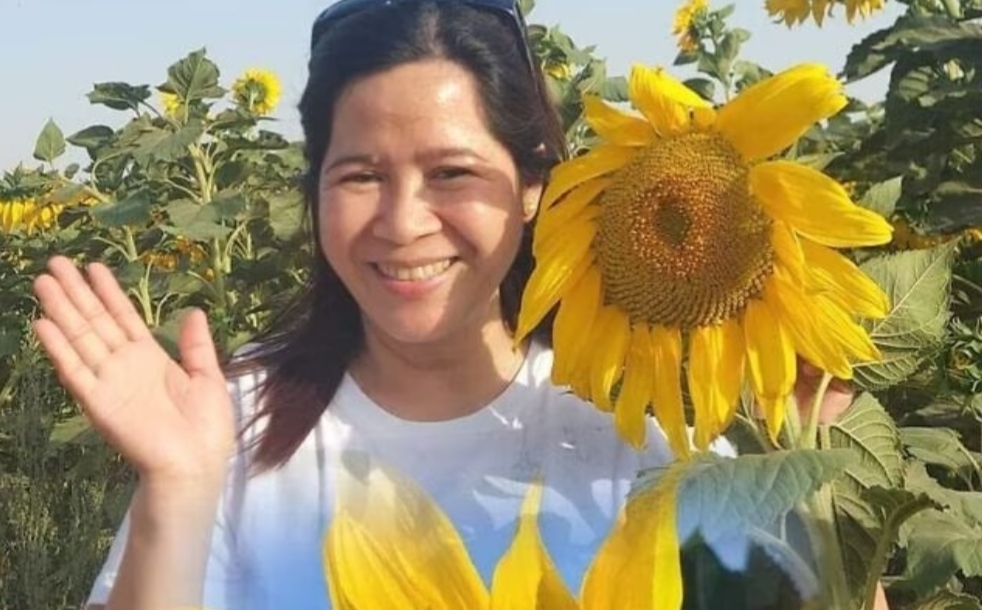
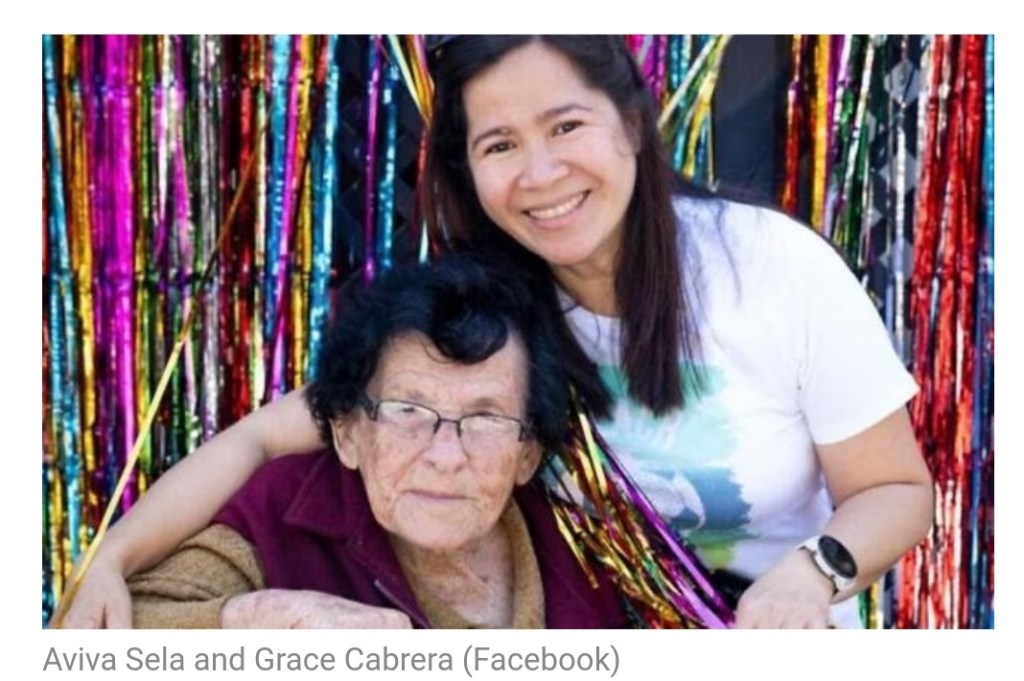
This is another story of love, loyalty and kindness in the face of unimaginable terror. Grace Cabrera (45) lived and worked in kibbutz Be’eri as the caretaker of Aviva Sela (95). She had parents, siblings, a husband and a child back in the Philippines, who depended on her salary. Her sister, Mary June, also lived in kibbutz Be’eri.
On the morning of October 7, when it was clear that their kibbutz was under attack, Grace took her patient into the safe room of their house and held the door closed for hours (these doors don’t have locks). Days later, security cameras showed that Hamas broke into the room and held Grace and Aviva at gunpoint on the porch. The porch of this house was apparently used as headquarters and weapons assembly. At the end of the day, Grace was taken by the terrorists, leaving 95 year old Aviva alone in the swing chair on the porch.
Aviva does not remember much, but she remembers deciding to leave the kibbutz. She took her walker and started walking, without her glasses or hearing aids. At some point, someone from the kibbutz took her into their car, and she called her daughter, Osnat Weinberg. When her family came to pick her up, they found the basket of her walker packed with everything she needed, including medication and food. “Only Grace could have gotten her ready like that,” Osnat said.
Grace’s body was found on October 19. She had been shot and dumped by the terrorists. Words fail me.
Osnat Weinberg said of Grace:
“Her composure, her wisdom and her best intentions for my mother were far beyond the realm of ordinary. She was simply an angel with her feet on the ground. What a good soul, how wise… we are so thankful to the wonderful Grace who became part of our family, and we are crying over her loss.”
Mary June Prodigo, Grace’s sister, wrote on Facebook : “No words can explain the pain I feel right now… I lost my sister/best friend. Now everything is gone… all the happy memories will be replaced by pain.”
—
There are more stories of the way Filipino caregivers protected their charges. There is a story of a carer who somehow managed to bribe the terrorists with money. Both she and her patient escaped with their lives.
I am heartbroken that they had to go through this. I am so sad for their families. And I am beyond furious that the evil incarnate called Hamas did this to them, and to us. That anger is what fuels me to keep writing. This article was exceptionally hard to write. The cruelty and sadism of the Death Eaters stands in such heavy contrast to the kindness and sacrifice shown by the Filipinos. It’s like good and evil faced each other that day.
Grace, Loretta, Paul and Angie were killed ruthlessly. But they left their impression on the world. Their love, kindness and energy lives on in the memories of both their Filipino and Israeli families, and in their children. And in the collective memory of Israel and the world. We will always remember that they were good, and kind, and protective of their patients. Hamas is their polar opposite, and their days are numbered. They will pay for what they did to these innocent people.
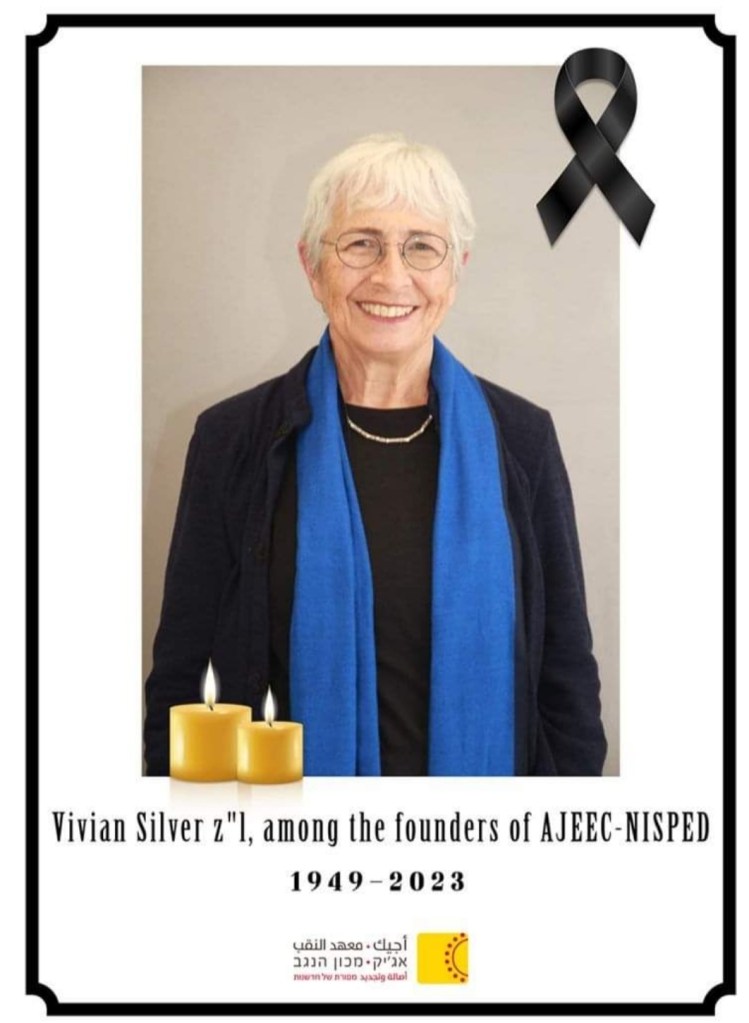
Vivian Silver was born in 1949 in Winnipeg, Canada, and immigrated to Israel in 1974. She settled in kibbutz Gezer and soon became the leader of the community. She was an energetic person with strong beliefs and a natural sense of justice. In the early days, Vivian activated for gender equality and women’s rights. She worked in the Knesset for the Committee of the Advancement of Women in Work and Economy, and she founded the United Kibbutz Movement’s Department to Advance Gender Equality.
.
.
In 1990, Vivian and her husband moved to kibbutz Be’eri with their two sons. It was there, in close proximity to Gaza and the Bedouin community of Israel, that she became a peace activist. Together with Amal Elsana Alh’jooj, an Arab Israeli woman, she founded the Arab-Jewish Center for Equality, Empowerment and Cooperation. This centre focuses on improving Arab-Jewish relations and a better understanding between Palestinians and Israelis. In 2010, they received the Victor J. Goldberg Prize for Peace in the Middle East.
.
.
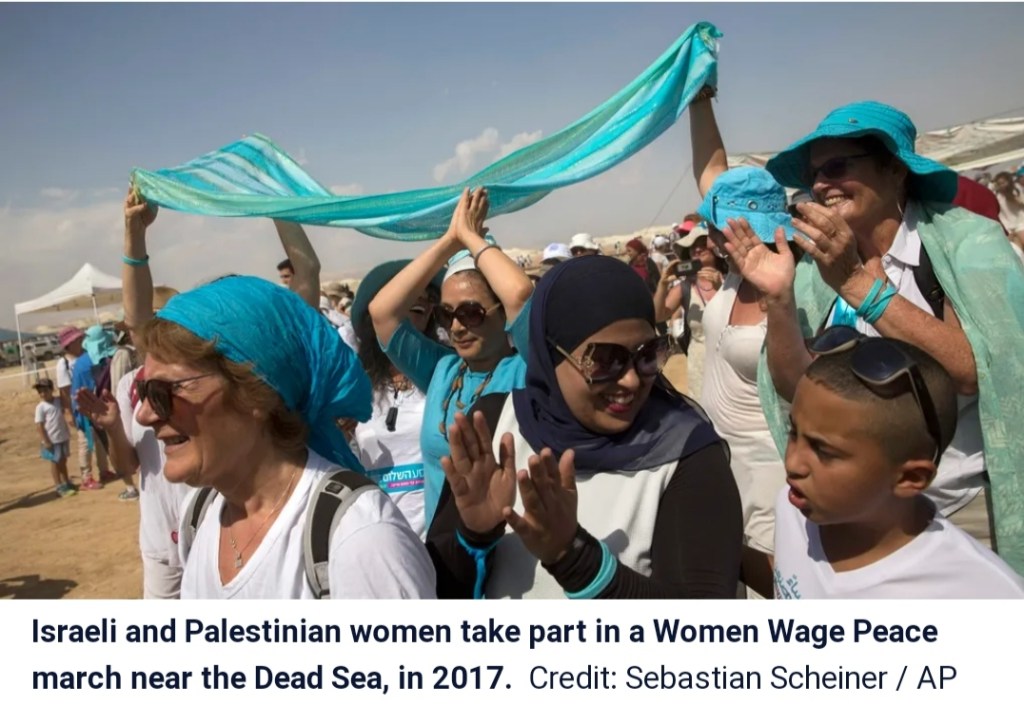
Apart from her work in the kibbutz and with the Centre, Vivian also volunteered with Road to Recovery, a project that transports sick people from Gaza to hospitals in Israel. In 2014, after another war with Gaza, she founded Women Wage Peace. This organization brings together women of different backgrounds and strives for peace between Israel and the Palestinians. The organization has more than 20,000 members. They organize rallies, marches and other activities to pressure the Israeli government to work towards peace. Vivian also joined in the protests against Benjamin Netanyahu and his government and the planned judicial overhaul, as many Israelis did (including me). She was strongly opposed to Netanyahu’s politics.
.
On October 4, 2023, just three days before Hamas’ attack on Israel, Woman Wage Peace and Women of the Sun, a Palestinian organization, joined together in a march for peace in Jerusalem. Vivian, 74 years old, was there, as always.
On October 7, Vivian Silver was alone at her home in kibbutz Be’eri. When she realized that the kibbutz was under attack by terrorists, she hid in a closet and began texting her family and friends. Her son describes their text messages. She told him that she loved him, and then she wrote: “They’re inside the house. It’s time to stop joking and to say goodbye.”
Her son wrote: “I love you mum, I’m with you.”
She answered: “I feel you.”
That was Vivian’s last message. After that, there was silence.
.
.
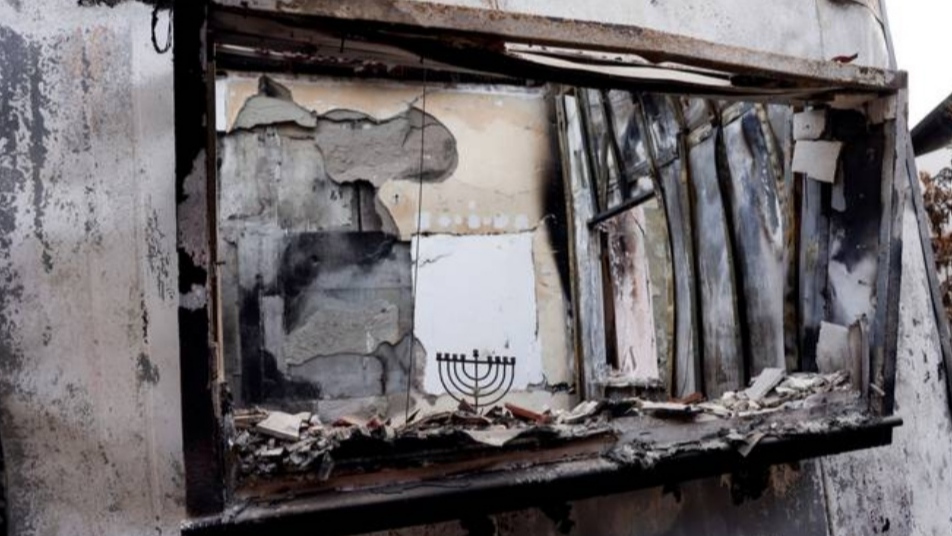
In the evening, Vivian’s house was found completely trashed and burned out. Vivian was nowhere to be found and she was assumed to be a hostage. But five weeks later, Vivian’s remains were finally identified in her house. She had been murdered in cold blood and burned to ashes, by the very people she had worked so hard, all her life, to help and to forge bonds with.
Hamas didn’t care who Vivian was. It didn’t matter to them that she had dedicated her life to peace and better treatment of the Palestinians. They couldn’t care less. And that is because they do not want peace. Their goal is to destroy the Jews, not to make peace with them. Vivian was their enemy.
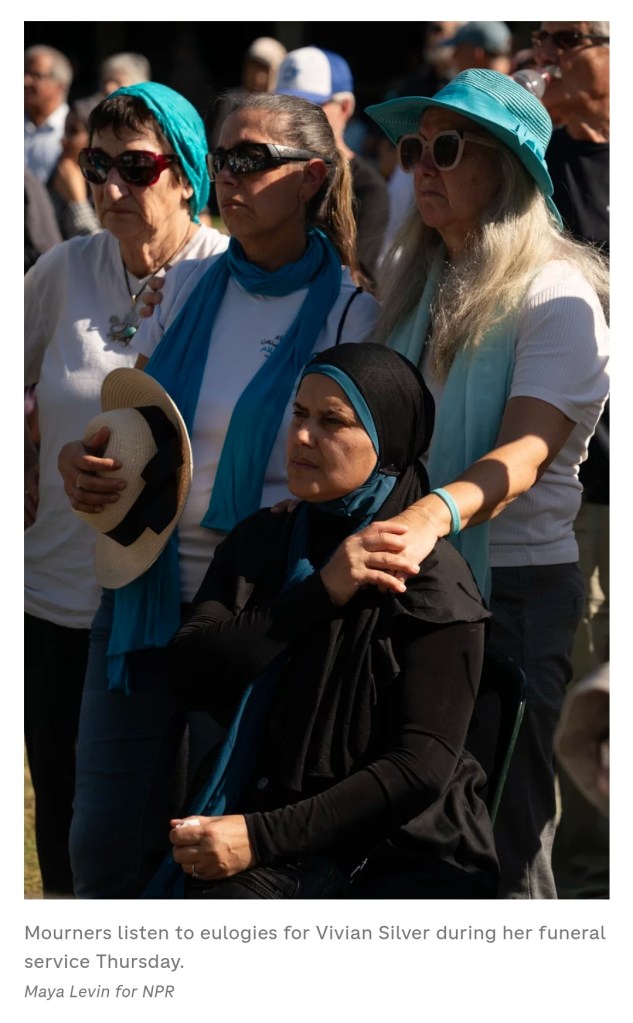
Vivian was mourned intensely by many. She was loved fiercely by hundreds of people and admired by thousands. Her funeral was attended by all her friends, her family and all the women and men she inspired, of many different backgrounds. Her son, Jonathan Zeigen, said: “It was not just me that was orphaned. The community you helped was as well. Your friends were orphaned. This country you adopted at a young age was orphaned. And your movement was orphaned. The movement of peace.”
.
Women Wage Peace promised that the peace movement was not dead. That they would continue their work without Vivian. They knew that even now, especially now, Vivian would be calling for peace, for agreement, for understanding.
Vivian was an immeasurably better person than me. I have always believed that peace between Israel and the Palestinians was possible. That we just had to get rid of our rotten government, implement the two-state solution, and we would be able to achieve peace. After all, the Palestinians are just people, like us. Why would they not want peace? They just want to live their lives, like we do.
But now, I’m not so sure. I did not reckon with the pure hate the Palestinians have for us. How much Hamas controls their lives. How they are groomed and brainwashed since early childhood to hate and fear Jews. How they are told to sacrifice their lives to kill Jews. How can you make peace with people whose only goal in life is to kill you?
Still, I admire Vivian Silver, and all that she stands for. Rest in peace, Vivian, or, as one of your friends put it: Rest in power.
One fifth of the population of Israel are Israeli Arabs. Some prefer to be called Palestinian Israelis. Most of them are Muslims, some are Christians and some are Druze. Some are Bedouins, a tribe of nomadic Arabic people. Some live in predominantly Arab towns, like Nazareth, and others in mixed cities, like Haifa. In the South, there are Bedouin towns and cities, like Rahat.
And no, there is no apartheid. Israeli Arabs have the same rights and opportunities as Jewish Israelis. Arabic is one of the official languages of Israel. My kids learn Arabic in school (although they’re not very good at it). There are Arabic political parties. Arabs can and do enlist in the Israeli army, although it is not compulsary for them. Arabs study in universities and hold respected positions in Israeli society. I’ve been treated by Arab doctors and brought my sick animals to Arab veterinarians. Also, Israelis LOVE Arabic food. Arabic restaurants are extremely popular. I love them myself, too.
Obviously, that’s not to say that we’re living in a perfect utopia where Jews and Arabs always get along great and everything goes well. Palestinian Israelis often feel conflicted. Many of them have family in Gaza and the West Bank. They often don’t feel heard and represented in a country that is first and foremost Jewish. I can understand that. As a non-Jew, I feel like that sometimes, myself (although I know it’s not the same). Of course there are clashes, there can be hate and ugliness (on both sides), discrimination and prejudice. In some Arab towns there is gang activity, which the Israeli police can’t really get a grip on. But show me a country where all these things do not happen. In this post, I want to focus on the positive.
.
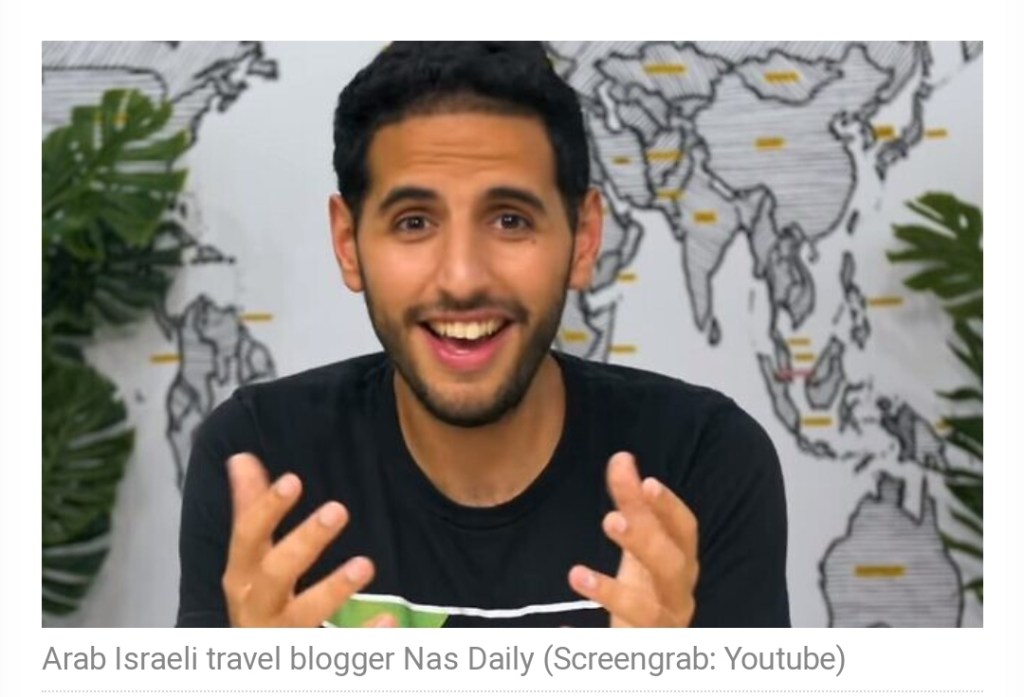
After October 7, Palestinian Israelis stood together with Jews against Hamas. They, too, had suffered losses. 24 Israeli Arabs had been killed and 9 taken hostage. Some Arabs did downright heroic things to protect their Jewish neighbours. On the 9th of October, a famous Arab Israeli vlogger, Nuseir Yassin, also known as Nas Daily, wrote this on Twitter/X:
“For the longest time, I struggled with my identity. A Palestinian kid born inside Israel. Like…wtf. Many of my friends refuse to this day to say the word “Israel” and call themselves “Palestinian” only. But since I was 12, that did not make sense to me. So I decided to mix the two and become a “Palestinian-Israeli” I thought this term reflected who I was. Palestinian first. Israeli second. But after recent events, I started to think. And think. And think. And then my thoughts turned to anger. I realized that if Israel were to be “invaded” like that again, we would not be safe. To a terrorist invading Israel, all citizens are targets. 900 Israelis died so far. More than 40 of them are Arabs. Killed by other Arabs. And even 2 Thai people died too. And I do not want to live under a Palestinian government. Which means I only have one home, even if I’m not Jewish: Israel. That’s where all my family lives. That’s where I grew up. That’s the country I want to see continue to exist so I can exist. Palestine should exist too as an independent state. And I hope to see the country thrive and become less extreme and more prosperous. I love Palestine and have invested in Palestine. But it’s not my home. So from today forward, I view myself as an “Israeli-Palestinian”. Israeli first. Palestinian second. Sometimes it takes a shock like this to see so clearly.”
(Obviously, this was before the real numbers of dead and wounded were known. 1200 people died, of whom 24 Arabs and 39 Thais.)
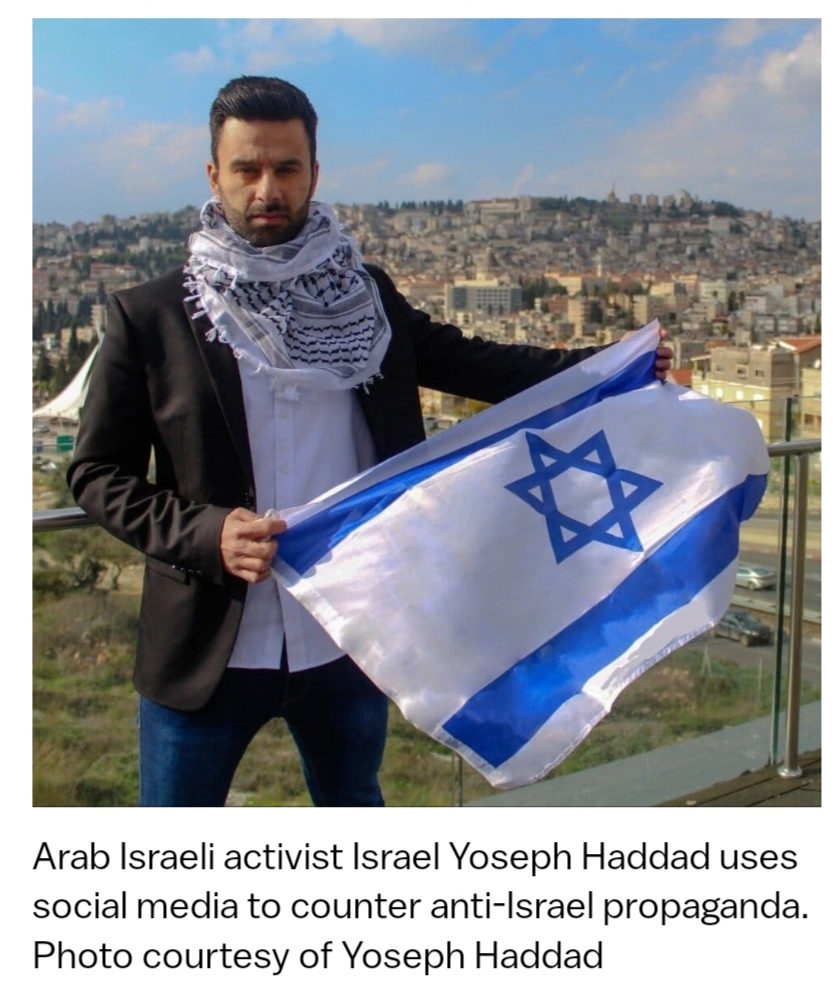
Another famous Arab Israeli, Yoseph Haddad, news correspondent and co-existence activist, told us the story of Masad Armilat, an Israeli Arab who worked at a gas station near the town of Sderot. On October 7, Masad heard gunshots. But instead of hiding, he ran towards the sound. He saw people fleeing and other people lying on the ground wounded. He collected as many people as he could and brought them all into the gas station. He locked the door behind them and piled gas balloons against it, so if the terrorists shot at it, the balloons would explode. And when the terrorists did come to the door, they saw the gas tanks and decided not to risk it. This is how Masad Armilat saved the lives of 14 people.
Afterwards, Masad said: “We are all one people, it doesn’t matter if we are Arab or Jewish.” Someone give this young man a medal!!
Another such hero was Awad Darawshe. He was an Israeli Arab paramedic, who worked at the Supernova festival that day. He thought he’d have to treat cuts and bruises, maybe a case of overheating. But instead, he found himself in the middle of a chaotic hellscape. Terrorists rained bullets into the crowd, grabbed young girls, stabbed people and hurt them in any way they could. Awad could have run, but he didn’t. He stayed and treated as many wounded people as he could. Until he was shot himself. He died on the battlefield of Supernova, to save others. His death is a tragedy. We desperately need people like him in our society.
.
Then, there is the heartbreaking story of Hamid Abu Arar, whose wife was shot point blank by Hamas terrorists, but who, with his baby in his arms, still managed to warn a group of Israeli soldiers about the ambush they were about to walk into. I will let him tell his own story:
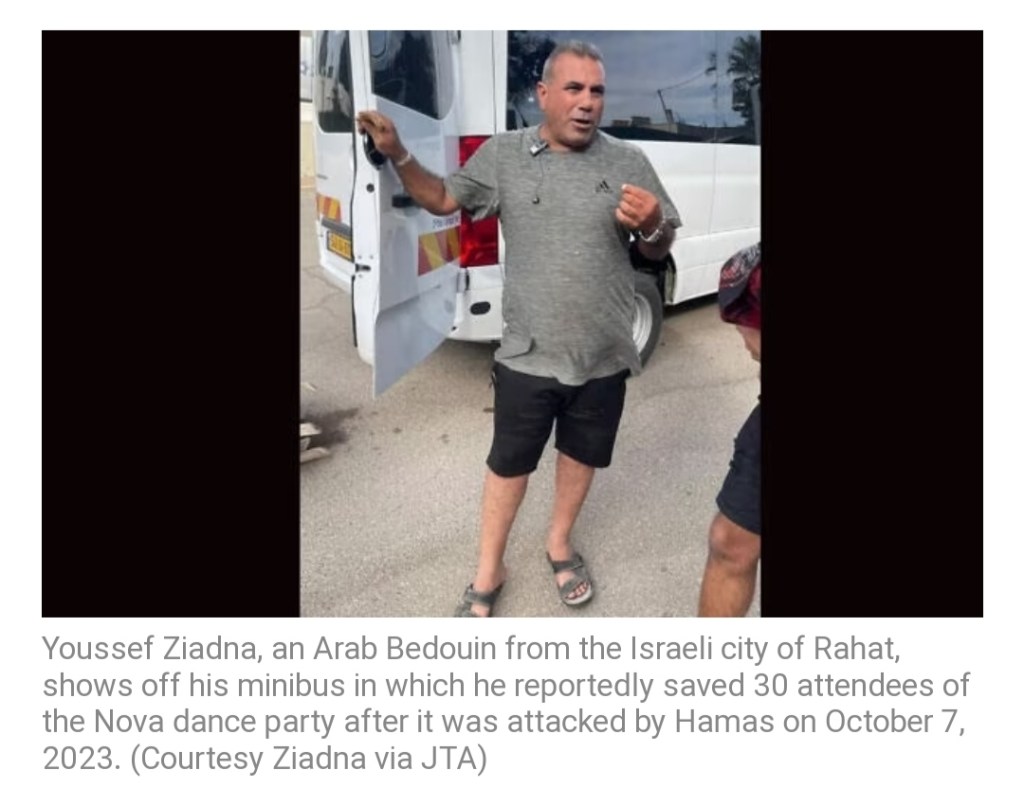
And here is another story. It’s the story of Aya Meydan, a young woman from kibbutz Be’eri, and a Bedouin family, who saved her and at least 30 other people. The family is called Alkrenawi. Here are their voices:
There are many more such stories. They are heartbreaking, but incredible, wonderful and inspiring at the same time. They tell the story of very different people, who came together and helped each other through something horrific and traumatic. Who stood together and said: No, I do not stand for this. This is what happens when people are humans first, and Muslims, Jews, Christians and everything else later. Like the people of Israel are now doing. And this is why Hamas will lose this war and will be destroyed.
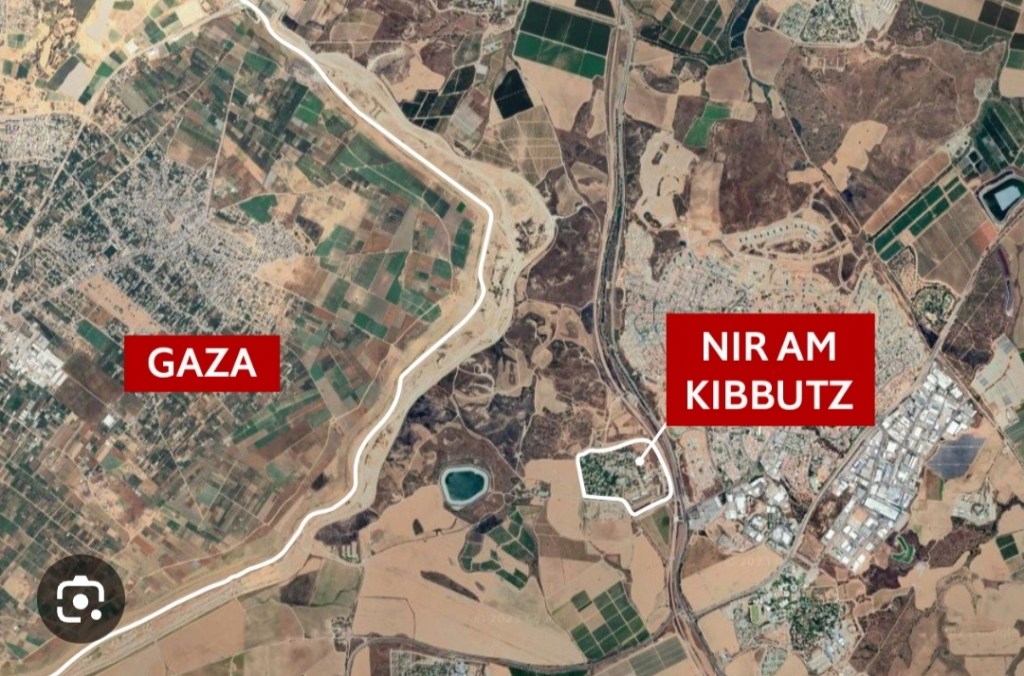
Nir Am is a kibbutz at the border with Gaza, close to the town of Sderot. It has a population of around 600 people. It has agriculture fields and a dairy farm, a cutlery factory, a country lodge and a museum. The kibbutz also employs workers from Gaza, as many of the kibbutzim on the border do (or did).
The kibbutz security team consists of twelve people, who are all men, except for their commander. The leader of this team is Inbal Rabin-Liberman, a 26 year old woman who served in a combat unit in the IDF. In 2022, she took over the task from her uncle, Ami Rabin.
On October 7, Inbal was woken up at 6:30 by sirens and alerts from the national security, telling the people of the kibbutz to go into the shelters and safe rooms. This was not an uncommon occurance in this part of the country. The missiles shot at them from Gaza were usually (but not always) diffused by the Iron Dome defense system.
.
.
But Inbal heard noises outside that she didn’t trust. She saw trucks driving around, up to the kibbutz gate and back again. She had a gut feeling that there was something worse going on today. So she called the members of her security team and told them to come and get weapons and then stationed them around the perimeter of the kibbutz. When the electricity failed, she told them not to turn it back on again, so the electric gates of the kibbutz would not open.
Because of the defense team’s quick action, Hamas was unable to enter the kibbutz. Several terrorists trying to scale the fence were shot by the security squad. The stories of this fight vary widely. Some articles say the fight lasted 12 hours, 25 terrorists were killed and Inbal shot 5 of them herself, but others report that it lasted 3 hours and only two terrorists were killed. The truth is probably somewhere in the middle. But what is certain is that Inbal’s gut feeling and quick thinking saved kibbutz Nir Am.
Hamas was not able to enter kibbutz Nir Am, thanks to the armed volunteers stationed around the kibbutz at the fence. No one was hurt or abducted. Nir Am is the only kibbutz in the Gaza Envelope that wasn’t ruined, massacred and burned. And Inbal was hailed as a hero.
.
.
But Inbal does not want this praise. She says she didn’t do anything special, she was just one of the many. So I will just repeat Inbal’s own words on Instagram:
“I see everything you write to me, and I want to tell you that you shouldn’t believe everything that’s written. There is a lot of fake news among the reports. I’m not a hero, and I wasn’t there by myself. I still can’t make sense of everything I’m going through, and therefore I can’t tell the real story – but I promise you will hear from me. So many people are still in the field fighting for their lives, and there were a lot more, fighting next to me and around me. I would like you to share this story in order to convey a message. Let’s engage in the important things, not in bombastic headlines.”
I decided to honour Inbal’s words, and not call this article “The Heroine of Nir Am”. Because there is another story that needs to be told, too.
.
.
The terrorists did not get inside the kibbutz iself. But the fields and the chicken hatchery that belonged to the kibbutz were unprotected. And that morning, several people were already at work there. They were from Gaza, workers with a special day pass, who went back and forth between their homes in Gaza and their jobs in Israel. A lot of Palestinians work in Israel, from both Gaza and the West Bank. Like the Thais, they often work in agriculture and construction.
Hashim and Nabil al-Birawi are two brothers who worked in the fields of Nir Am for decades. They had a good relationship with their employers. “They treated us like family there,” Nabil says in +972 magazine. On the morning of October 7, Nabil and his team were already at work in the fields, while Hashim and his workers were still on the road, in a grey van driven by an Israeli Arab driver.
Hashim called his employer, Lior Golan, and told him he and the others had been shot by a “terrorist who came from the sky in a parachute.” Golan told them to run, to hide in the fields, but they couldn’t. They were too badly hurt. Later that day, the grey van was discovered with all its occupants shot dead.
.
Nabil al-Birawi and his team hid in the orchards for 11 hours. Three of the workers were hit by bullets. In the evening, Ofer Liberman, Inbal’s father, was able to reach the workers and take the wounded to the hospital.
Nabil has been stuck in Israel since, along with many other Palestinian workers. He mourns the death of his brother and is desperate to correct the initial assumption that the people in the grey van were terrorists. They were all victims of Hamas. Like the 1200 Israelis who were murdered. Hamas killed anything on its path, like a war machine, like a natural disaster.
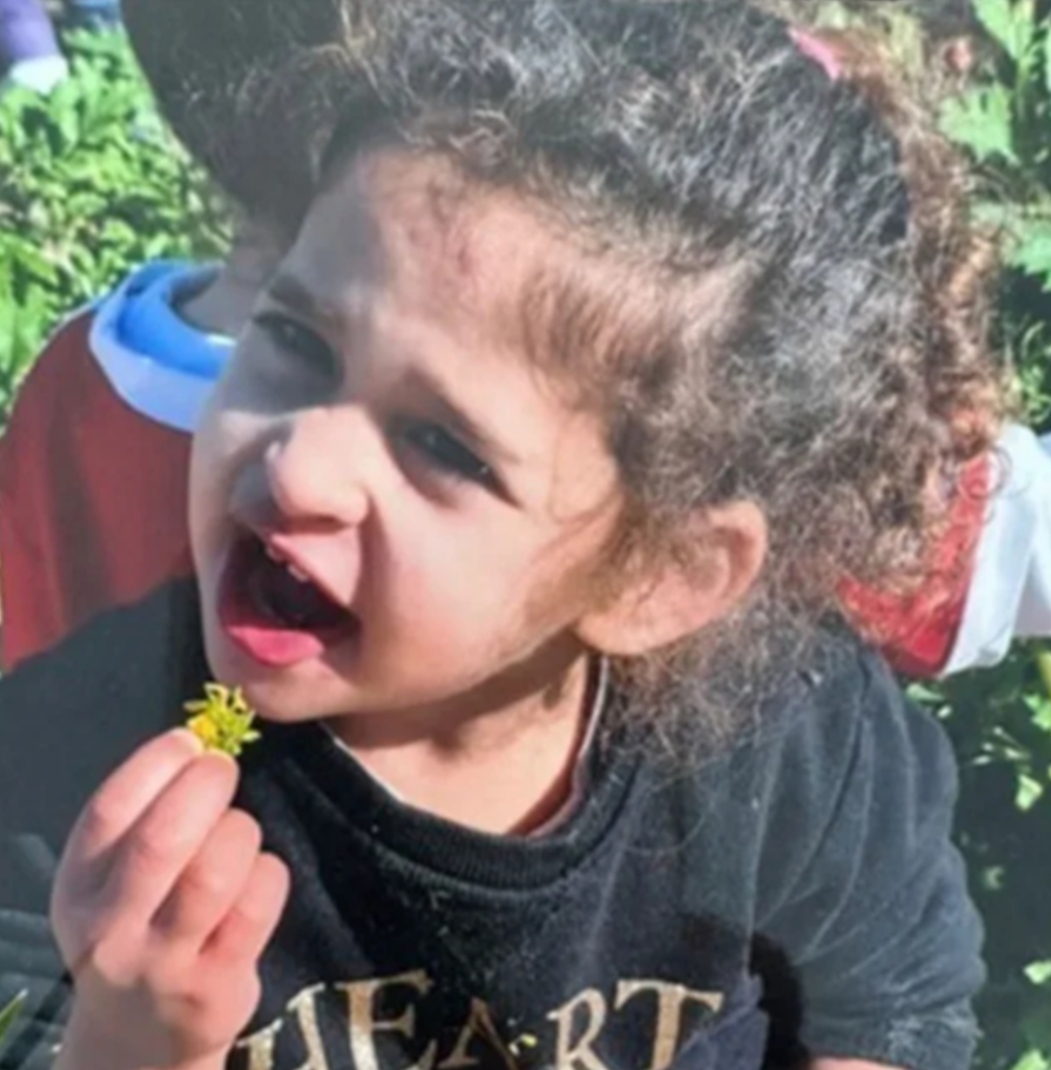
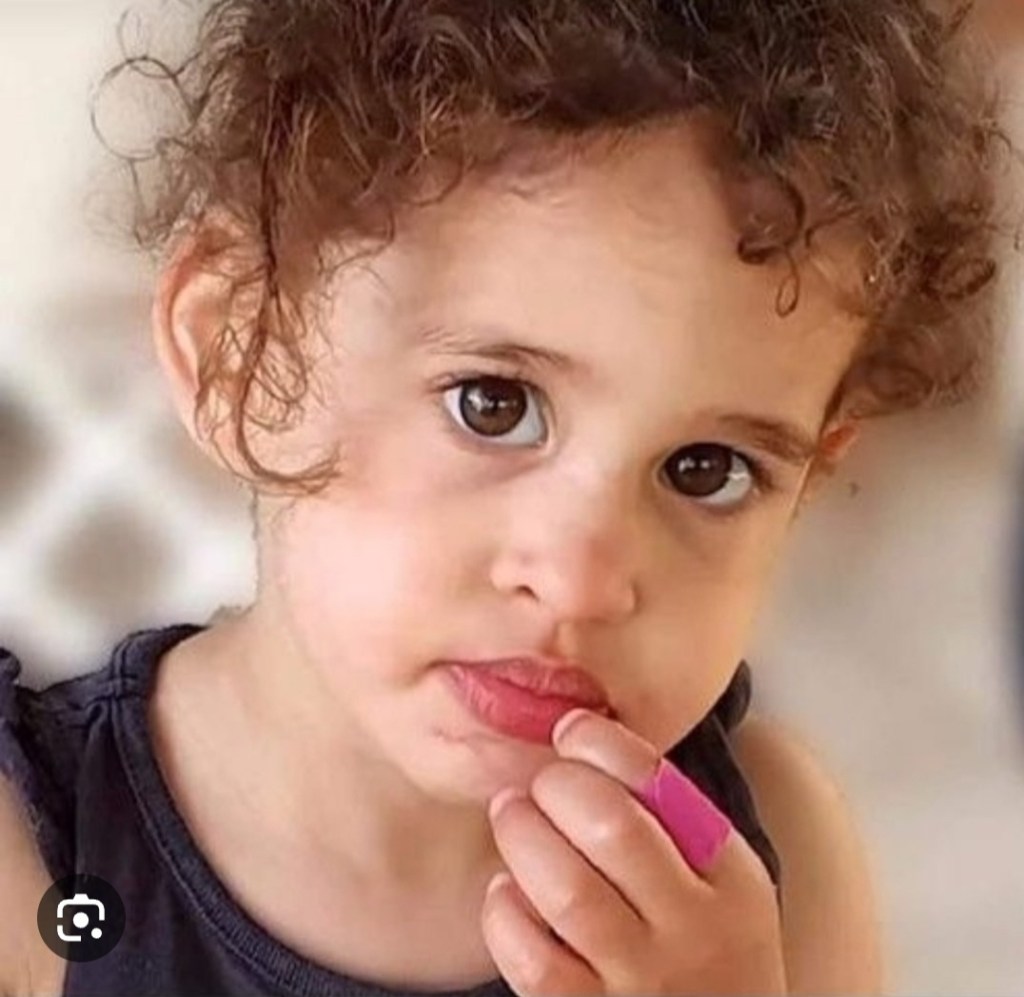
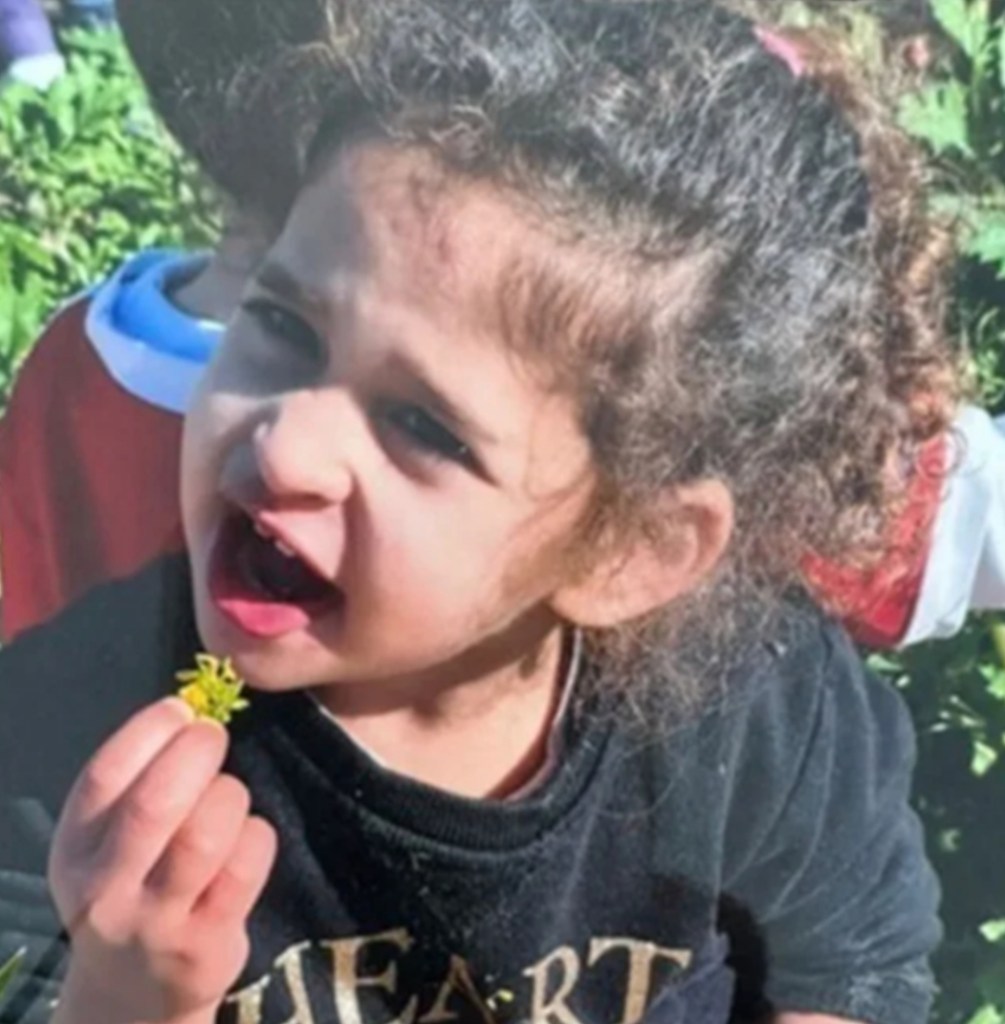
This is Avigail Idan. She’s four. Can anyone tell me what kind of threat a four year old baby poses for the two-state solution? What type of terrible power did she have that justifies executing her parents and trying to take her out, too, Voldemort style? Does Avigail hold the key to the freedom of the Palestinian people?
Of course not, and the freedom of the Palestinian people is not what concerns Hamas. The terror organization of Hamas has only one ultimate goal: the establishment of the Islamic State. That means 1. the total destruction of Israel and all Jews on the planet and 2. conquering the entire world until every single person is under radical Islamic control. Sounds fun? Not really. But because these goals are kind of hard to reach, in the mean time, they will satisfy themselves by inflicting as much death, pain and destruction on Israel as they possibly can. Go to town, boys! You can do anything you like to them. Really live out those sadistic fantasies. That’s what I imagine Yahya Sinwar said to them. Or, as I prefer to call him: You-Know-Who.
.
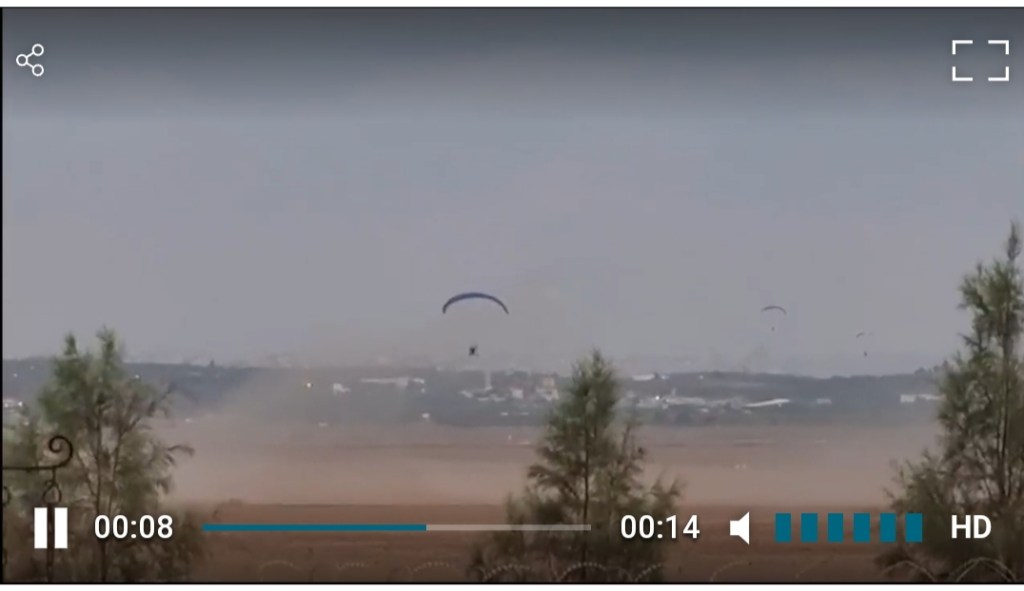
On October 7, Avigail Idan was three years old. She lived in kibbutz Kfar Aza with her father, Roee, her mother, Smadar, and her 2 siblings, Michael and Amalia. Roee Idan was a photojournalist for the news website Ynet. On the morning of October 7, he actually went outside with a camera and filmed the arrival of the terrorists in paragliders. This is a still from one of his videos, as published on Ynet:
.
At the end of the video, Roee drops the camera and starts running. He runs home, grabs his wife and children, tells them to run, to hide, that terrorists are flooding into their kibbutz. But they would not get far. Hamas gunmen broke into their home at that very moment and opened fire. Smadar collapsed. The two older children ran and hid in a closet. Roee, who was holding Avigail, was shot too, and fell to the ground, covering Avigail with his body.
The murderers must have thought they had shot Avigail too, because they left. But Avigail was unhurt. She crawled out from under her father’s body, covered in his blood. She fled in terror and ran to her neighbours’ house, the Brodutch family. Hagar Brodutch took Avigail into the safe room with her own three children, while her husband went out to fight. But when Avihai Brodutch came back to his house, he found his wife, his three children and Avigail missing. They had all been abducted to Gaza. Avigail was gone, in the hands of the monsters who murdered her family.
.
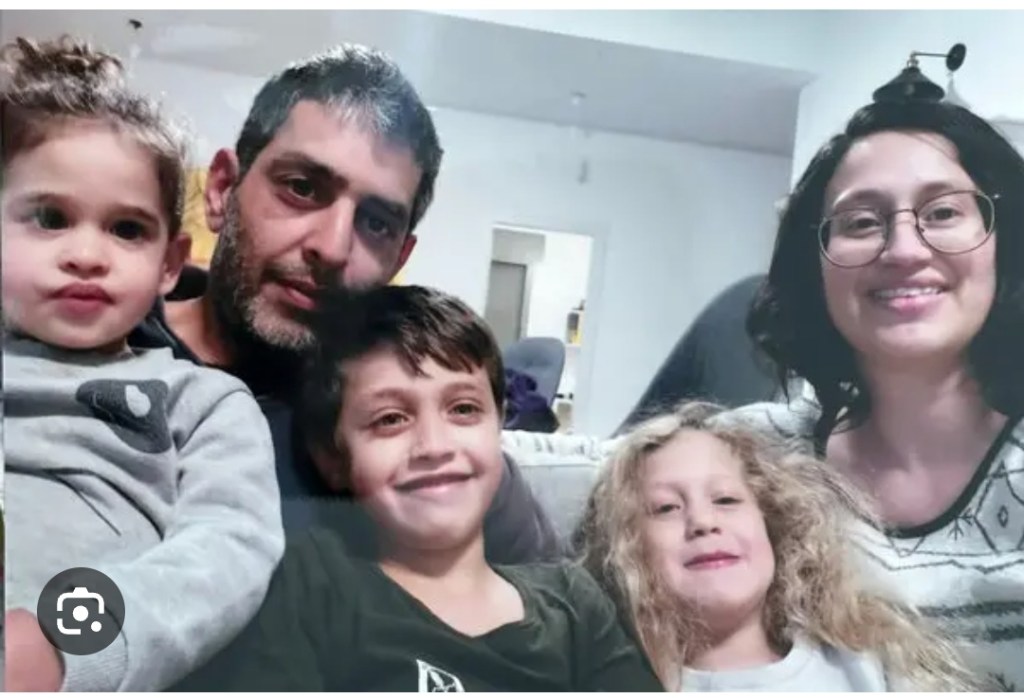
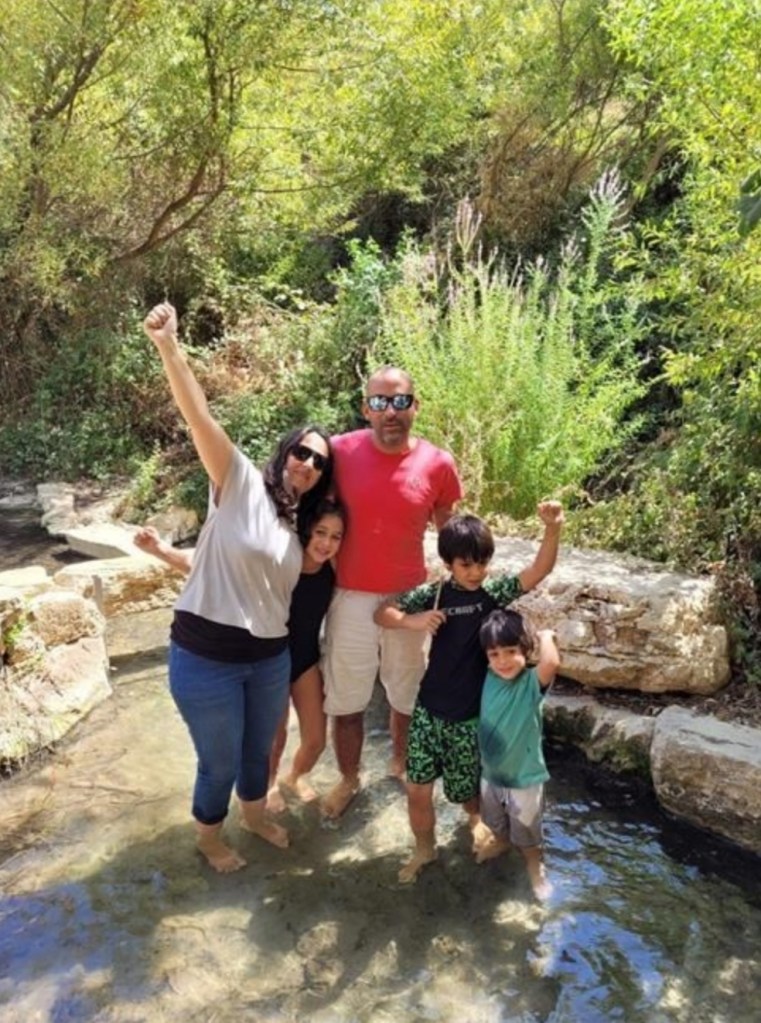
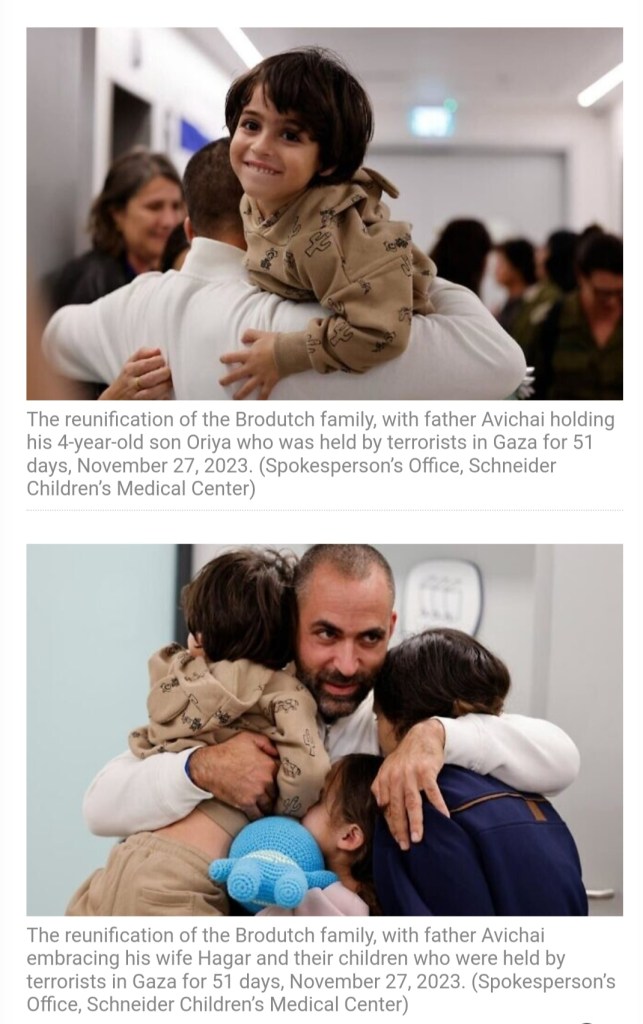
The Brodutch family: Hagar, Avihai, Ofri (10), Yuval (9) and Oriya (4).
Avigail and the Brodutches were in captivity for 50 days. Avigail turned four years old on November 24. US president Joe Biden took a specific interest in Avigail, because she has dual citizenship with ties to Arizona, and because of her status an an orphan. “What she endured is unthinkable,” he said.
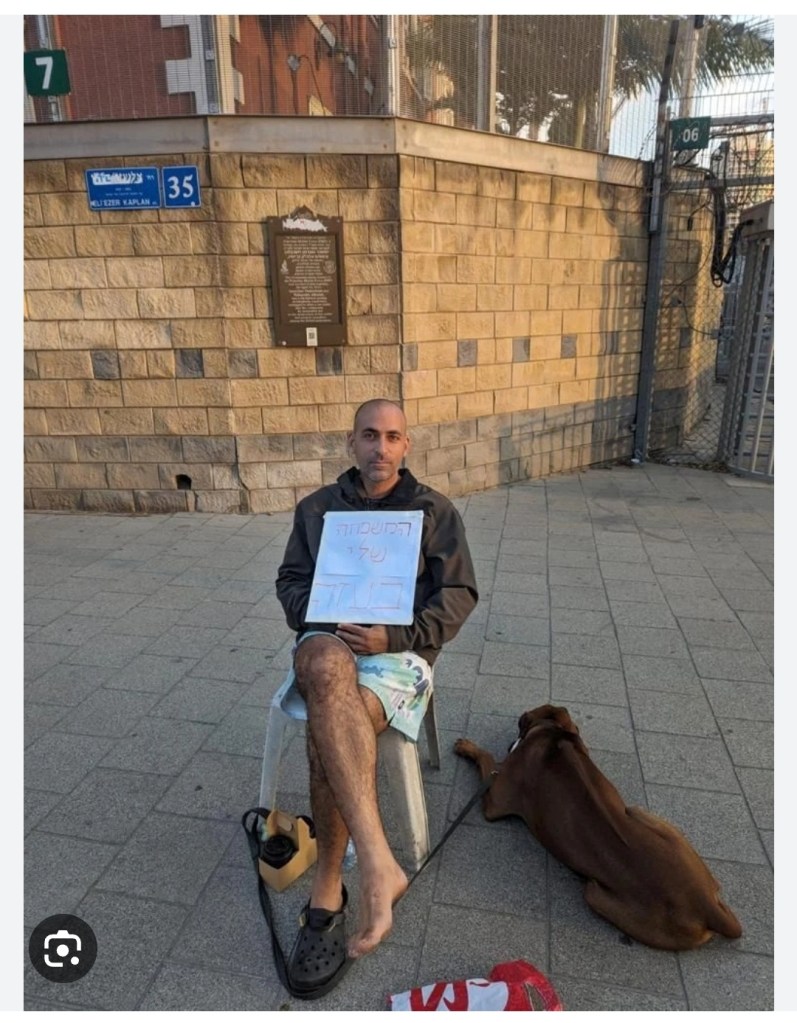
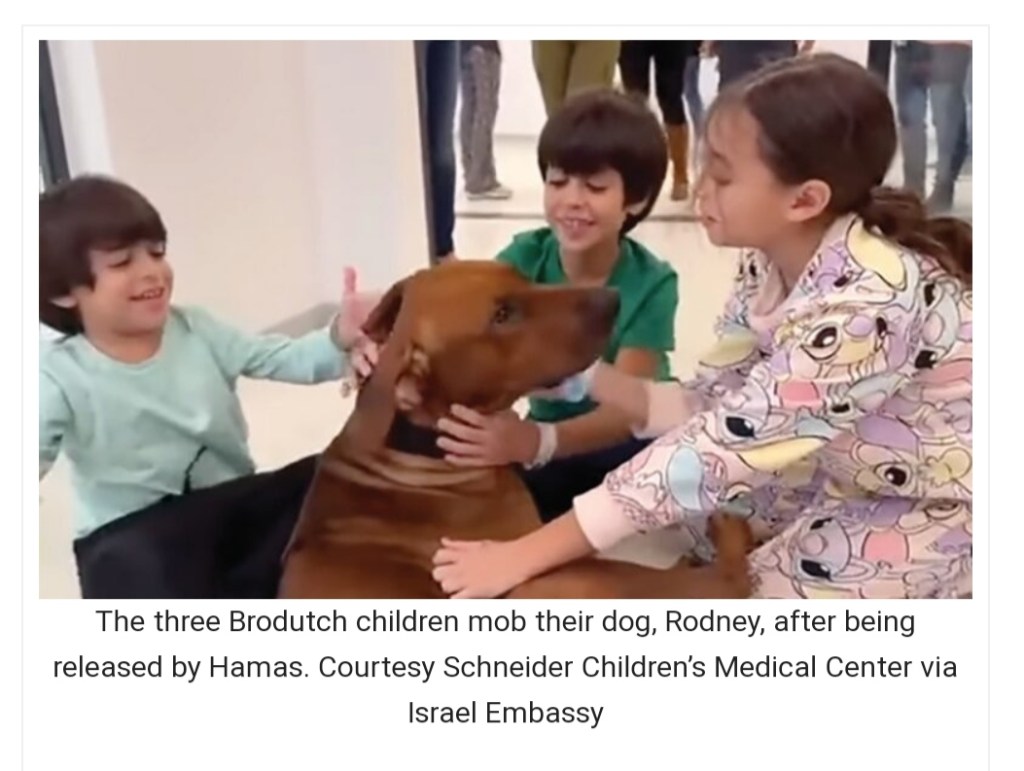
Avihai Brodutch was in a way the opposite of an orphan: a father whose family was torn away from him. He didn’t know what to do. So he went to Tel Aviv with his dog, Rodney, and sat in front of the Ministry of Defense. He waited for 50 days.
.
On November 26, the third day of the ceasefire, Avigail and the Brodutches were finally released. The reunion of Hagar and the children with their father and their dog was one of the most healing, wholesome things I have ever seen. Their joy made the whole country smile through their tears.
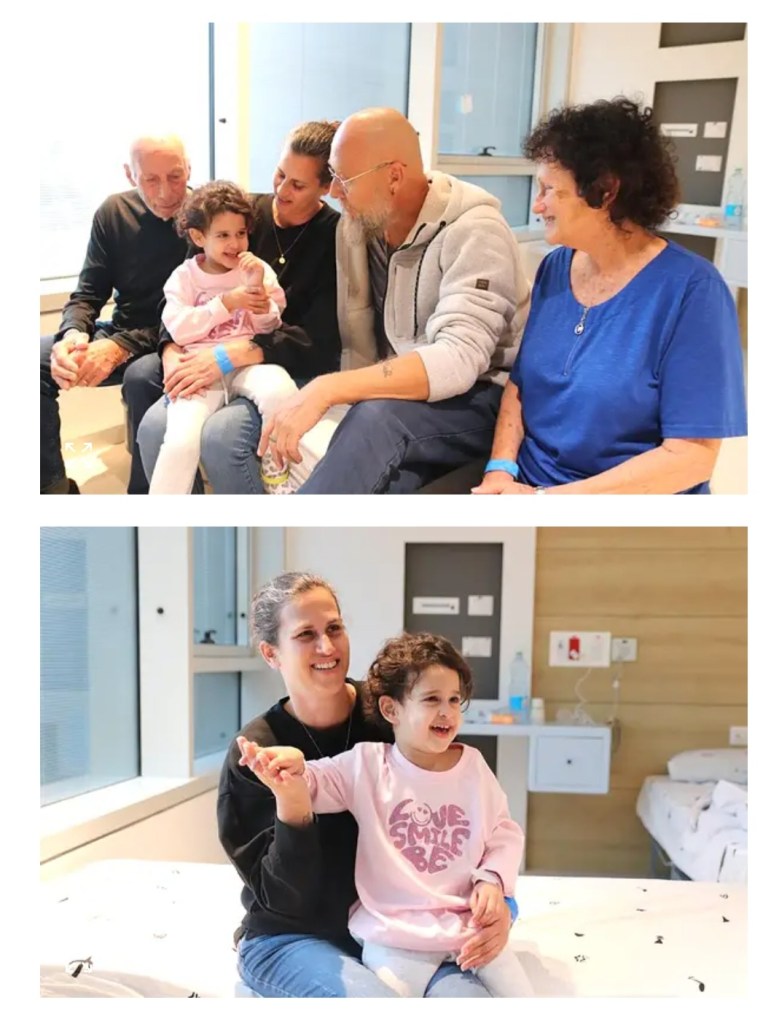
But Avigail Idan had no parents to come back to. She was welcomed by her extended family, her grandparents and her aunt and uncle. I was touched to the heart to see her smile, holding the hand of her aunt, who looks remarkably like her.
Her grandparents and aunt are now taking care of her and her siblings. They are all traumatized beyond anything we could ever imagine. How can young children even understand such horror? I can’t understand it either, and I’m 49.
I can only hope that the children and the whole family will receive all the help they need and will eventually be able to heal from this. We love you, Abigail. You are the Girl Who Lived.
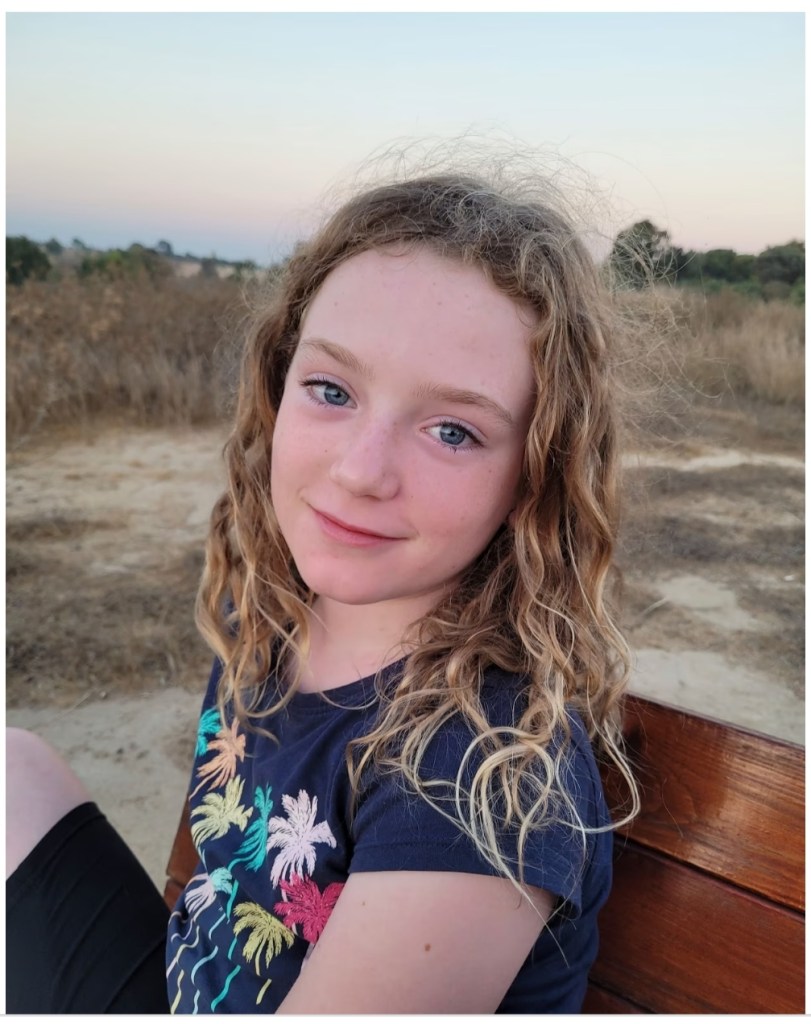
This is the story of Emily Hand. It will shatter your heart and then put it back together again. Partly, at least. Emily saw and experienced things no child should ever have to go through. She wasn’t the only one. But I feel a special connection to her and her father, because they are so much like me.
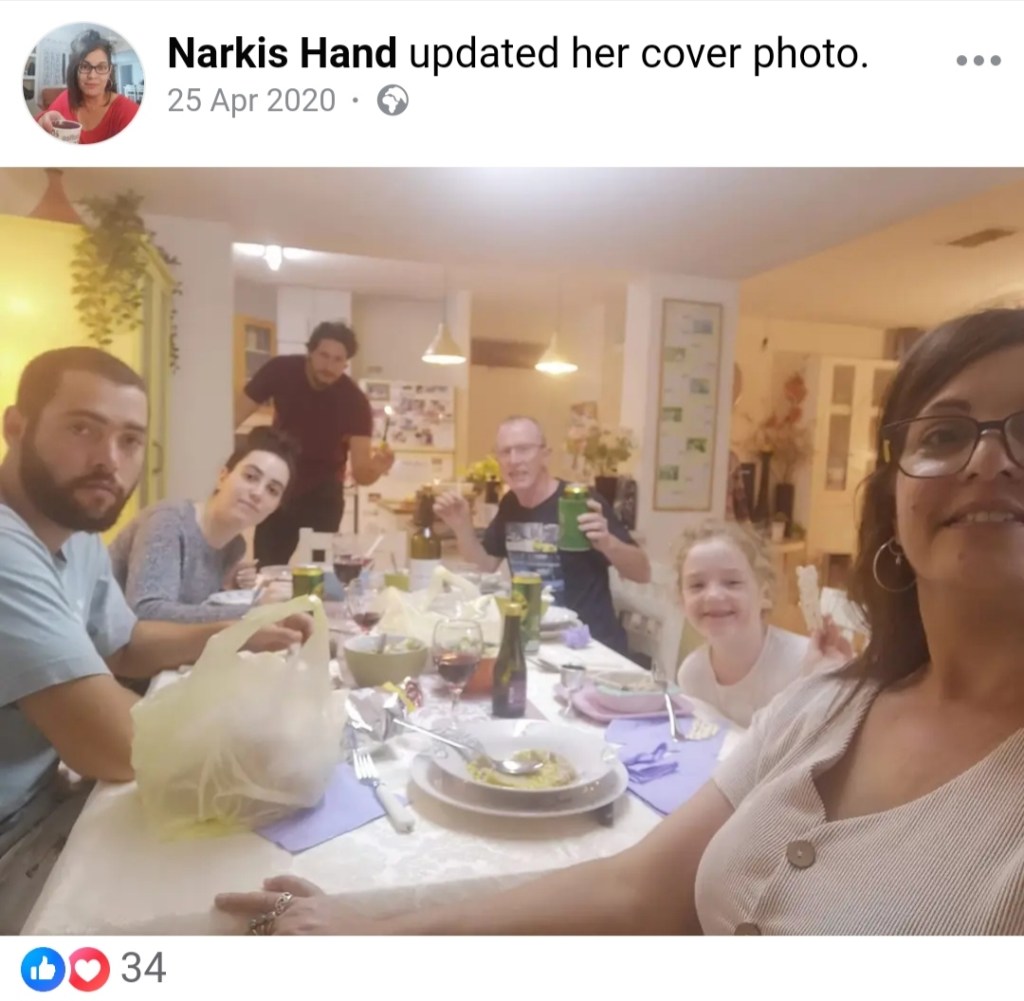
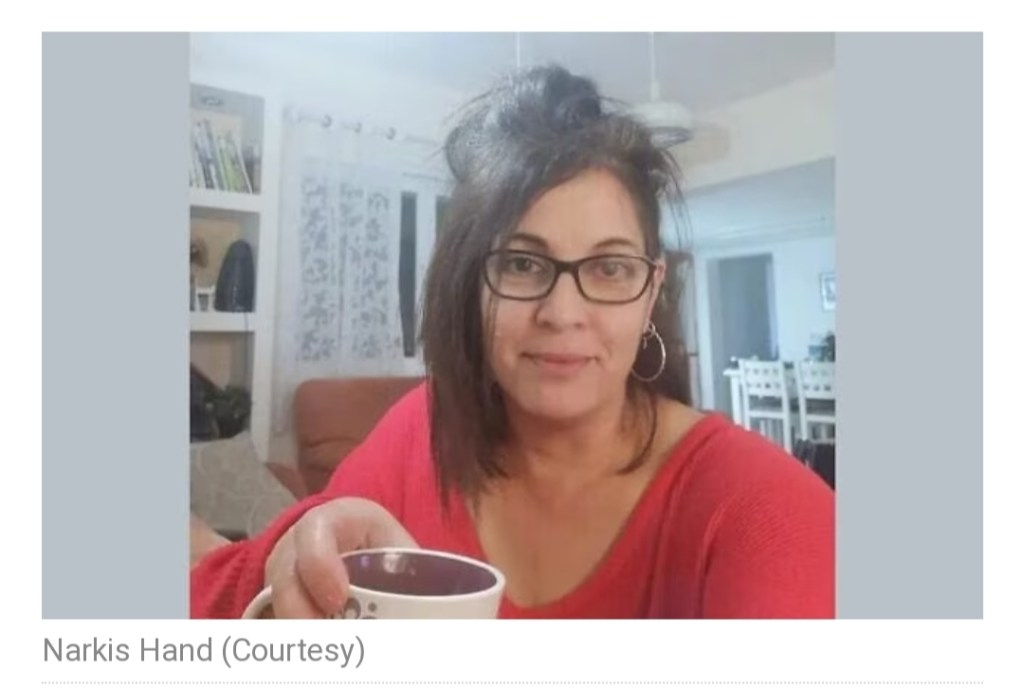
Emily is nine years old. She is the daughter of Thomas Hand, who is Irish and came to Israel as a kibbutz volunteer. Like I did. Thomas volunteered on kibbutz Be’eri and met a woman called Narkis, who he married and had two children with: Eden and Natali. The family lived in Be’eri. Later in life, when the children were teenagers, Thomas and Narkis divorced. Thomas met Liat Korenberg and they had a daughter together: Emily Tony Korenberg Hand. Sadly, Liat died of cancer when Emily was only two years old. So Emily lived alone with her father in kibbutz Be’eri. But she also spent a lot of time with Thomas’ ex-wife, Narkis, and her half-siblings, Eden and Natali. Narkis was like a mother to Emily. The family might have been unusual, but they were happy and close. This beautiful picture from Narkis’ facebook page shows that. In the photo, Narkis, Eden, Natali, Thomas and Emily are all sitting around the dinner table together. I can’t imagine a better way to be co-parents.
.
On October 7, 2023, Emily was at a sleepover at the house of her friend, Hila Rotem. At 6 in the morning, the terrorists reached the kibbutz. In interviews, Emily’s father describes locking himself into the safe room in his house, hearing the terrorists outside, and exchanging text messages with his ex-wife. He describes the terror and helplessness he felt, knowing he couldn’t protect his daughter. If he had gone outside, he would have been murdered, which would not help Emily.
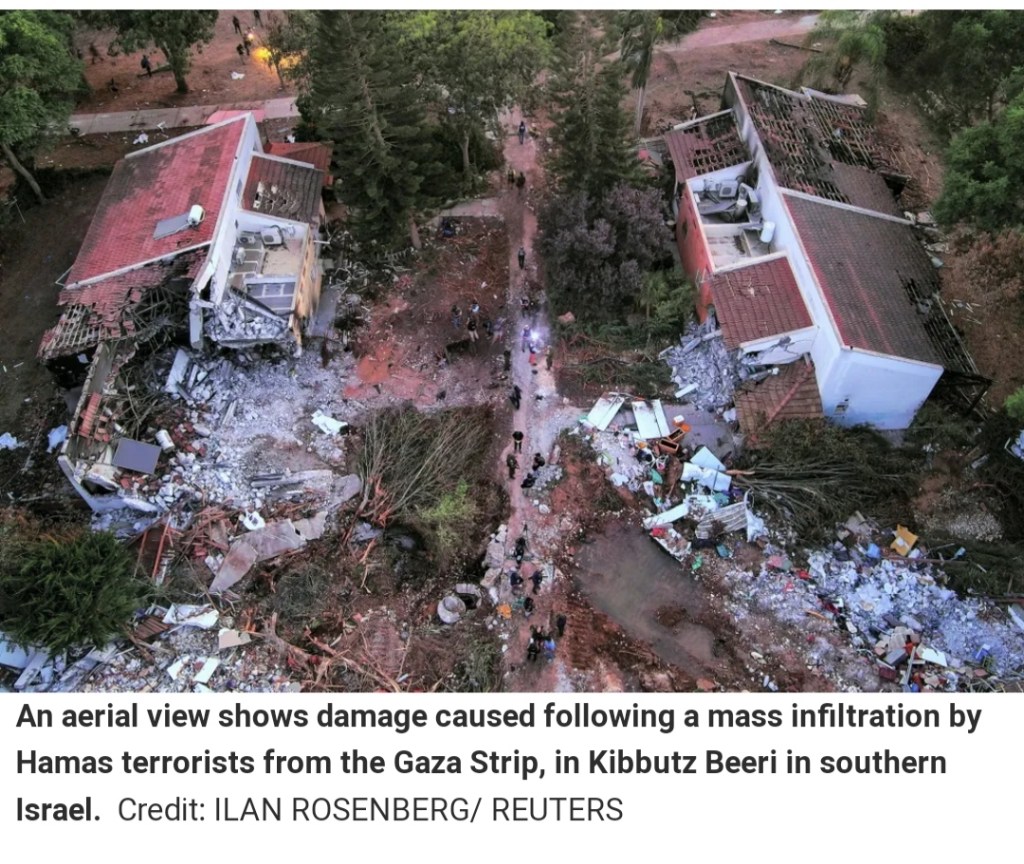
When at the end of the day, finally, the IDF regained control over the area, kibbutz Be’eri was a smoking, bloodstained ruin. Thomas had survived. But Emily was gone. So were her friend Hila and Hila’s mother, Raaya. And Narkis Hand had been murdered in her house. The happy blended family had been torn apart, half of it gone. The pain this kibbutz went through is indescribable. More than 120 people were brutally murdered and another 29 taken hostage.
Thomas was told that Emily was dead, that her body had been found. His first reaction was relief. He thought that being abducted to Gaza would have been a fate worse than death. He said in the Daily Mail: “They’d have no food. They’d have no water. She’d be in a dark room filled with Christ knows how many people, and terrified every minute, hour, day, and possibly years to come.”
But the initial report was wrong. Emily’s remains were not found, and later she was seen in security footage, being loaded into the bed of a terrorist truck with Hila and Raaya Rotem, and driven away. Thomas’ worst fear had come true: Emily was one of the hostages. But at the same time, he had been given hope again. Emily might come back home.
Time passed. Thomas and his adult children campaigned for the release of the hostages. They flew to London and Ireland and gave interviews. Emily turned 9 years old in the tunnels of Hamas, but she had no idea it was her birthday.
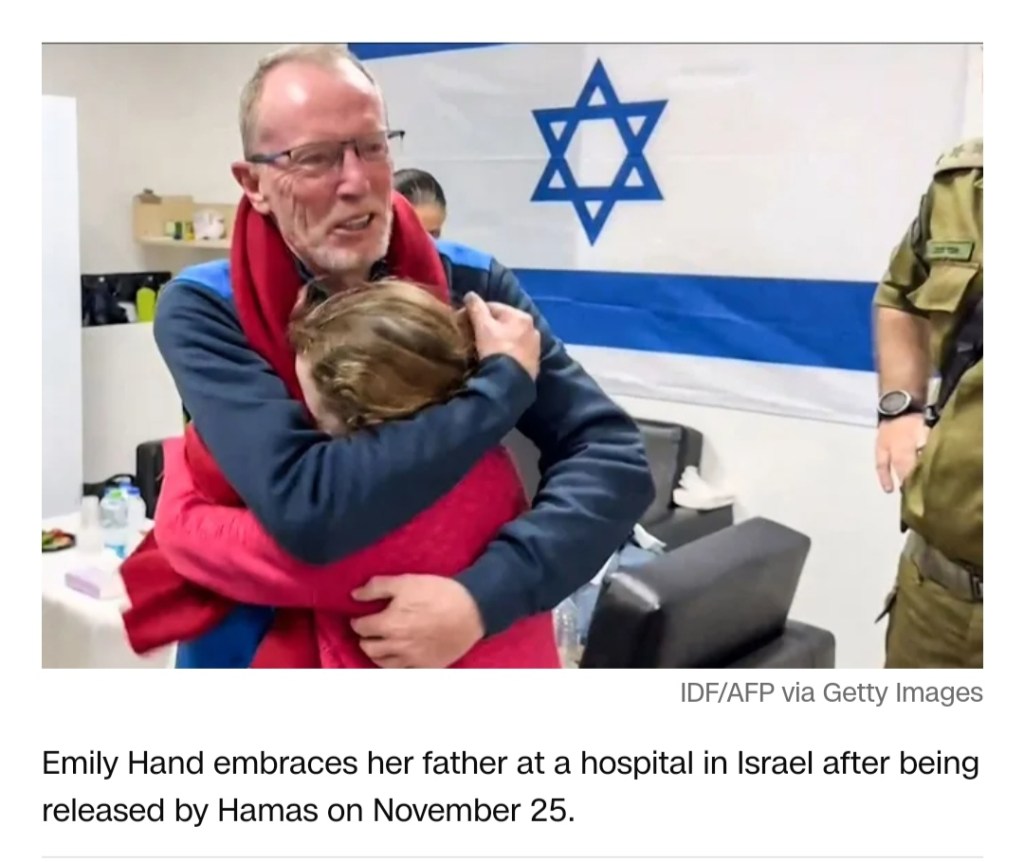
Then, after eight long weeks, a ceasefire was negotiated and an agreement was reached for some of the hostages to be freed. Emily was on the list but didn’t come home the first day. But finally, on November 25, after 49 days of captivity, Emily Hand was released into the embrace of her father.
.
I will never forget sitting in front of the tv, every evening of the ceasefire, desperately tired but refusing to go to bed until I knew who was coming home that day, and until I had seen them escorted into Israel by the Red Cross, and reunited with their family. The tears I cried every evening, happy tears but also tears of sadness, for those who didn’t come home, and those who would never come back again. Seeing Emily run to her father, and seeing Thomas’ smile, was everything. It healed something in me.
Emily was released together with her friend, Hila Rotem. The girls had clung together in the long weeks of captivity, under the care of Hila’s mother, Raaya. Raaya was not released that day, but fortunately, a few days later, she was. There was no rhyme or reason for that, apart from Hamas’ psychological warfare tactics – breaking up families and putting them through mental anguish is their favourite thing to do. Apart from causing death and destruction. They are Death Eaters.
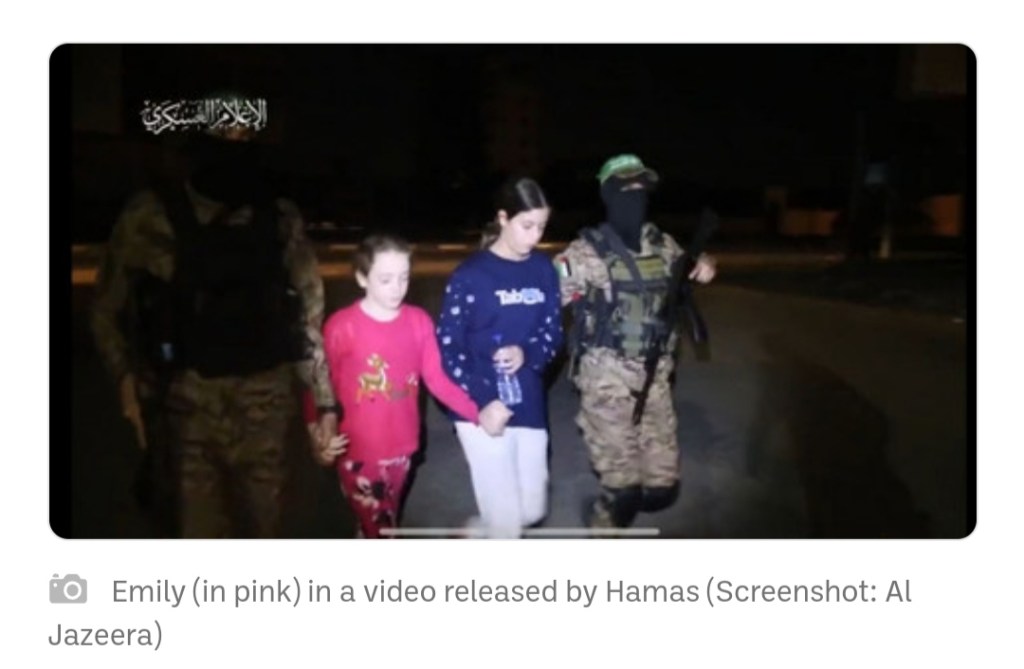
This picture shows Emily and Hila walking hand in hand to the Red Cross ambulance, flanked by armed and hooded terrorists.
Emily had gone through hell and come back from it. But her pain is not over. Far from it. First, she had to be told that Narkis Hand, her second mother, was dead.
Narkis Hand was 54 years old when she was killed. She was described as a kind and generous person and a wonderful mother. She loved dancing and travelling and was the centre of her blended family. She leaves a gaping hole in her community.
.
Since Emily has been back, she has told her family bits and pieces about her experience in the tunnels of Gaza – a place she calls “the box”. There was no sense of time in the darkness. She thought she had been there for a year. She thought her father had been kidnapped as well and was held somewhere else. She had lost weight and was very pale. And she whispered. The children had been threatened and told to be quiet, so she only spoke in whispers. She had learned how to say “be quiet!” in Arabic. She cries at night, for her stepmother, for her friends, for the trauma she went through. But she is alive, she is safe, and she will be ok again.
The Irish Prime Minister described Emily as a child “lost and found” – an unfortunate choice of words, that doesn’t even begin to describe the reality of what Emily went through. She was stolen in the middle of a massacre, abducted and held hostage underground for 49 days, then finally released under immense pressure. This could have been me, my child, or any of my friends. By pure chance of geography, it was not. But Emily and Thomas are forever etched onto my heart.
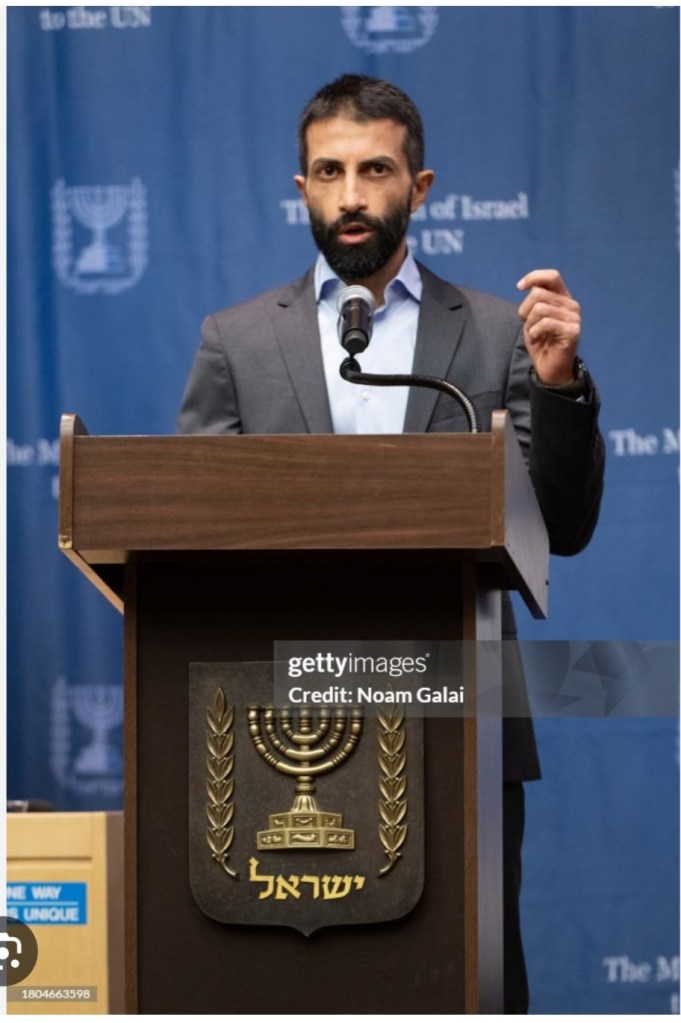
I want you to meet Mosab Hassan Yousef, also known as “The Green Prince”. He is the son of one of the founders of Hamas. His story is incredible and what he has to say is hugely important. He has been very vocal in denouncing Hamas and supporting Israel for years. To me, he is a fascinating person. His sharp intellect and his courage are remarkable, and we can learn so much from his insights. If we choose to listen, and not turn the other way, because we don’t like the picture he is painting.
.
Mosab Hassan Yousef was born in the West Bank in 1978. While growing up, his ambition was to become a “freedom fighter”, as so many Palestinian children’s was. But his life went differently. After witnessing the cruelty, brutality and terror that Hamas subjected their OWN people to, he started thinking differently. He became an informant for the Israeli intelligence.
Over the years, he has prevented countless suicide and terror attacks, earning himself the nickname “the Green Prince” (the colour of the Palestinian flag and his status as the son of a sheikh). Many of us owe him our lives and we don’t even know it. Jews, Israeli Arabs, foreign workers, tourists – everyone. Hamas does not distinguish. Their goal is to eradicate the state of Israel, kill every single Jew on the planet and then establish the Islamic State. They will use any means necessary, including using their own people as a human shield.
We know this because Yousef, and other people like him, told us, again and again. Yousef wrote a book, “Son of Hamas”, and a documentary was made about him: “The Green Prince”. Now, he is raising his voice again to tell the international community what we already know. He is putting himself in extreme danger to say these things. Hamas wants his blood like they want ours. He now lives in the USA, for his own safety.
This is an interview with Mosab Hassan Yousef by Piers Morgan, on October 26, 2023.
.
.
It’s not just Youssef’s sharpness and his bravery that impress me. It is his humanity. He is driven by his love for the Palestinian people. He wants to see them free and in peace. Free from Hamas’ reign of terror. He wants to say his truth, and say it loudly. Listen to him.
.
.
I agree with him. Hamas cannot be forgiven for what they did to us on October 7. We can never forget, and never forgive. They must be destroyed. Not only for us, but for the entire world. As Mosab Hassan Yousef says: “If Israel fails in Gaza, all of us will be next.”
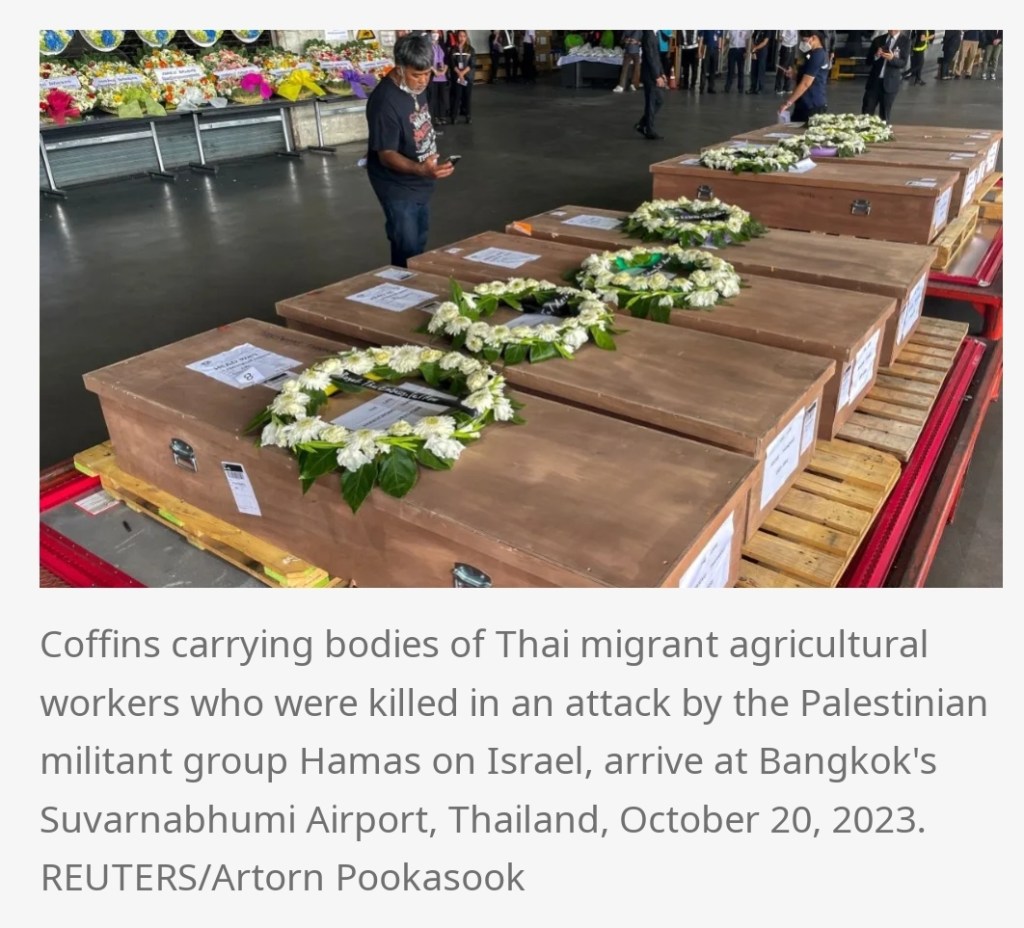
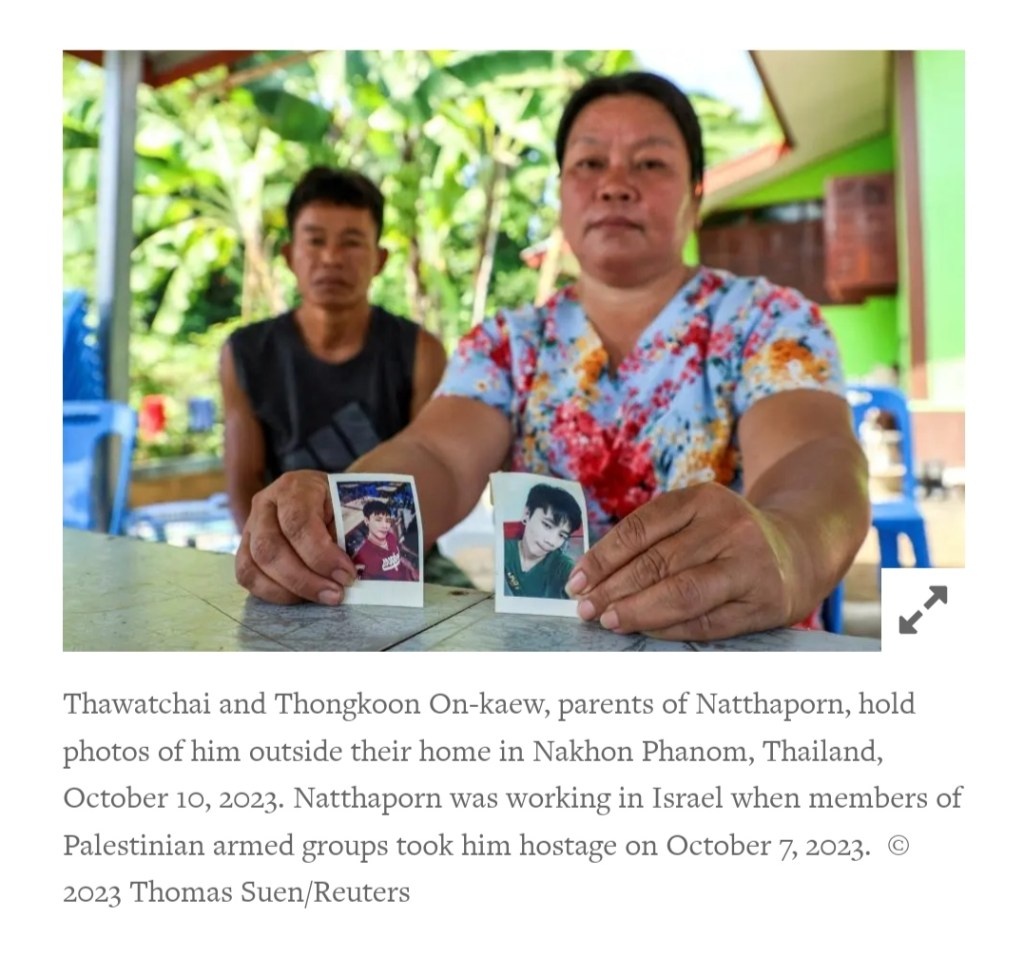
On October 7, 2023, Hamas murdered Jews, Israeli Arabs and non-Jewish foreign workers alike. Of the around 1200 murdered people (the exact number is still not clear), 39 were Thai. A further 26 Thai people were taken hostage and 19 were injured. Four Filipino nationals were murdered and two were abducted. Two Tanzanians and ten Nepali students were killed and one taken hostage. Four Chinese people died in the attack and two are still missing.
Why were all these Asian and African people in Israel? Some of them are foreign students of agriculture, who come to Israel for a work experience in a kibbutz, like the Nepali and Tanzanians. The Filipinos mostly work in care, as aides for elderly and disabled people.
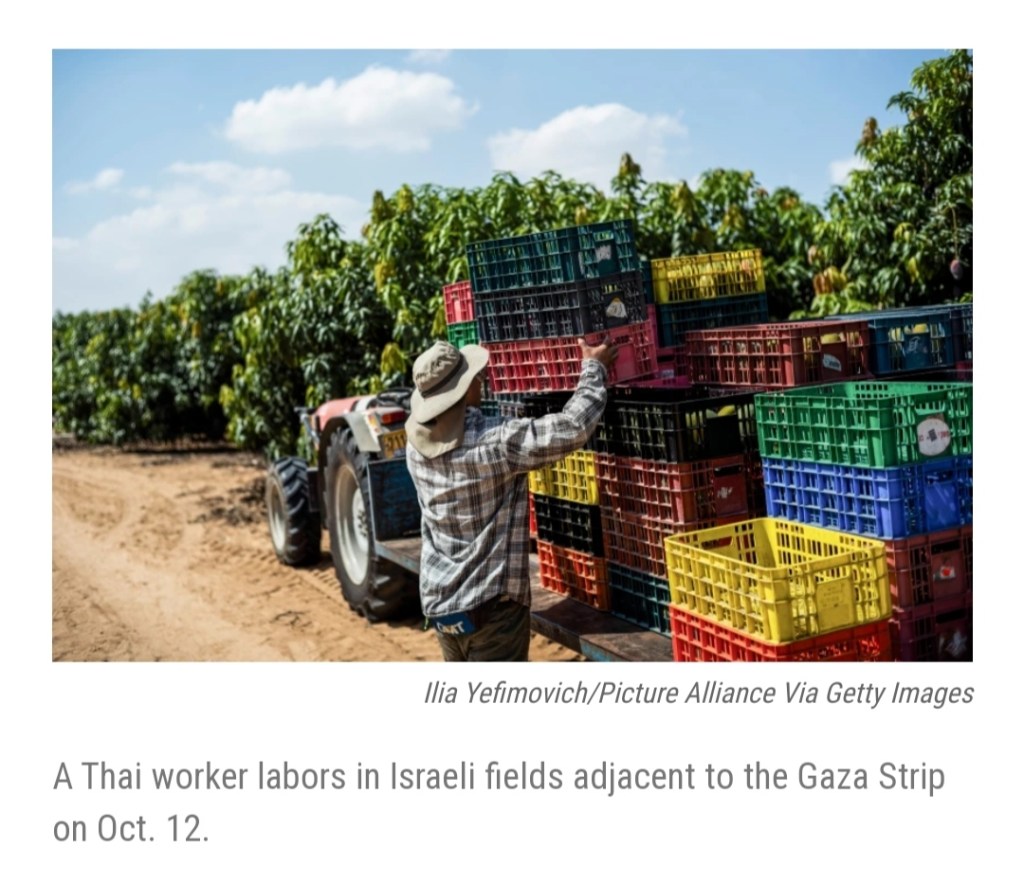
And the Thai and Chinese people are farm and construction workers. Israel’s agriculture relies heavily on foreign workers. There is simply too much work and there are not enough people who are prepared to do it. For many Thai people, working in Israel is the only way to make enough money to take care of their families. For them, the salary of a farm worker is a lot of money.
There are an estimated 30,000 Thai workers in Israel. Most of them are male and work in agriculture. In my kibbutz, there are around 30. They work in the fields and orchards and in the dairy farm. You could say that there is a Thai subculture in Israel. Many of them live in housing away from the kibbutz, in the fields, where they have some land to grow vegetables, keep chickens and other small animals. There are Thai shops and supermarket vans that cater to their needs, supplying them with Thai groceries, so they can make the food they are used to.
Is everything perfect? Absolutely not. I do think that in most kibbutzim, the Thais are valued highly and treated well. But some are exploited, neglected or even abused. Their living quarters everywhere are not even close to Israeli standards. They often have no air-conditioning and no adequate bomb shelter. There are agencies and laws that are supposed to protect the rights of foreign workers, but in reality, there isn’t enough supervision and the Thais often don’t even know where to turn to if things are not ok. There is a huge cultural divide between them and the Israelis. They usually do not speak any English or Hebrew when they arrive here, so communication is very difficult. Most of them pick up words and phrases over time, but a real conversation is often not possible. I speak to them about my chickens sometimes. They call the roosters “men” and the hens “ladies”. They make me smile. They seem like very gentle, friendly, quiet people. (Although I know they have absolutely no problem killing and eating their own chickens.)
Which is why the fate of the Thai people from the attacked kibbutzim on October 7 really broke my heart. They have nothing whatsoever to do with the conflict between Israel and Gaza. Many of them didn’t even know about it. They are Buddhists, not Jews. All they did was come to Israel to work and earn money to support their families. The way they were cruelly slaughtered along with everyone else, shows again that Hamas broke into Israel that day with no other goal than to kill anyone they saw and to inflict as much pain as possible. Anyone who stood in their way was mowed down.
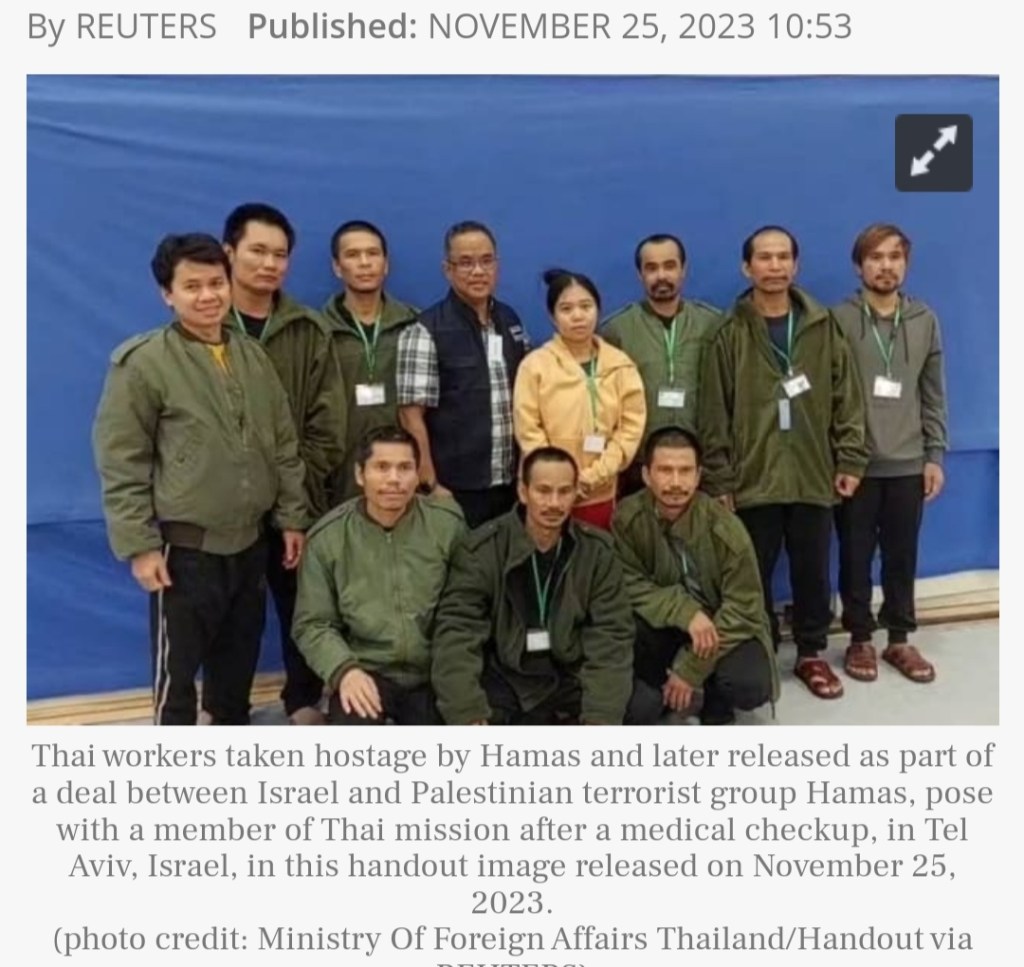
Fortunately, the Thai government did not take this lying down. Somehow, they managed to get Hamas to release their Thai hostages. I have no idea what they threatened or bribed them with. During the ceasefire, from November 24 to 30, nineteen Thai hostages were released. All of them were men, except for one: Nathavaree Mulkan.
In this photo, Nathavaree Mulkan stands in the middle of all the men, in a yellow jacket. Her partner, Bunthom Phankong, is standing at the far right. They were the subjects of a strange story that circulated in the first weeks of the war, but which was eventually debunked. The story went that Mulkan was nine months pregnant when she was abducted, and that she had given birth in the dungeons of Hamas. Something worse people could hardly imagine, and outrage exploded. The story spread like wildfire over the internet. But it turned out not to be true. Mulkan was released with no baby and no sign of having given birth. We all collectively heaved a sigh of relief. I’m not sure how this story started, it is said that Sarah Netanyahu wrote a letter to Jill Biden, claiming that one of the hostages had given birth. God knows where she got that from. And yes, I will talk about Netanyahu in another post. We have been calling for his resignation for a very long time.
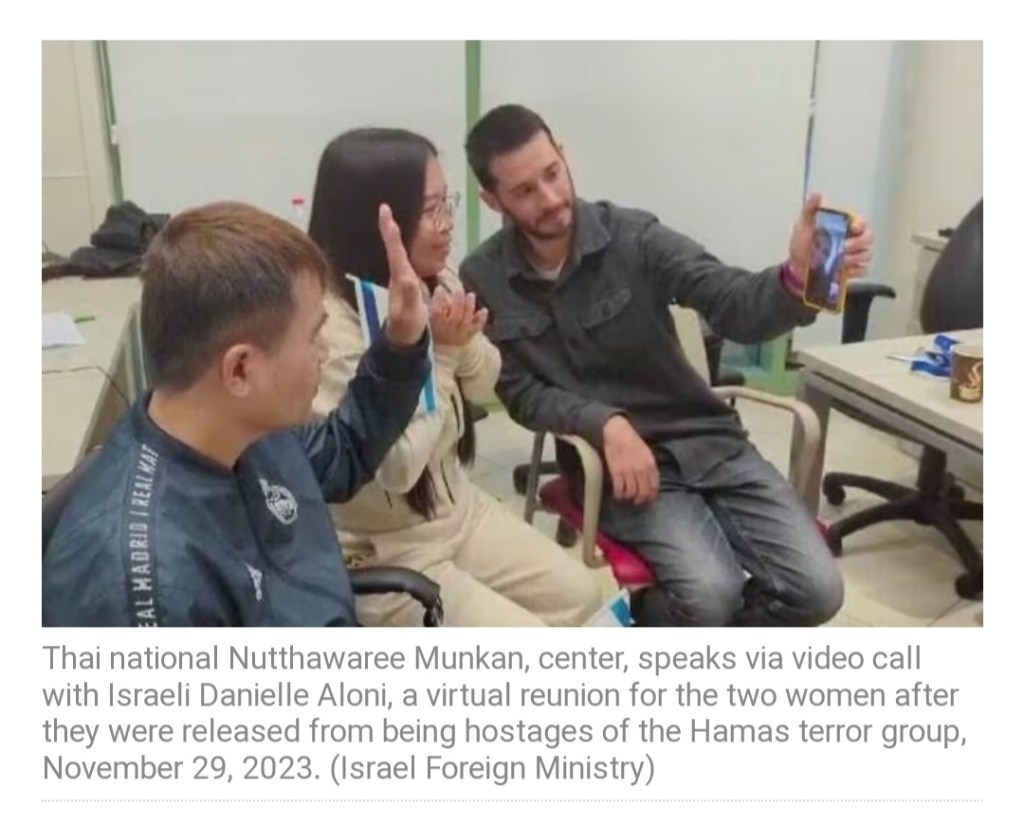
In a heartwarming twist, Nathavaree Mulkan made friends with an Israeli child and mother during their time in the tunnels of Gaza. Emilia (aged 5) and her mother Danielle Aloni became close to Mulkan and her partner. They taught each other words and songs in their languages and promised to visit each other. “We are family now,” Danielle said in a video call, after they were all released.
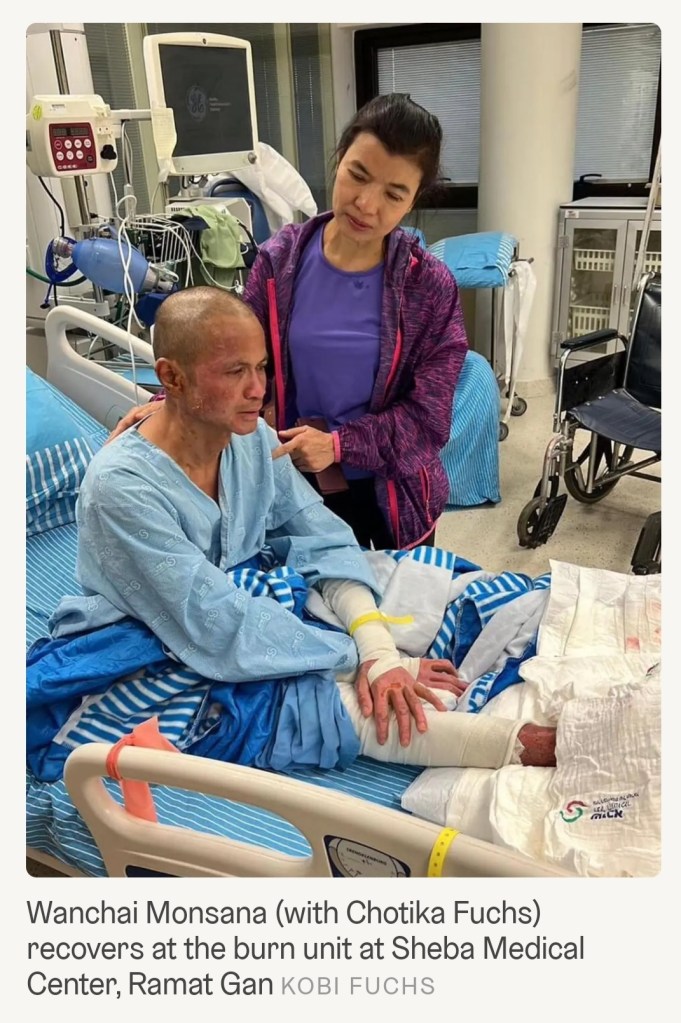
There is another story I want to tell. It’s the story of Wanchai Monsana, a Thai man who miraculously survived the massacre. Monsana is 44 years old, has been in Israel for four years and does not know any Hebrew or English. On October 7, he was burned severely but managed to escape the slaughter. He ran, and ran, wounded and exhausted, for two days, until he arrived in the city Beersheva and was taken to the Soroka hospital. He was immediately treated for his injuries. He had sustained burns to 50% of his body, was in septic shock and close to death. He was anaesthesized, intubated and underwent skin grafts and partial amputation of his right foot. It is unbelievable how he could have run so far so severely wounded. Incredibly, he survived. But no one could speak to him. They didn’t know who he was or who he used to work for. All the people he knew, his boss and his coworkers, had all been murdered. He was alone and had nothing.
Until Chotika Fuchs, a Thai woman married to an Israeli man, heard about the nameless Thai man in the hospital of Beer Sheva. She went to visit him and spoke to him. She and her husband, Kobi, spread his incredible story and asked the Israeli public to help him. And they did. So many people came to visit him, bearing gifts and money, that the hospital had to restrict the visits so Monsana could rest. Both Israelis and Thais came to see him. They brought him a new phone, clothes and Thai food. Chotika and Kobi Fuchs have been visiting Monsana frequently and organized a fundraiser for him. His story has a happy ending – his insurance pays for all his hospital costs and the Israeli government will give him benefits and damage payments for the rest of his life. This is standard and is done for all survivors of terror attacks in Israel. Monsana will return home to Thailand and will be with his family. He won’t have to leave them again, just to make a living. But at what cost? He was severely damaged, both physically and mentally. I just hope his scars will heal over time and he can be happy again. He deserves it ten times over.
.
After the end of the ceasefire, 7 Thai nationals are still unaccounted for. We don’t know if they are hostages, if they have been murdered in captivity or if they were killed on October 7 and their bodies have not been identified. Every option is terrible. The families of all these young men are in pain and mourning. The released hostages are physically ok, but mentally deeply traumatized.
The Thai government has evacuated a lot of Thai workers from Israel. Some of them are planning to go back, but there is a gaping hole in the workforce of the agriculture of Israel, which is now being filled by Israeli volunteers. But this can’t go on forever, and already, workers from other countries are being recruited to come work in Israel. The only thing I can hope for them, and for all of us (and for Gaza, too), is that after this war, Hamas will no longer exist.
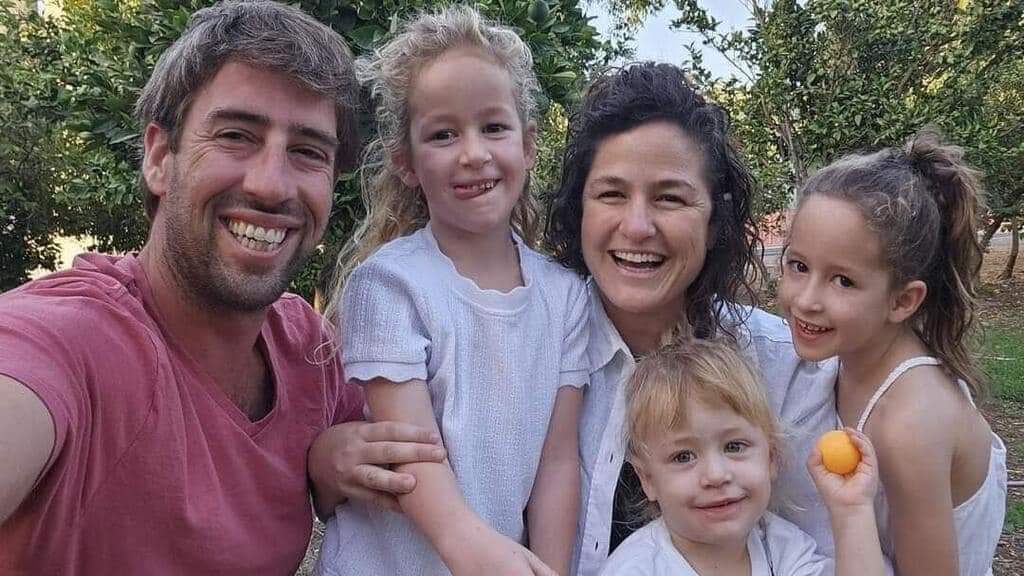
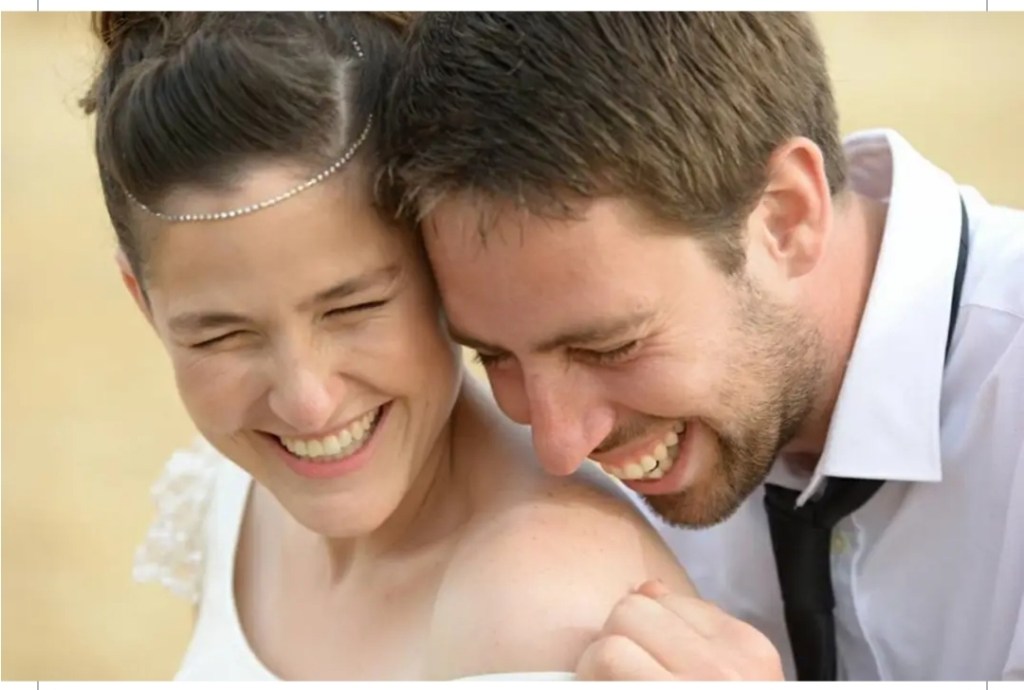
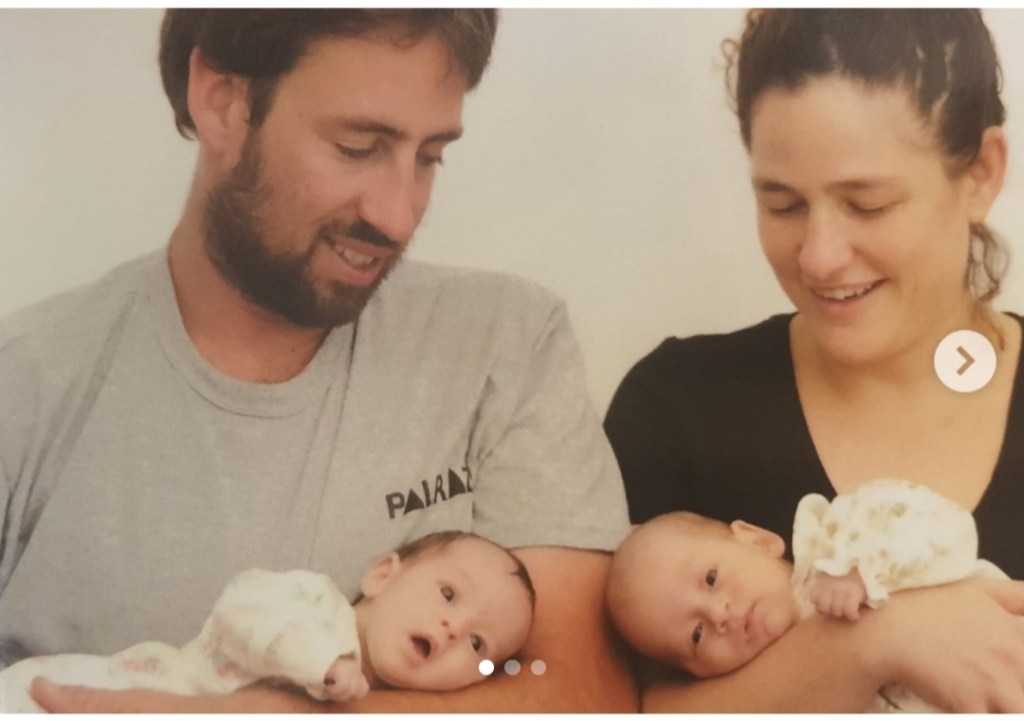
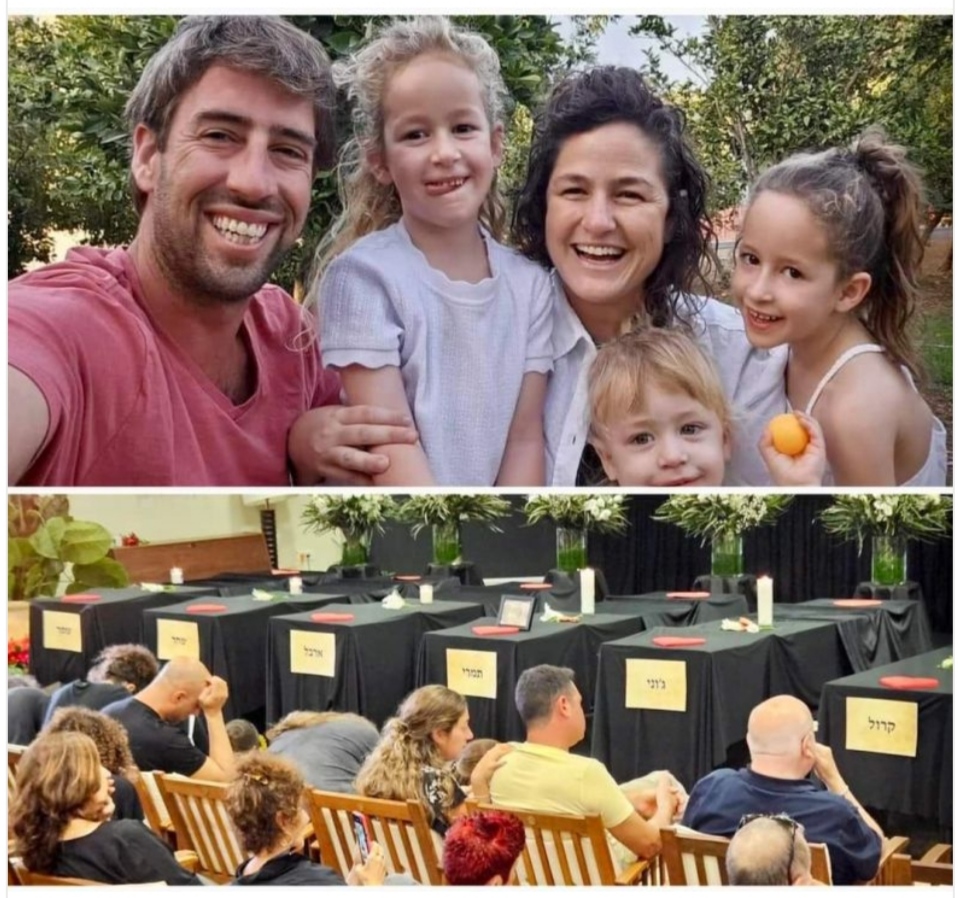
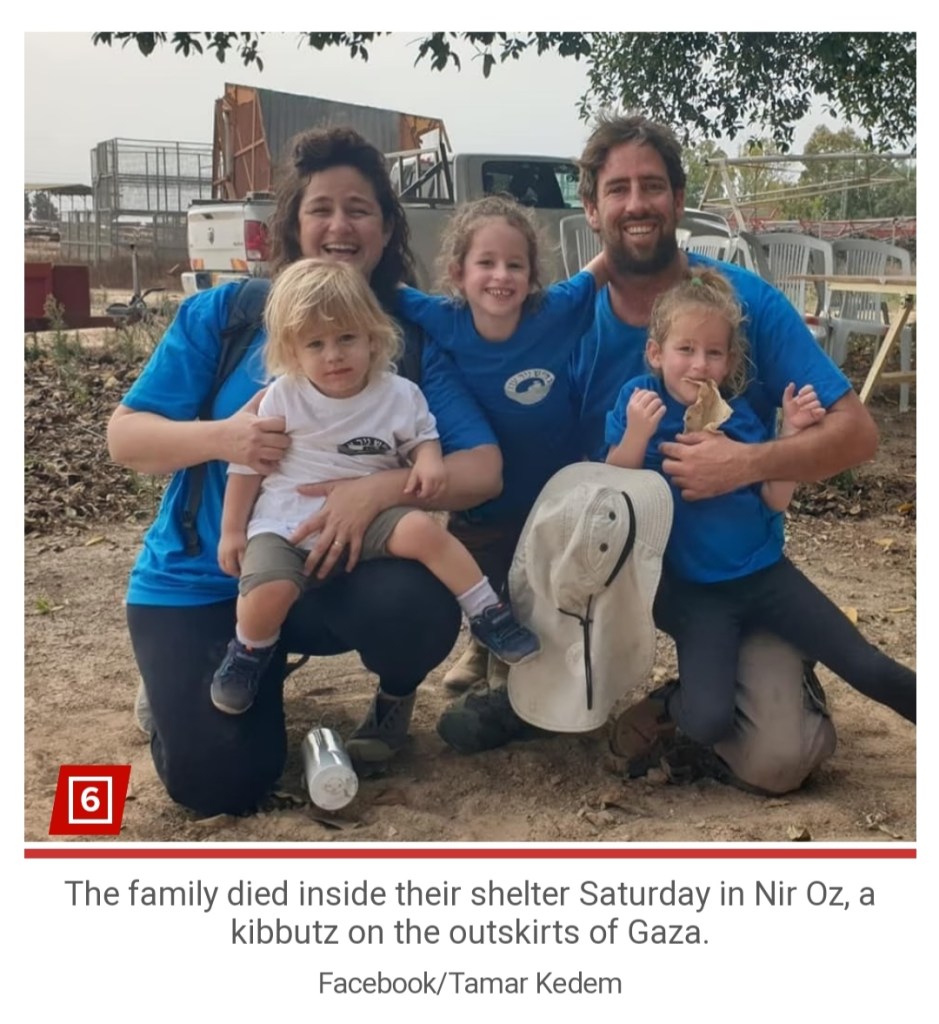
This is the Siman Tov family. Consisting of Yonatan (Johnny) Siman Tov, Tamar Kedem-Siman Tov, 6 year old twins Shahar and Arbel, and 4 year old Omer. A beautiful, happy, laughing family of five from Kibbutz Nir Oz.
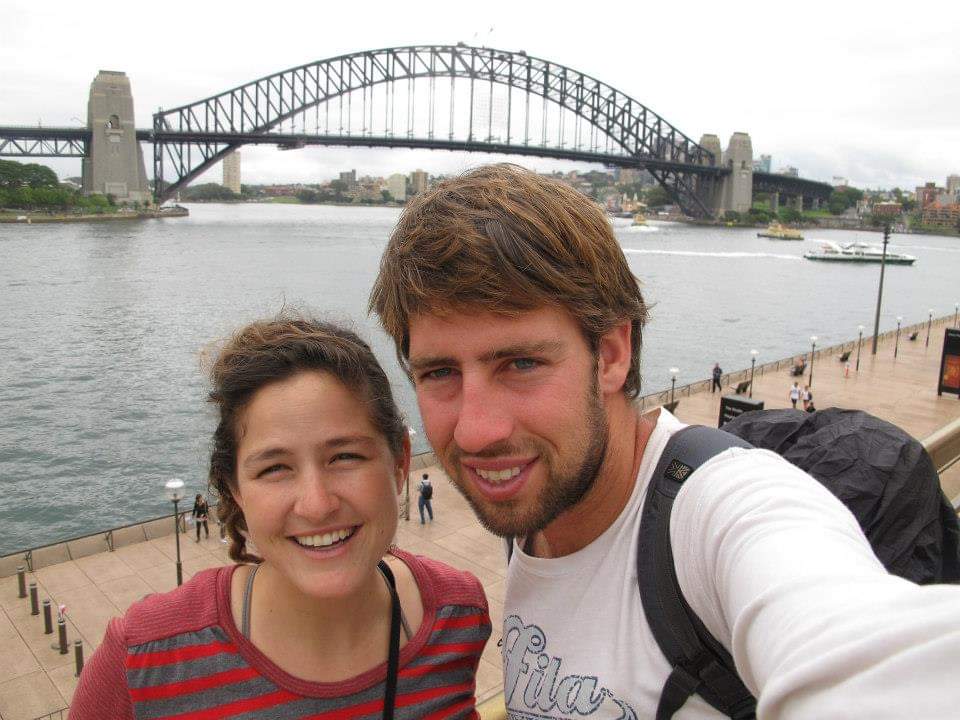
Johnny and Tamar met in 2011. Johnny was a born and raised Nir Oz kibbutznik, while Tamar was from Jerusalem. They both wanted to see the world, so they spent a year in Australia and New Zealand together, where they traveled around as backpackers. These photos are from Johnny’s facebook page. You can just see how happy they were, trekking in the wild nature, seeing the famous landmarks and seeing all those amazing places. I sure they never wanted it to end. They made some good friends in Australia, who they stayed in contact with after they went back to Israel.
.
.
After 7 years together, they got married in May of 2018. They settled down in Nir Oz and soon welcomed twin baby girls, Shahar and Arbel. Two years later, they celebrated the birth of their third child, a little boy they named Omer.
.
.
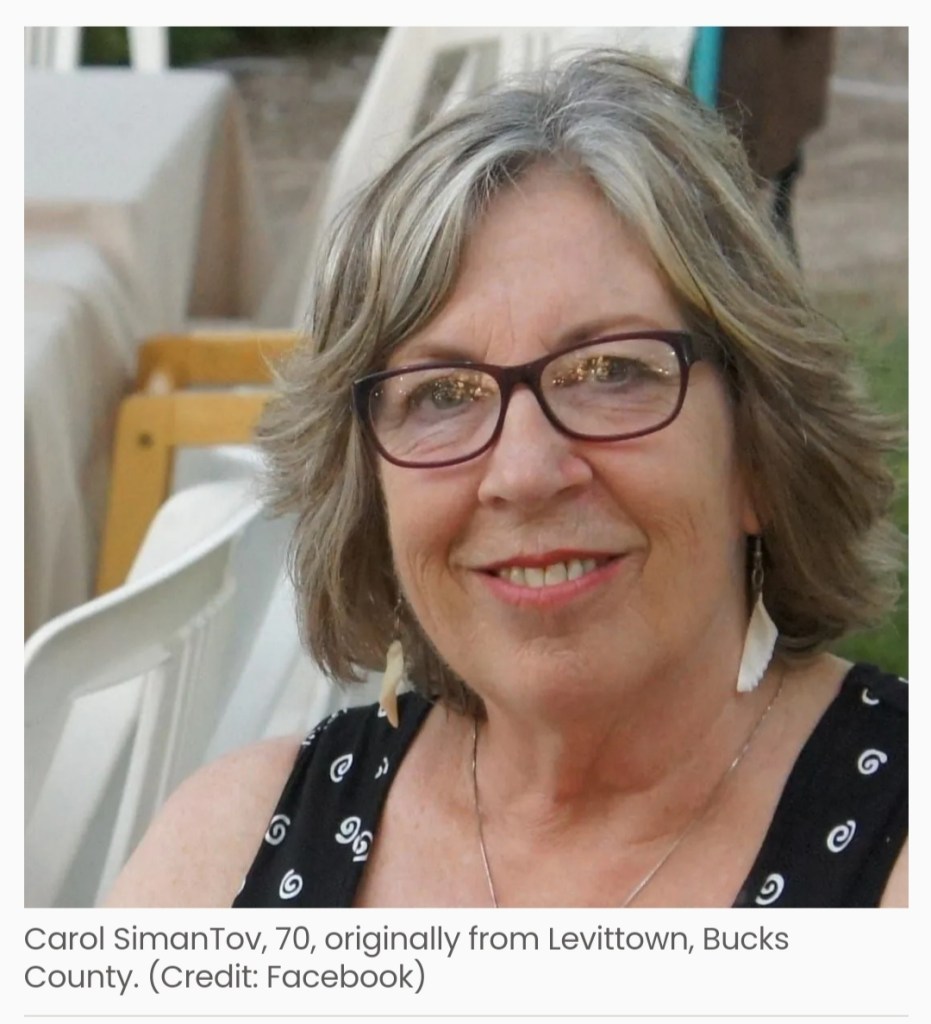
For years, the family lived happily in kibbutz Nir Oz. Johnny’s mother Carol Siman Tov also lived in Nir Oz, as did Johnny’s four siblings with their families. Carol is originally from the USA, and the entire family holds US citizenship.
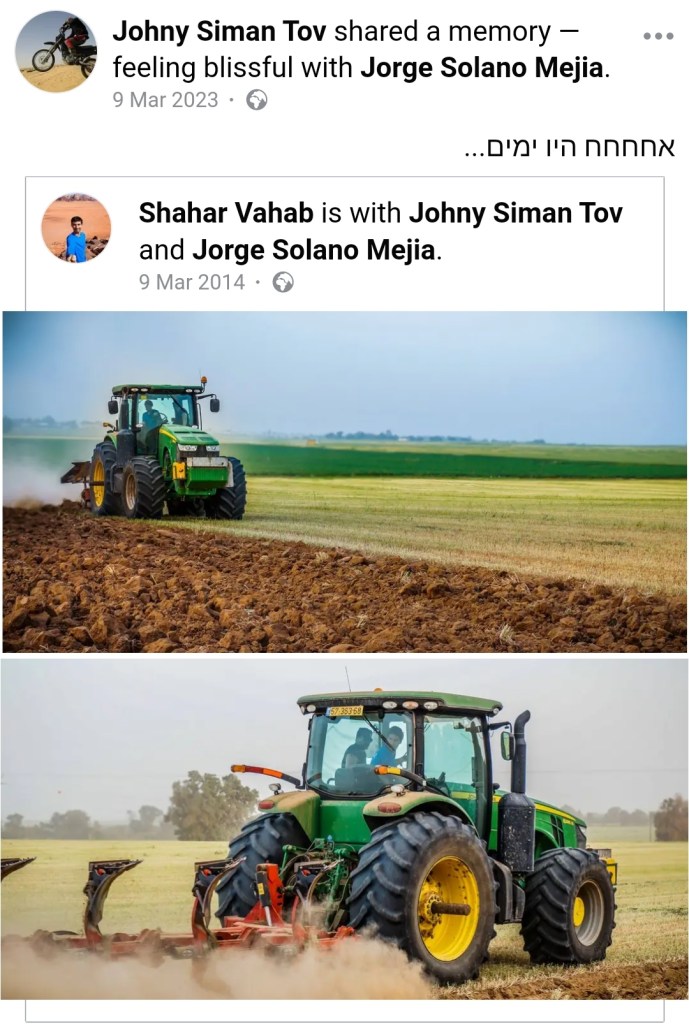
Johnny seems to me like a typical, friendly, down to earth kibbutznik. He was one of the acricultural managers of the kibbutz and worked on the wheat fields. This is one of his facebook posts:
.
.
“Those were the days…” he writes wistfully. His love for the land, for agriculture, for getting his hands dirty working the tractors, is evident.
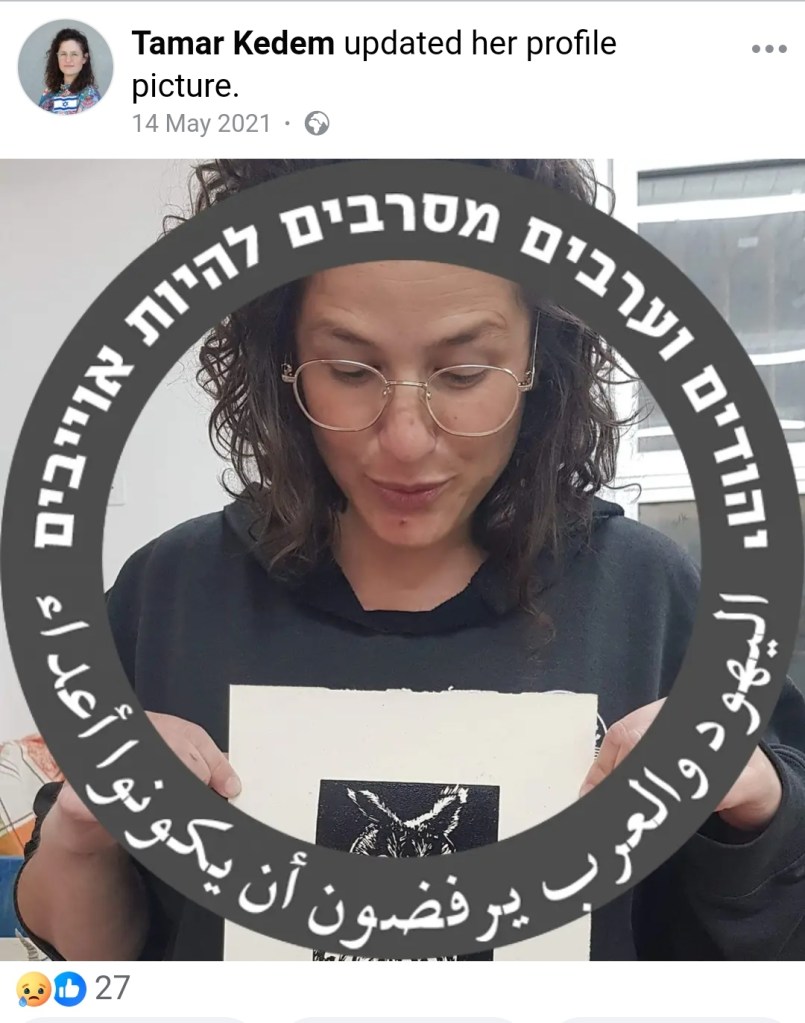
Tamar Kedem Siman Tov was a very driven person, always wanted to make the world a better place. She fought for woman’s rights, she was a peace activist and a politician. She was actually running for mayor of the local council, and had a very strong online presence to support her campaign. It looks like a lot of people in the council admired her and intended to vote for her.
.
.
This was Tamar’s profile picture in 2021. It says: “Jews and Arabs refuse to be enemies”.
In the early morning of October 7, 2023, the sirens started wailing in kibbutz Nir Oz. Johnny, Tamar and the children went into their “safe room”, a room built of solid concrete with a steel door and window shutter, made to withstand missiles and gunfire. Every house in Israel has one. They assumed it was just regular rockets being fired from Gaza, something that occurred almost daily in their area. Tamar sent off a quick text to her friends in Australia: “Hi guys, we got into the shelter in our house, we’re all going ok.” Going ok. As they say in Australia.
But soon, they started to understand that this was not like every other day. Something immeasurably worse was happening. They heard gunfire outside and voices, shouting in Arabic. In horror, they realized their kibbutz was being raided by terrorists, who were going from house to house, killing people and setting fire to their houses. It was only a matter of time until the voices and guns would get to their house. They locked and barricaded the door. Johnny kept up a text exchange with his family, who were locked inside their own houses in the kibbutz.
.
.
When the terrorists broke into the house of the Siman Tov family, they couldn’t immediately get to them. So they set the house on fire. Slowly, the room filled with smoke. Johnny texted to his sister, Ranae: “They’re here. They’re burning us. We’re suffocating.” Choking on the smoke, they were forced to open the reinforced window of their secure room, so they wouldn’t all die of smoke inhalation. But behind the window, gunmen were waiting for exactly that.
Tamar and Johnny were immediately shot through the window. They managed to close the window again to protect the children from being shot. But they must have known they all faced certain death by fire or smoke. The terror, pain and grief they must have gone through in that room is unimaginable. Later that day, Johnny, Tamar, Shahar, Arbel and little Omer were all found dead in the safe room of their burned house. The children had died from smoke inhalation.
Hamas also got to the rest of Johnny’s family. His mother, Carol, was shot to death together with her dog, Charlie, in her own house. The rest of the family excaped with their lives. Although one of the brothers got shot, he survived.
.
.
So tell me: if this is not premeditated murder in cold blood, then what is?? If this is not the most horrendous crime imaginable, then what is?? Shooting little children execution style? Gunning down an old lady and her dog? What kind of depraved savages could do this?
Hamas is not an army fighting for the rights of their people. They are a terrorist organization, dedicated to the systematic destruction of the state of Israel, of the Jewish people and of all Western civilization. They are also a cruel, totalitarian regime that terrorizes their own people. There is no excuse for what they did and they cannot be allowed to continue to exi
Nothing can bring back the Siman Tov family, and the other 80 people of kibbutz Nir Oz who were murdered that day. Nothing can heal the terrible loss of their family, their friends, and everone who knew them. The entire country is in mourning. But the kibbutzim who were raided on Black Shabbath, are in unimaginable pain.
.
.
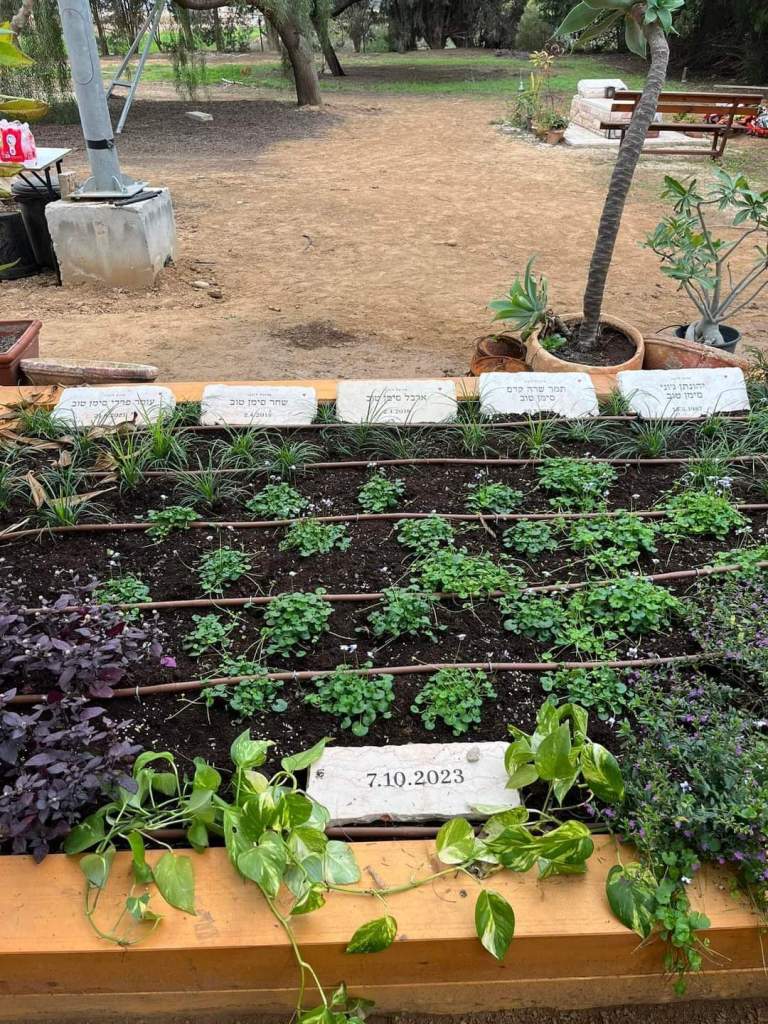
This is the memorial planted in Nir Oz for the Siman Tov family. We will never, ever forget them, and how they died. At the hands of violent murderers.









 Stories of Israel
