(This is my video about the Bedouin victims of Hamas.)
—
28 Bedouin Israelis were killed by terrorists and rockets on October 7. Another 7 were taken hostage. Two of them, minors, were released during the ceasefire and one is known to have been killed in Gaza. The rest still languishes underground.
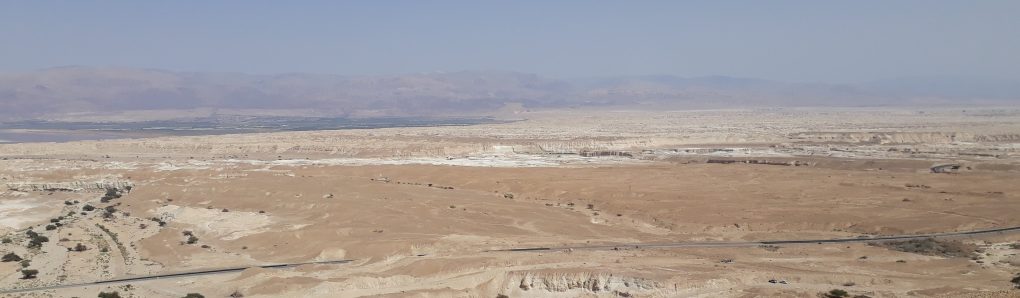
An estimated 200,000 Bedouins live in Israel, most of them in the Negev desert. They are a group of historically nomadic tribes, who used to roam the entire Arab peninsula and North Africa. Since the beginning of the 20th century, most Bedouins are no longer nomadic, but live in camps, villages and towns. Ethnically Arabs, they are Muslims and speak an Arabic dialect. However, they do not consider themselves Palestinians. They call themselves “Negev Arabs”. They live not only in Israel, but also in Jordan and in the Sinai pensinsula of Egypt.
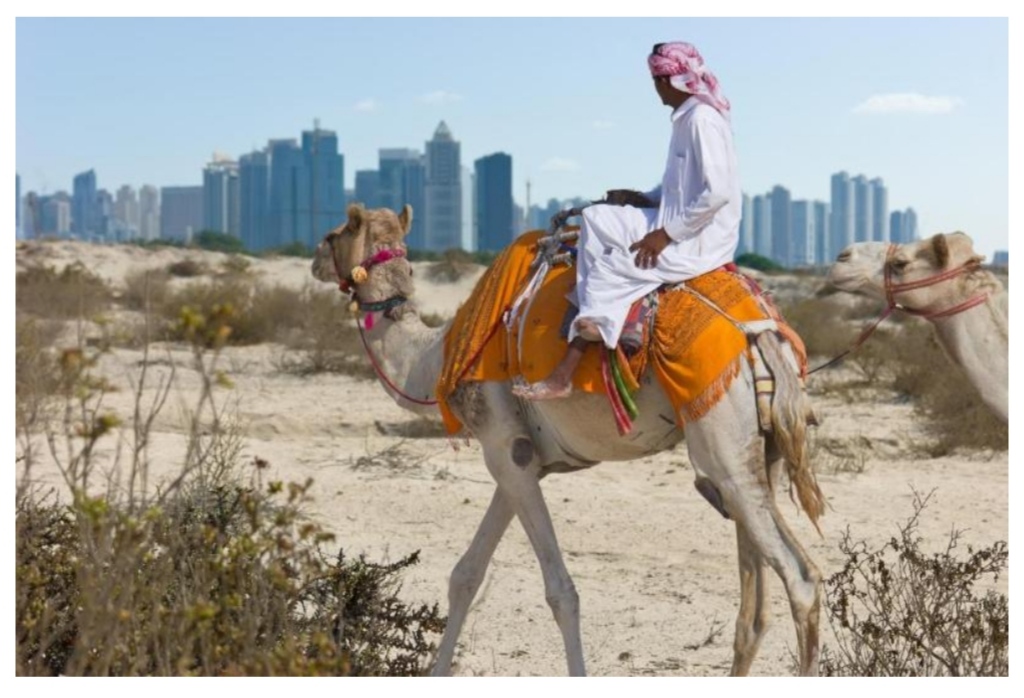
I have always thought of Bedouins as the Gypsies / Travellers of the Middle East, and there are some similarities between the two groups. Like Gypsies, Bedouins hold on tightly to their culture and identity, even while surrounded by the modern world. Some things have had to change, but their distinct customs and lifestyle are very important to them. They have their own laws and codes of conduct, which are based on Islam. Their system is complicated and I don’t know much about it, but I know that kinship ties and honour codes are extremely important to them, and that their hospitality and their pita bread are famous.
Because they live mainly in the Negev desert in designated towns and villages, I don’t meet many Bedouins. But since I started my small hobby farm and taking in rescue animals, I have had some interaction with them. Some of those were positive, like the time when we went to a Bedouin town to buy a saddle and they proudly showed us their amazing, home-bred Arab horses, complete with beautifully decorated tack. And others less so, like when I sold a (different) saddle online and a group of four Bedouin men came over and basically intimidated me into accepting a much lower offer than I wanted. Well, you live and learn, and I wrote this down to male bullying more than anything else.
Bedouins were historically dependent on their animals to survive. For thousands of years, they relied on their camels for transport, milk and meat. I don’t know anyone who can handle a camel except the Bedouins. I am used to large animals, but I treat camels with extreme caution. They are amazing but so strange to me! I have no idea how they work. Whenever we go for trips to the desert, my face is glued to the window looking for Bedouin camps with camels and especially, horses.
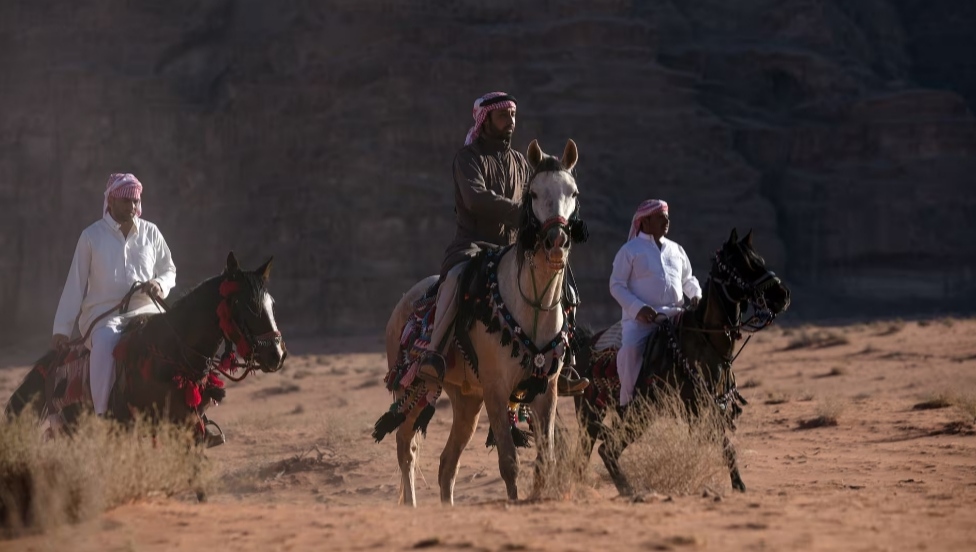
Arab horses are world renowned for their beauty, speed and strength. They are like the Jaguar of horses. And these magnificent creatures just live by Bedouin tents, between the goats, kids riding them bareback. Sometimes you see people riding on the streets, parading proudly with beautiful, coloured tack and decorations.
If Arab horses are the Jaguars of the horse world, Saluki dogs are the Jaguars of dogs. The Saluki is a breed that was traditionally used by Bedouins for hunting. These days, hunting is illegal in Israel, so anyone using their dogs to hunt runs the risk of the dogs getting confiscated. You don’t see Salukis much anymore. The breed that is now mostly associated with Bedouins is the Cana’an dog, a breed that is extremely watchful and makes great guard dogs. I should know, because I have Cana’an mix and he never stops barking.
Now, the Bedouins are famous for their animal breeding and riding skills – but not always for their animal-friendliness. I have three rescue donkeys that have escaped from Bedouin villages. Two of them are terrified of people, full of scars and obviously traumatized. Sadly, donkeys are the dregs of the farm world. They have mostly been replaced by tractors and trucks, but are sometimes still used by Bedouins for riding, carrying burdens and pulling carts. They are frequently overloaded, mistreated and neglected, sometimes even subjected to extreme and malicious abuse. This is obviously not limited to Bedouins – people everywhere abuse animals. But there are several practices common amongst Bedouins that I consider problematic.
One of them is tying the legs of animals together. Traditionally, Bedouins don’t build fences and let their animals roam freely to find food for themselves. But obviously, they can’t go too far or run away when their owners come to get them. So their legs are tied together in such a way that they can walk small distances to graze, but not run. This is done to all animals: goats and sheep, camels, horses, donkeys. I have seen camels with all four legs and their head tied together. They could only hobble a few paces.
I don’t like it, but if this is done safely and with wide leather straps, I wouldn’t consider it abuse. But often, it is done with straw twine, which cuts into their legs and leaves wounds that never heal. These poor animals suffer constant pain. All my donkeys have these scars on their legs – except the one who was born in my care. One of them also has scars on his chest, probably from pulling a cart with an ill-fitting harness. Donkeys are extremely sensitive and intelligent animals. They figure out how to beat the system and untangle themselves. And when they’re gone, they’re gone. They remember everything and they will never go back to owners who abused them. So they start roaming. They walk along the roads and often end up in kibbutzim, where there are fields and horses. That way, I have now gathered three rescue donkeys – they were found wandering around, alone and hungry, with wounds on their legs. They have become less afraid with time, but they will never fully trust any human.
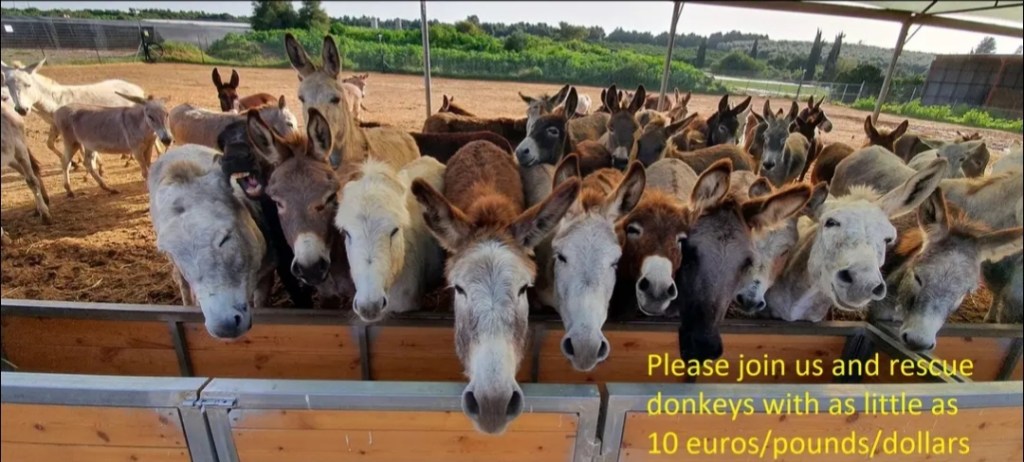
There are several large scale donkey sanctuaries in Israel. The most famous ones are Pegasus, Starting Over and Safe Haven for Donkeys. These people do incredible work that is vastly underrated. Donations and publicity are always greatly appreciated.
But I digress! I will get off my animal care soapbox now and concentrate on human rights. Because Bedouins and modern Israeli society do not always mesh well. Most Bedouins live in towns in the Negev, like Rahat or Tel Sheva. But there are many illegal villages, where the desert people decided to build their tents and huts, as is their tradition. But the land does not belong to them and the state does not recognize these villages. As a result, these places lack basic necessities like electricity, plumbing and, most importantly, bomb shelters and sirens. They are also not covered by the Iron Dome, the rocket interception system which keeps most of Israel safe from bombs launched at us from Gaza and Lebanon.
On the 7th of October, 2023, Hamas started their deadly invasion with a barrage of rockets shot into Israel. As many of the Bedouin villages do not have bomb shelters, seven people were killed by the impact of rockets. Six of those were children, and one a grandmother. This is absolutely heartbreaking. It is unacceptable that people have to live in this country without adequate protection against rockets. Hamas has been throwing rockets at us since 2005, when Israel left Gaza. You’d think every square inch of the country would be protected by now.
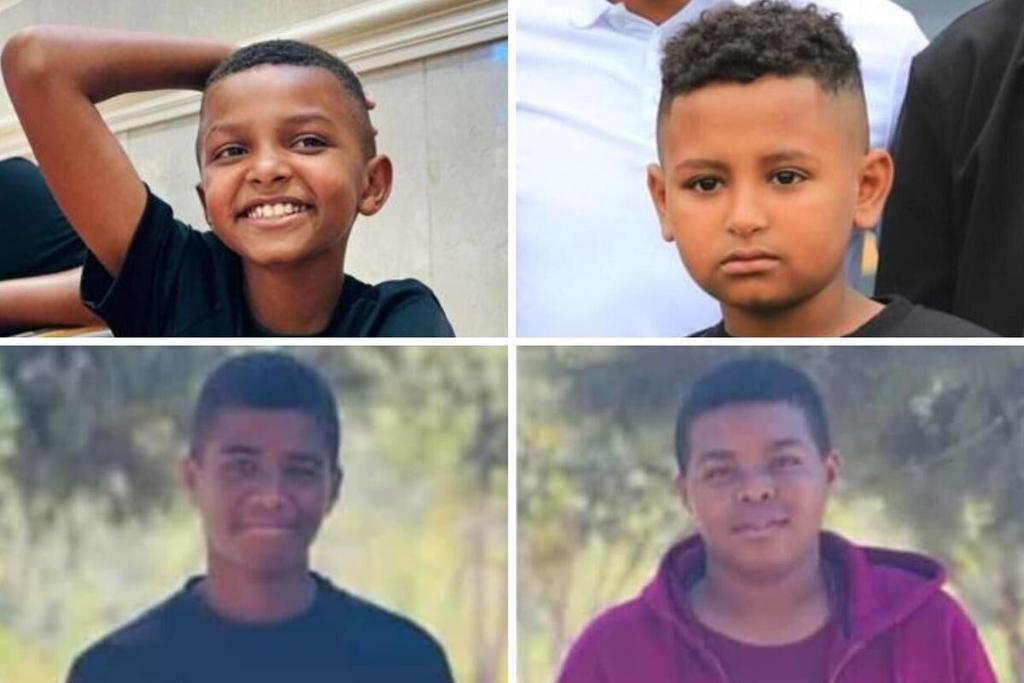
Malik, Jawad, Mohammed and Amin Al-Gourhan. Four children killed by a single rocket launched from Gaza.
Apart from casualties by rocket impacts, Hamas murdered 21 Bedouin Israelis. Some Bedouins serve in the Israeli army, but most of those killed on October 7 were civilians. Not that Hamas cared. They destroyed everything in their path.
Fatma Alttalaqat, 35, was a Bedouin mother of nine children. She was on the way to work with her husband and baby, when Hamas terrorists stopped the car and shot her point blank. Her body was found riddled with 40 bullets. She leaves a broken family behind, who cannot comprehend how Palestinians could shoot an innocent woman wearing a hijab in cold blood. I can’t either. It is inhuman.
I found no photo of Fatma, because Bedouins do not like publishing photos, especially not of women. The one exception was Aisha Alziadne, out of necessity.
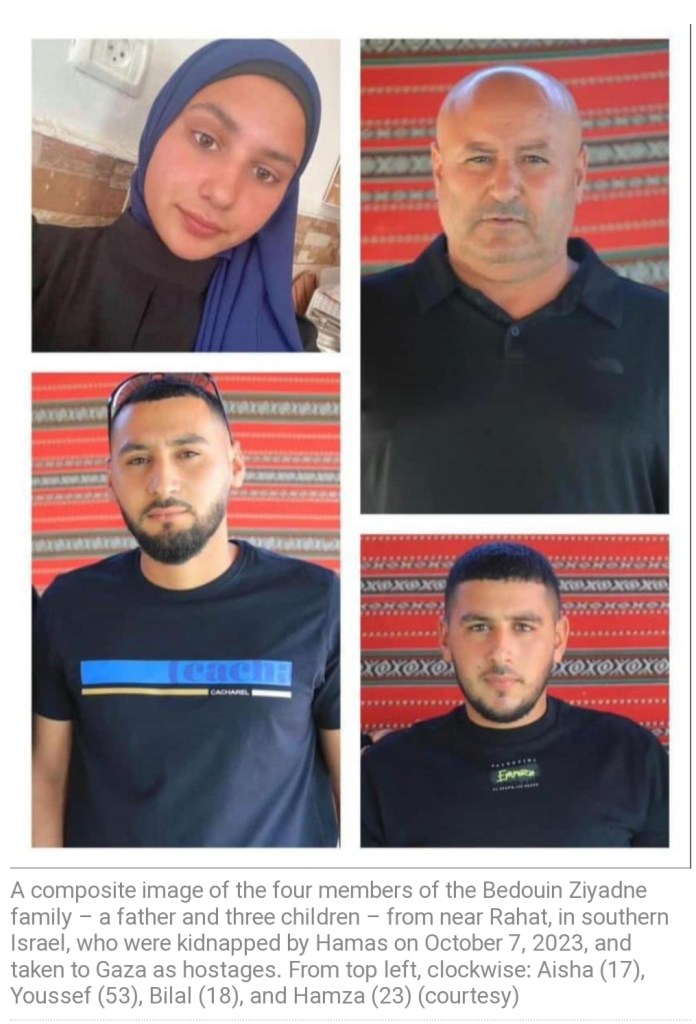
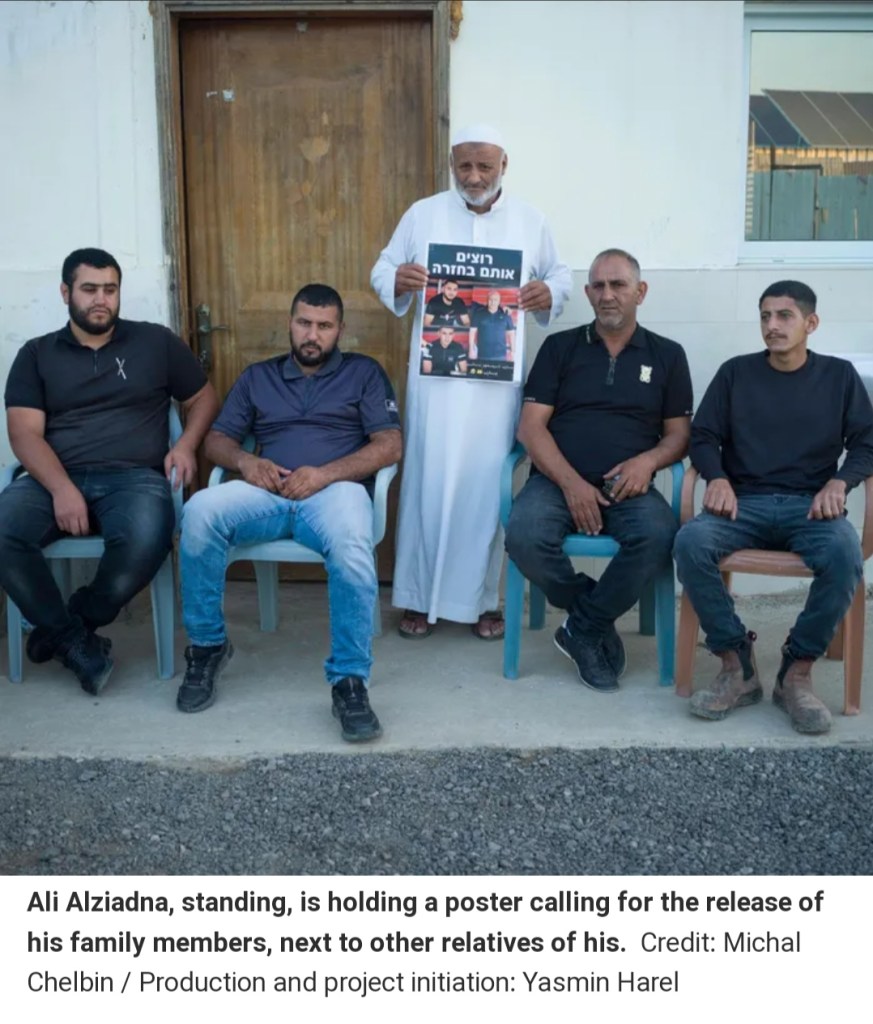
Four members of the same Bedouin family, the Alziadne clan, were abducted by Hamas. Youssef Alziadne has worked in the dairy farm of kibbutz Holit for seventeen years. When they were old enough, three of his children, Hamza, Bilal and Aisha, starting working with him. On October 7, they were all at work when the terrorists invaded kibbutz Holit. At the end of the day, all four were marked as missing. Later, they were seen in security footage, being led into Gaza on foot. Their status was adjusted to hostages.
A member of the same family, Abed Alrahman Ataf Alziadne, 26, was killed on Zikim Beach. Just like Fatma Alttalaqat, his body was absolutely riddled with bullets. He was machine gunned to death by rabid lunatics. It is horrific.
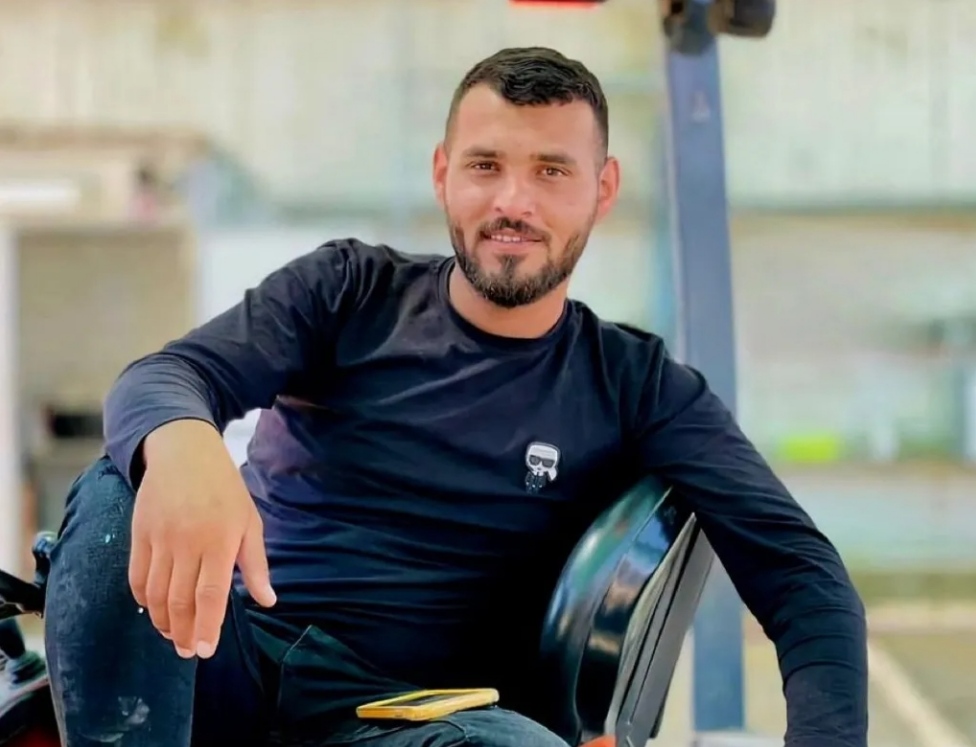
After 7 weeks of captivity, minors Aisha and Bilal were released. But Hamza and Youssef remain in the tunnels of Hamas. Their extensive family is terrified for them. Youssef has two wives and 19 children. He suffers from diabetes and his family is worried that he does not have his medication. Hamza is married and a father of two children. He suffers from migraines and does not have his medication either.
Other than the Alziadne family, there are three more Bedouin hostages. One of them was Samer Talalka. On December 15, Samer managed to escape his prison together with two other Israeli hostages. They tried to get the IDF to notice and rescue them, but instead, the IDF soldiers thought they were being ambushed and shot them. Tragically, the three were killed by fire from their own army. The absolute last thing anyone wanted.
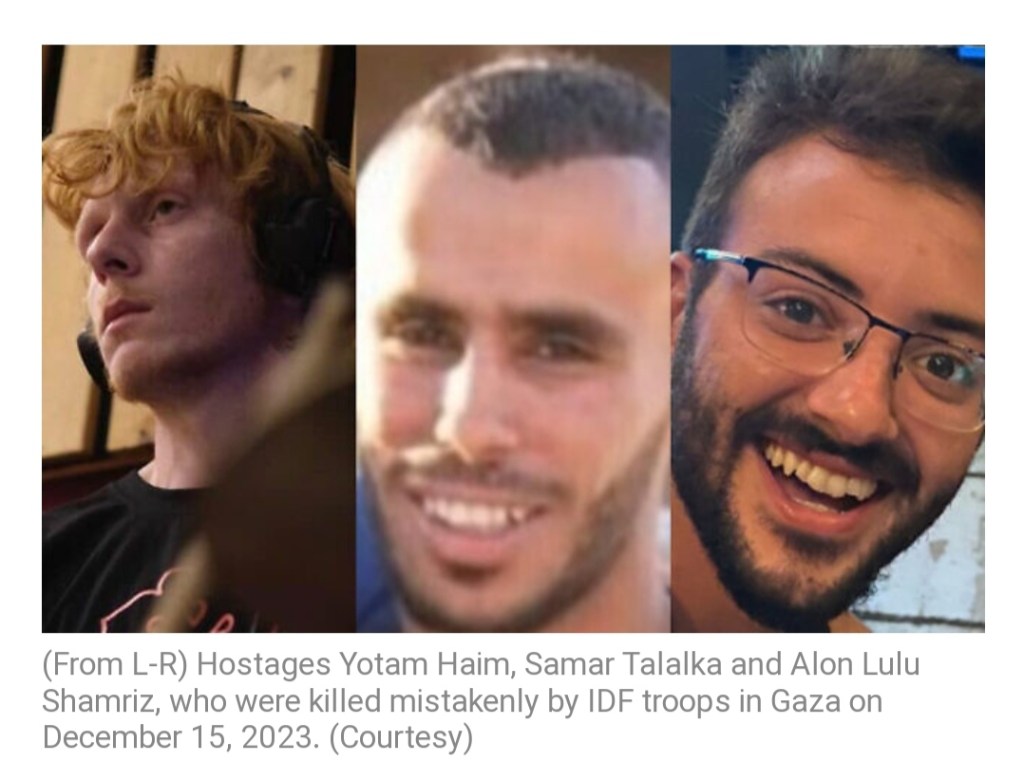
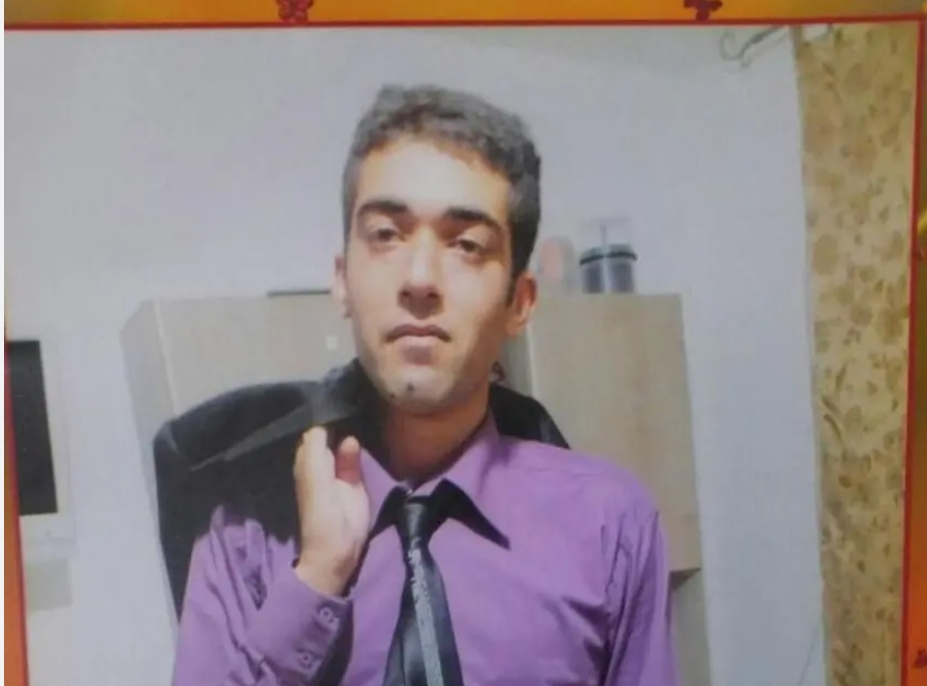
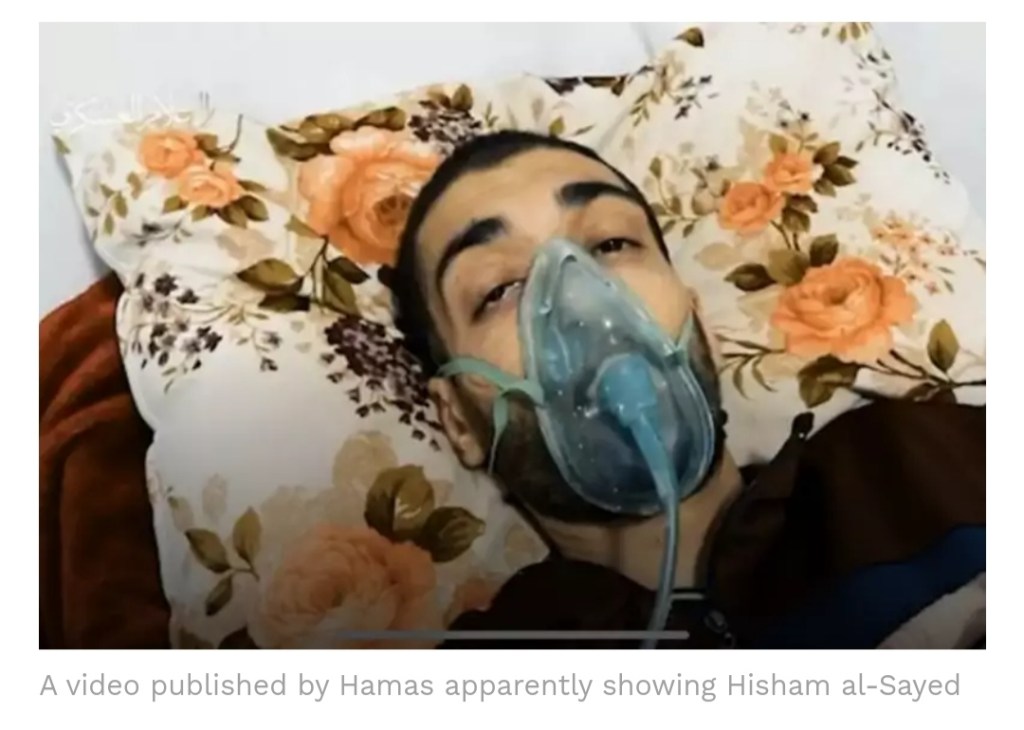
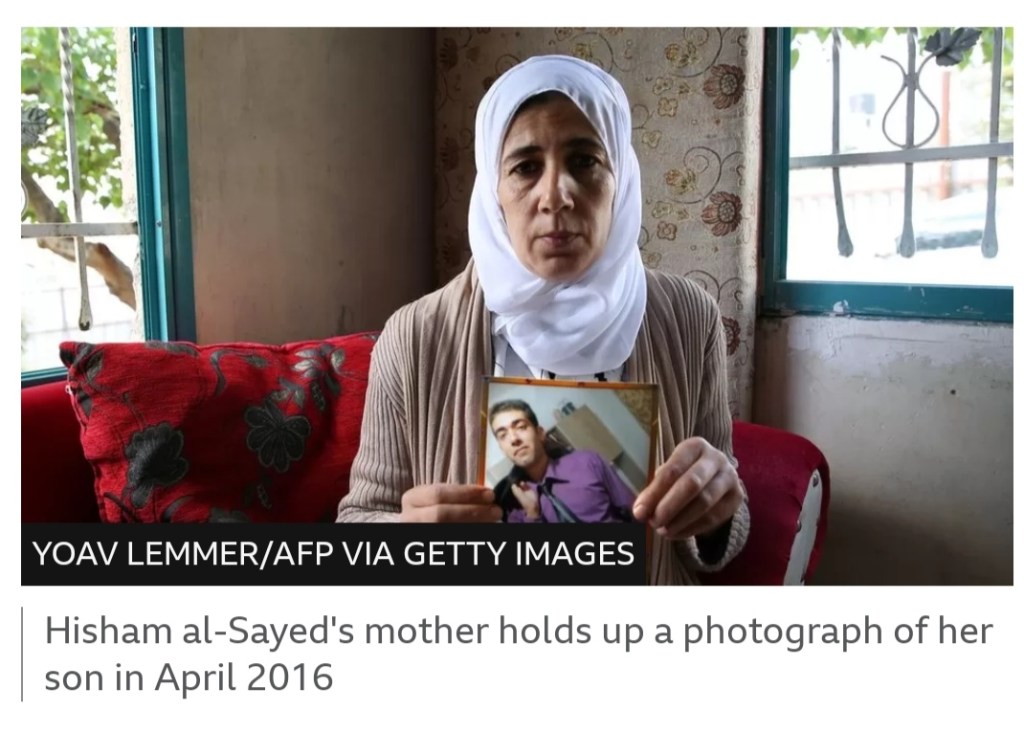
One of the other Bedouin hostages remains unnamed, at the request of his family. The last one is Hisham al-Sayed, who has been held captive by Hamas since 2015.
One other victim of Hamas that I want to mention is Osama Abu Assa. Osama was a Bedouin man from Tel Sheva, who worked as a security guard near kibbutz Re’im. In the early morning of October 7, he was returning home from his night shift when the sirens started wailing. He ran for a bomb shelter and hid there with other people. A security camera recorded the entire sequence of events. I saw the beginning of the video. The terrorists started firing into the bomb shelter and shouting for people to come out. Osama ran out, ducking to avoid the bullets flying around him. He shouted at them that all the people in the shelter were Arabs, that they were all civilians, women and children. This was not true, the other people in the shelter were Jews. Osama saved their lives. But he paid for it with his own life. The terrorists started beating him up. I couldn’t continue watching at that point, but I know they violently beat him, forced him to undress and robbed him of all his valuables – before finally executing him. Knowing this makes me sick to my stomach. What a horrendous, senseless murder. Osama was a good man who protected innocent people. Why? Why did they kill him? It is pure evil.
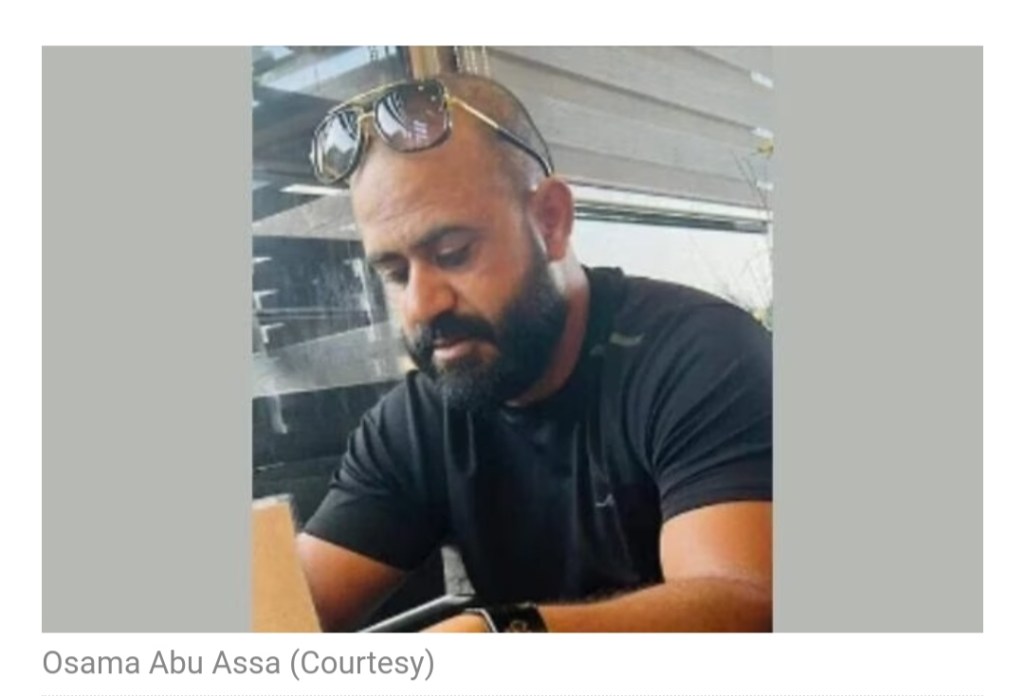
There is a twist to this story. Osama belonged to a large family clan with a lot of influence in the Bedouin community. His family has sworn bloody revenge and had offered a reward of 1 million dollars for information leading to Osama’s murderers. In an interview with Ynet, Osama’s brother, Joad Abu Assa, told the interviewer:
“(…) this is a blood feud – these people tortured him and it’s not a simple matter. My Bedouin, Druze and Jewish friends approached me asking to help us. If their families don’t fear us, they’ll do it again and again because this is a blood feud. Bedouins in Israel kill one another over trivialities all the time, so don’t you expect everyone, and the world, to rise up in this case?”
About Hamas, Joad Abu Assa said:
“Hamas is a crime syndicate, not a state working against a state. People there murder people for money and their own interests. This isn’t about a state or the war, this is about the people there. They only want more money and then fire rockets at Israel so that it has a chance to take a picture of a dead Palestinian child and show the world. We know this and we’ve had enough of Hamas, ISIS, and their violence. It’s not only about my brother, we’re aching for the Jewish children who were murdered as well, and the 80-year-old woman who was abducted, who does something like this?”
And finally:
“(…) their Islam doesn’t represent us, they’re not true Muslims. A Muslim doesn’t murder, they hide behind our Islamic religion, ours is a religion of peace and respect. Our religion tells us not to murder. It says much, but not to torture.”
I know I shouldn’t want revenge. I should want peace for everyone involved. And I do. But this, coming from an Israeli Bedouin, really lifts my spirit. I know about blood feuds. They’re seriously scary. But instead of fighting each other, the Negev Bedouins now have a common enemy: Hamas. They understand Arab culture in a way we don’t. And they are armed and ready. They are not done with Hamas.
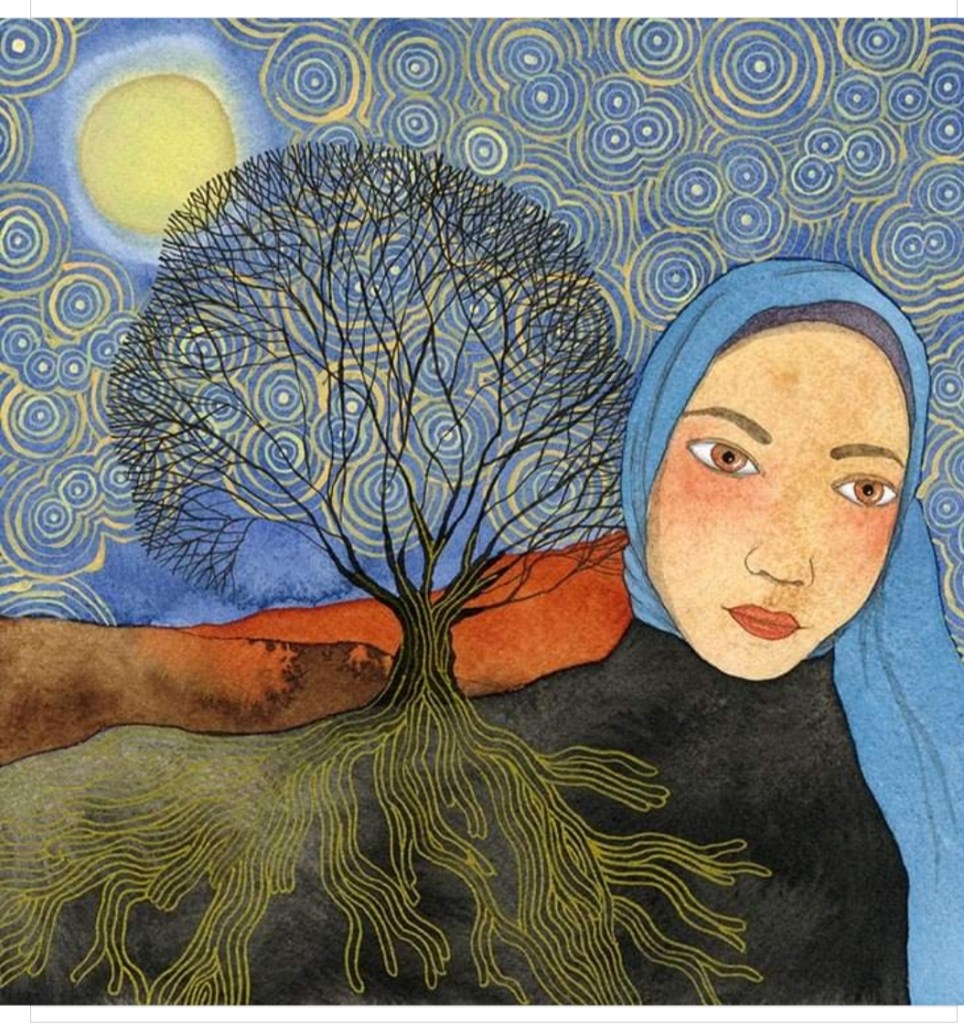
Aisha, come home. By Yaara Eshet.

 Stories of Israel